-
 Translate
- Astropatri Values
- My Account
Translate
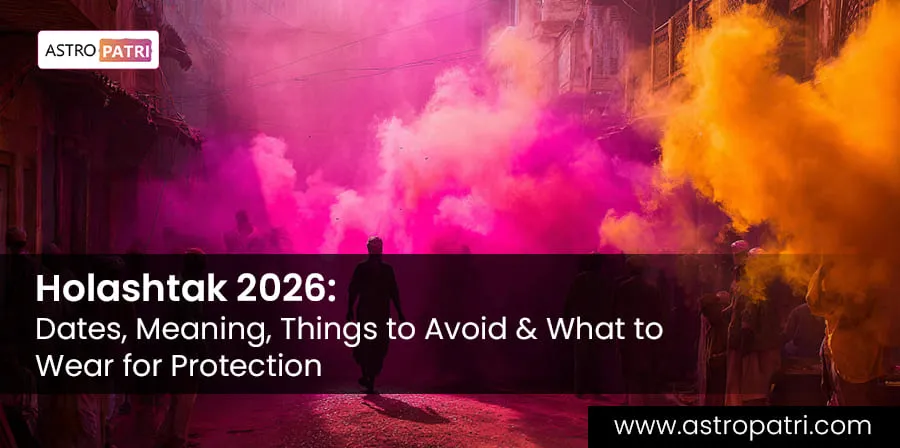
Holashtak is the eight-day period before Holi when planetary energies are traditionally considered intense or Ugra. Holashtak begins on the Shukla Ashtami of the Phalguna month and ends on Holika Dahan, which is just before the Holi festival. In traditional astrology, this period is considered sensitive because planetary vibrations are believed to become sharp and intense. Major auspicious ceremonies such as marriage, housewarming, and new ventures are generally avoided.
In 2026, Holashtak will be observed from 24th February to 3rd March, ending with Holika Dahan. Seasonal change, mythological symbolism, and planetary influences create emotional and practical sensitivity. Some zodiac signs may experience stronger effects and should remain cautious.
The word Holashtak literally means “eight days of Holi.” It represents the final spiritual preparation before the festival of colours. While Holi celebrates joy, forgiveness, and fresh beginnings, Holashtak is the inward stage that precedes that celebration.
The mythological foundation comes from the story of Prahlada and Holika. Prahlada’s devotion remained firm even when faced with danger, while Holika, despite her boon of protection, was consumed by fire due to her negative intent. The ritual of Holika Dahan symbolizes the burning of ego, arrogance, and harmful tendencies. Fire acts as a purifier.
Astrologically, purification often involves intensity. When cleansing occurs, hidden weaknesses surface. Emotions rise. Situations that were ignored demand attention. This is why Holashtak is described as a period of strong planetary vibrations.
Seasonal Transition:
Holashtak usually occurs during the shift from winter to spring. The Sun’s movement increases warmth and activates the fire element in nature. This environmental shift can influence human mood, making people more reactive, restless, or impatient.
Dominance of Strong Planetary Energies:
Traditional belief suggests that the Sun, Mars, Saturn, and Rahu-Ketu can give stronger results during this period. The Sun can create ego clashes, Mars may trigger aggression, Saturn can bring delays or pressure, and Rahu-Ketu may cause confusion or sudden emotional reactions.
Lunar Emotional Sensitivity:
The Moon is generally waxing during Holashtak. Emotional responses can intensify. People may become more sensitive to situations, leading to misunderstandings or quick reactions.
Karmic Cleansing Phase:
Astrologically, this period is viewed as a time of purification. Challenges are believed to help clear past karmas. Rather than being purely negative, it is seen as a transformative phase encouraging patience, discipline, and reflection.
While Holashtak influences everyone, some signs may feel its effects more strongly.
Aries:
Ruled by Mars, Aries natives may experience heightened impatience and impulsiveness. Arguments, quick decisions, or risky financial choices should be avoided. Calm thinking and controlled speech will help maintain harmony.
Cancer:
The Moon rules over the Cancer sign. Hence, emotional sensitivity can increase. Family misunderstandings, mood fluctuations, or stress-related health concerns may arise. Emotional balance, rest, and open communication are important.
Leo:
Leo is governed by the Sun, which represents ego and authority. During Holashtak, pride or leadership conflicts may surface. Avoid dominance in discussions and practice humility to maintain positive relationships.
Scorpio:
Mars rules over the Scorpio sign. The Scorpio natives may experience internal tension, hidden anger, or emotional intensity. Avoid confrontations and excessive suspicion. Spiritual practices or physical activity can help release stress.
Capricorn:
Saturn rules over the Capricorn sign. Saturn is considered a planet of karma and discipline. Responsibilities may feel heavier, work delays may occur, and patience may be tested. Financial caution and steady effort will help manage this phase.
Signs That May Handle It Better:
Sagittarius and Pisces often benefit from Jupiter’s spiritual influence. It encourages wisdom and faith. Virgo and Libra may maintain balance through strong communication and diplomacy if Mercury and Venus are well placed. However, awareness and calm behaviour are advisable for all signs during Holashtak.
Helpful Practices During Holashtak:
This period is not meant to create fear but awareness. Simple practices can help:
a) Avoid starting major auspicious activities.
b) Maintain emotional control and mindful speech.
c) Practice meditation, prayer, or spiritual reading.
d) Engage in charity or helpful acts.
e) Focus on self-reflection and patience.
Such steps help maintain mental peace and reduce stress.
Conclusion:
Holashtak is a spiritually significant period marked by intense planetary vibrations and seasonal transition. In 2026, it occurs from 24th February to 3rd March, ending with Holika Dahan. Aries, Cancer, Leo, Scorpio, and Capricorn natives may need extra caution during this phase. However, this time mainly symbolises purification and inner growth. With patience, awareness, and spiritual focus, Holashtak can become a period of transformation rather than disturbance.
Frequently Asked Questions (FAQs)
Why are weddings avoided during Holashtak?
Traditional belief considers planetary vibrations unstable during these eight days. Since marriage is a long-term commitment, families prefer to choose a calmer and more auspicious period.
Is Holashtak considered inauspicious?
It is not inauspicious in a negative sense. It is regarded as a transitional and sensitive phase better suited for reflection than new beginnings.
Can we perform daily puja during Holashtak?
Yes. Daily worship, meditation, and spiritual practices are encouraged. Only major ceremonies are generally postponed.
Does Holashtak affect everyone equally?
No. The effect varies depending on an individual’s birth chart. Some may feel emotional intensity, while others may experience minimal impact. Awareness and patience help everyone manage this period smoothly.


Instant Report Based on Our Proprietary Framework, Developed by Experts