-
 Translate
- Astropatri Values
- My Account
Translate

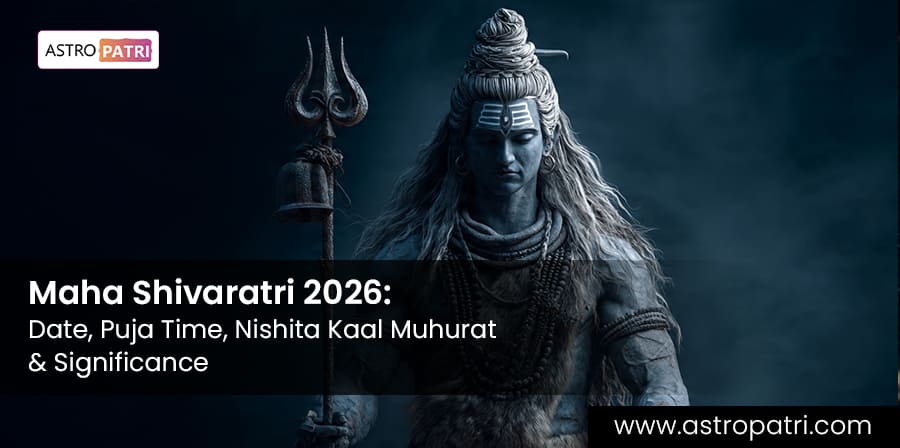
Maha Shivaratri is a sacred Hindu festival dedicated to Lord Shiva, observed as a night of fasting, prayer, and deep spiritual reflection. It is considered one of the most powerful nights in the Hindu calendar. For many devotees, Maha Shivaratri is not just a festival but a personal moment of faith, silence, and inner connection.
Lord Shiva is worshipped as the symbol of transformation and higher consciousness. He represents detachment, discipline, and balance. Maha Shivaratri reminds devotees that growth often begins with stillness and self-control.
Unlike most Hindu festivals that are celebrated during the day, Maha Shivaratri is observed through the night. Devotees fast during the day and stay awake at night. They chant mantras, perform Abhishek, and meditate. The calm of the night is believed to help the mind slow down and turn inward.
Every year, Maha Shivaratri is observed on Krishna Paksha Chaturdashi in the month of Phalguna. In 2026, the festival falls in mid-February. The day comes with specific puja timings that are considered especially auspicious for Lord Shiva worship.
In 2026, Maha Shivaratri will be observed on Sunday, 15 February 2026.
The date of Maha Shivaratri is decided using the Hindu Panchang. The festival is observed on the day when the Chaturdashi Tithi remains present during the night. This rule is crucial because Maha Shivaratri is primarily a night-based observance.
In 2026, Chaturdashi Tithi fully covers the night of 15–16 February. Because of this, 15 February 2026 is accepted as the correct and scripturally valid date for Maha Shivaratri across regions.
| Event | Date | Time |
| Maha Shivaratri Date | Sunday, 15 February 2026 | — |
| Chaturdashi Tithi Begins | 15 February 2026 | 05:04 PM |
| Chaturdashi Tithi Ends | 16 February 2026 | 05:34 PM |
| First Prahar Puja | 15 February 2026 | 06:11 PM – 09:23 PM |
| Second Prahar Puja | 15–16 February 2026 | 09:23 PM – 12:35 AM |
| Third Prahar Puja | 16 February 2026 | 12:35 AM – 03:47 AM |
| Fourth Prahar Puja | 16 February 2026 | 03:47 AM – 06:59 AM |
| Nishita Kaal Puja | 16 February 2026 | 12:09 AM – 01:01 AM |
| Parana Time | 16 February 2026 | 06:59 AM – 03:24 PM |
This table helps devotees plan their vrat, puja, and night worship correctly.
According to the Hindu Panchang, Chaturdashi Tithi begins at 05:04 PM on 15 February 2026 and ends at 05:34 PM on 16 February 2026.
Since Chaturdashi remains active throughout the entire night, Maha Shivaratri is observed on Sunday, 15 February. This alignment is important because the spiritual essence of Maha Shivaratri lies in night-long worship.
When the tithi covers the night fully, devotees can perform Abhishek, chanting, and meditation without interruption. This makes the observance more complete and meaningful.
Nishita Kaal is the midnight period and is considered the most auspicious time for Shiva worship on Maha Shivaratri.
In 2026, Nishita Kaal Puja time is from 12:09 AM to 01:01 AM on 16 February, lasting 51 minutes.
This time is believed to carry intense spiritual energy. Many devotees choose Nishita Kaal for Shiva Lingam Abhishek, mantra chanting, and silent prayer. It is said that worship during this period helps clear mental stress, remove negative thoughts, and bring emotional balance.
For those unable to stay awake all night, performing puja during Nishita Kaal is considered especially rewarding.
The night of Maha Shivaratri is divided into four prahars. Each prahar lasts roughly three hours and holds its own spiritual importance.
Some devotees perform puja in all four prahars. Others choose one or two based on their comfort and health. Chanting “Om Namah Shivaya,” performing Abhishek, or meditating quietly are common practices.
What matters most is devotion, not how long one stays awake.
Parana is the process of breaking the Shivaratri fast.
In 2026, Parana Time is from 06:59 AM to 03:24 PM on 16 February.
The fast should be broken only after sunrise and after Chaturdashi Tithi has ended. Observing parana at the correct time is considered an important part of the vrat. It reflects discipline and respect for tradition.
Maha Shivaratri is observed at night because silence supports inner awareness. It is believed that Lord Shiva is easiest to worship during quiet hours, when distractions are few.
Staying awake through the night symbolises control over ignorance, desire, and restlessness. Spiritually, the night vigil represents the awakening of consciousness.
Maha Shivaratri is also linked to the divine union of Lord Shiva and Goddess Parvati. This association makes the night especially powerful for emotional and spiritual renewal.
Maha Shivaratri carries deep spiritual meaning. It is a time to pause, reflect, and reconnect with one’s inner self.
Devotees believe that sincere observance helps:
Fasting helps control the senses. Meditation calms the mind. Mantra chanting brings focus. Together, these practices purify both body and thought.
Rituals on Maha Shivaratri are simple and heartfelt. Devotion matters more than ritual perfection.
Common practices include:
Customs may vary by region, but the essence of faith remains the same.
Many devotees observe a strict fast on Maha Shivaratri. Some take fruits and water. Others avoid food completely.
The fast is not meant to cause hardship. It is meant to develop discipline and awareness. Mental restraint is considered just as important as physical fasting. Anger, impatience, and harsh speech are avoided as much as possible.
The fast is completed the next day during parana.
Maha Shivaratri is a meaningful occasion for devotion, restraint, and inner clarity.
Maha Shivaratri 2026 offers a rare chance to slow down and turn inward. The correct alignment of date, tithi, and night hours adds to its spiritual depth. Worship during Nishita Kaal deepens the experience. Whether through fasting, prayer, or quiet meditation, the night encourages discipline, awareness, and faith.
For many devotees, Maha Shivaratri becomes a moment of calm and connection that stays long after the night has passed.
Q1. When is Maha Shivaratri in 2026?
Maha Shivaratri in 2026 will be observed on Sunday, 15 February. The date is decided based on Krishna Paksha Chaturdashi Tithi, which remains present throughout the night.
Q2. What is the Nishita Kaal puja time on Maha Shivaratri 2026?
The Nishita Kaal puja time on Maha Shivaratri 2026 is from 12:09 AM to 01:01 AM on 16 February. This midnight period is considered the most auspicious time to worship Lord Shiva.
Q3. Can Maha Shivaratri puja be done at home?
Yes, Maha Shivaratri puja can be performed at home. Devotees can worship Lord Shiva by offering water or milk to the Shiva Lingam, chanting “Om Namah Shivaya,” and meditating during the night.
Q4. When should the Maha Shivaratri fast be broken in 2026?
The Maha Shivaratri fast should be broken on 16 February 2026, between 06:59 AM and 03:24 PM, after sunrise and after Chaturdashi Tithi ends
Instant Report Based on Our Proprietary Framework, Developed by Experts