-
 Translate
- Astropatri Values
- My Account
Translate

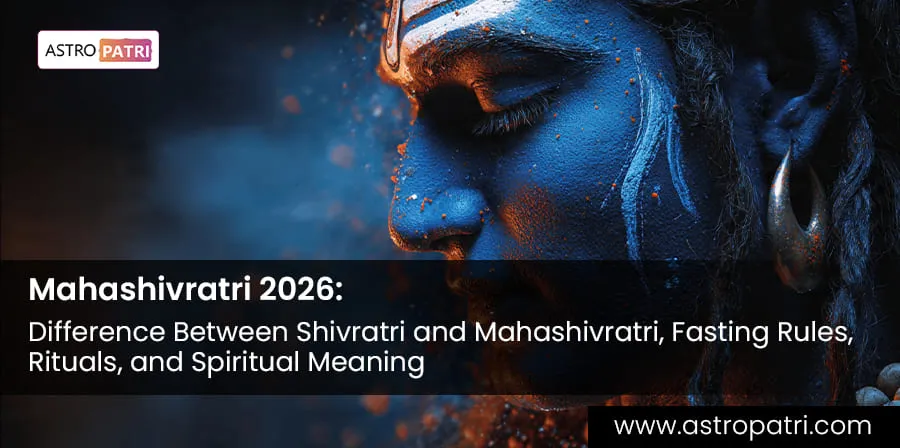
Mahashivratri is one of the most sacred nights in Hindu tradition. Unlike most festivals, it is not centred on celebration, colours, or social gatherings. Instead, it is observed with silence, fasting, prayer, and inner focus. This night is dedicated to Lord Shiva, the symbol of consciousness, stillness, and transformation.
Many devotees also observe Shivratri every month. However, Mahashivratri is very different from monthly Shivratri. Though both are devoted to Lord Shiva, their spiritual depth, rituals, and purpose are not the same.
This article explains Mahashivratri 2026 in simple words. It covers the difference between Shivratri and Mahashivratri, fasting guidelines, puja rituals, and the spiritual significance of this powerful night.
The word Shivratri means “the night of Lord Shiva.” It is observed every month on the Krishna Paksha Chaturdashi, the fourteenth lunar day after the full moon.
Monthly Shivratri is meant to help devotees stay spiritually disciplined. It acts as a reminder to pause from routine life and reconnect with faith. Most people observe it quietly with light fasting, temple visits, or evening prayers.
For many households, monthly Shivratri is calm and personal. There is no pressure to follow strict rules. The focus is on maintaining balance, control over habits, and respect for spiritual values.
Mahashivratri means “the great night of Lord Shiva.” It is observed once a year, usually in February or March, during the month of Phalguna.
This night is believed to carry special spiritual energy. According to tradition, Mahashivratri is associated with divine events such as the marriage of Lord Shiva and Goddess Parvati, and the appearance of the Jyotirlinga, the endless pillar of light.
Spiritually, it is believed that the mind becomes naturally calm and inward on this night. Because of this, Mahashivratri is considered highly suitable for meditation, prayer, and deep reflection.
| Basis | Shivratri | Mahashivratri |
| Meaning | Night dedicated to Lord Shiva | The most powerful night of Lord Shiva |
| Frequency | Every month | Once a year |
| Time | Krishna Paksha Chaturdashi | Phalguna month (Feb–March) |
| Spiritual focus | Routine spiritual reminder | Deep inner awakening |
| Fasting | Light or optional | Strict fasting preferred |
| Worship | Simple puja | Four Prahar puja with night vigil |
| Staying awake | Not necessary | Very important |
| Celebrations | Limited | Large temple observances |
In simple terms, monthly Shivratri maintains spiritual discipline, while Mahashivratri renews it deeply.
Mahashivratri is often described as a night of transformation. Staying awake symbolises awareness. Fasting symbolises control over physical desires. Silence symbolises inner clarity.
It is believed that sincere observance of Mahashivratri helps:
Unlike festivals that focus on enjoyment, Mahashivratri focuses on self-discipline and inner growth.
One of the most important aspects of Mahashivratri is the night vigil, also known as jagran. Staying awake throughout the night represents alertness of the mind.
In spiritual terms, sleep symbolises ignorance, while wakefulness symbolises awareness. By staying awake, devotees symbolically choose consciousness over distraction.
Those who cannot stay awake all night can still benefit by remaining mindful, calm, and focused for as long as possible.
Fasting on Mahashivratri 2026 is a personal choice. It should always be followed according to health, age, and capacity. Hindu tradition does not encourage suffering.
Nirjala Fast
No food or water for the entire day and night. This is the strictest form and should be observed only by healthy individuals.
Fruit Fast
Fruits, nuts, milk, and coconut water are allowed.
Milk Fast
Only milk, water, and buttermilk are consumed.
Single Meal Fast
One simple meal before sunset, followed by fasting at night.
The intention behind fasting matters more than the method.
These foods are light and easy to digest, helping the body remain calm.
Avoiding heavy food supports both physical lightness and mental clarity.
Mahashivratri puja is traditionally performed in four Prahars, or phases of the night.
Step 1: Morning Preparation
Take an early bath and clean the puja area. Wear clean, comfortable clothes.
Step 2: Sankalp
Take a vow for fasting and worship with a calm mind.
Step 3: Shivling Abhishek
Offer water, milk, curd, honey, ghee, and bilva leaves to the Shivling.
Step 4: Mantra Chanting
Chant:
Step 5: Night Vigil
Spend the night in prayer, meditation, or silence.
Step 6: Breaking the Fast
Break the fast the next morning after offering prayers.
Monthly Shivratri rituals are simpler.
These rituals are easy to follow, even with work or household duties.
Yes. Mahashivratri 2026 is for everyone, regardless of age or background. Those who cannot fast can still observe the day through:
Devotion is measured by sincerity, not strictness.
Mahashivratri teaches balance. It reminds devotees that spiritual growth does not come from excess, but from control, awareness, and reflection.
Lord Shiva represents stillness within chaos. Observing Mahashivratri helps devotees bring a part of that stillness into daily life.
Shivratri gently reminds devotees every month to slow down. Mahashivratri invites them once a year to stop completely, look inward, and reset.
Through fasting, prayer, and awareness, Mahashivratri 2026 offers a meaningful opportunity for mental clarity, emotional balance, and spiritual renewal.
It is not about following every rule perfectly. It is about approaching the night with sincerity and respect.
What is Mahashivratri and why is it celebrated?
Mahashivratri is the most sacred night of Lord Shiva. It is celebrated once a year to seek inner peace, self-control, and spiritual awakening through prayer and devotion.
Why is staying awake important on Mahashivratri?
Staying awake symbolises awareness and control over the mind. Spiritually, it means remaining conscious and alert instead of being distracted or careless.
Is fasting compulsory on Mahashivratri?
No. Fasting is not compulsory. Sincere prayer, calm behaviour, and positive thoughts are more important than strict fasting rules.
Can women observe Mahashivratri fast?
Yes. Women of all ages observe Mahashivratri fast for spiritual growth, mental strength, and family well-being.
Can working people observe Mahashivratri?
Yes. Working people can observe Mahashivratri through simple prayers, mantra chanting, or quiet reflection, even without fasting.





Instant Report Based on Our Proprietary Framework, Developed by Experts