-
 Translate
- Astropatri Values
- My Account
Translate

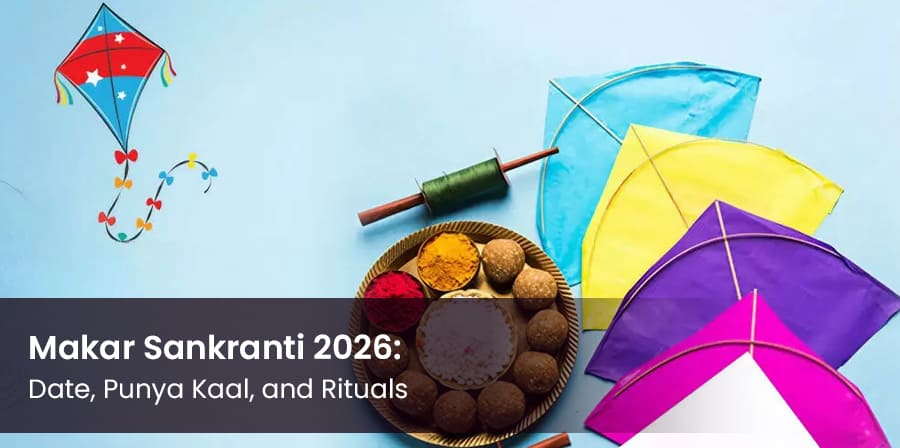
Makar Sankranti is a festival that follows the Sun. While many Hindu observances change dates every year, Makar Sankranti stays close to the same time. It is tied to the natural rhythm of the Earth and the steady movement of the Sun.
The festival marks the day when the Sun enters Makara Rashi, or Capricorn. This shift begins Uttarayan, the northward journey of the Sun. Traditionally, this movement is seen as a sign of forward motion, discipline, and inner clarity.
In 2026, Makar Sankranti will be observed on Wednesday, 14 January. This year holds special importance because the festival falls on Ekadashi tithi, a day associated with restraint, simplicity, and conscious living.
Makar Sankranti is not loud or dramatic by nature. Its meaning lies in quiet actions, thoughtful choices, and steady habits.
According to traditional astronomical calculations, the Sun will enter Capricorn on the afternoon of 14 January 2026.
This moment marks the exact solar transition. In traditional belief, this time is sensitive and meaningful. Activities done close to this point are said to carry deeper value, especially when done with a calm mind.
After the Sankranti moment begins the period known as Punya Kaal. This is the time considered most suitable for bathing, charity, and prayer.
Bathing or donating during these periods is traditionally believed to bring steadiness and mental clarity rather than quick rewards.
In astrology, the Sun reflects order, responsibility, and direction. Capricorn is ruled by Saturn, a planet linked with discipline, patience, and structure.
When the Sun enters Capricorn, the tone shifts. There is less focus on emotion and more on duty, planning, and long-term effort.
Traditional Sankranti interpretations for 2026 suggest:
These are symbolic observations passed down through classical texts. They are not fixed predictions and should be understood as general tendencies.
Makar Sankranti marks a slow turning point. Days begin to lengthen. Light increases. Warmth returns, step by step.
Spiritually, the festival stands for moving out of heaviness. It encourages discipline without harshness. It asks for effort without force.
The day is linked with:
This is why the festival holds meaning for both householders and spiritual seekers. It supports steady inner work rather than sudden change.
Bathing is one of the most important practices of Makar Sankranti. Traditionally, people bathe in sacred rivers such as the Ganga or Yamuna.
Water is seen as a carrier of renewal. Bathing on this day is not about ritual purity alone. It is about resetting the body and mind.
Bathing on Makar Sankranti is believed to:
For those who cannot travel, bathing at home is considered equally valid. Many add sesame seeds or a small amount of Ganga water. What matters is the feeling behind the act.
Charity holds a central place in Makar Sankranti observance. The Sun’s transition is seen as a moment of balance. Giving during this time reflects that idea.
Donation on this day is not about display. It is meant to be quiet and sincere.
Charity on Makar Sankranti is believed to:
Traditional teachings emphasise intention. Even a small donation, given with respect, is considered meaningful.
The items donated on Makar Sankranti are practical. They are meant to support daily needs, especially during winter.
Common donation items include:
These items symbolise nourishment, warmth, and care.
Some items are traditionally avoided, as they are considered unsuitable for sacred giving.
These include:
Donation is meant to be simple and respectful, without expectation or publicity.
In 2026, Makar Sankranti falls on Ekadashi, which brings added dietary discipline.
Rice is avoided on Ekadashi for traditional reasons:
Even though grains are commonly linked with Sankranti, Ekadashi rules take precedence when both fall on the same day.
Foods usually allowed include:
The purpose is simplicity, not hardship.
While customs differ across regions, some practices remain consistent.
These include:
The focus remains on balance and restraint.
Makar Sankranti is not about a grand celebration. It is about direction.
The festival quietly reminds us to:
As the Sun begins its northward journey, the message is steady and clear. Growth comes through patience and consistency.
Makar Sankranti on 14 January 2026 marks an important shift, both in the sky and within daily life. Observing the day through bathing, charity, restraint, and mindful conduct supports clarity and balance.
Beyond rituals, the festival asks a simple question.
How consciously are we living as we move forward?
That question is the true spirit of Makar Sankranti.
Instant Report Based on Our Proprietary Framework, Developed by Experts