-
 Translate
- Astropatri Values
- My Account
Translate

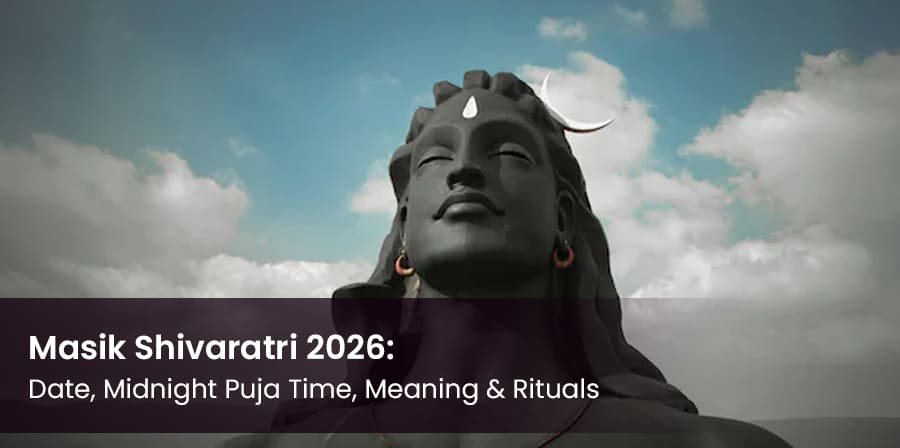
Masik Shivaratri is a monthly observance dedicated to Lord Shiva, followed by devotees who seek discipline, clarity, and inner balance. While Maha Shivaratri is widely known and celebrated once a year, Masik Shivaratri is observed every month on the same lunar phase and holds steady importance in Shaiva tradition.
Unlike daytime festivals filled with activity, Shivaratri is associated with the quiet of the night. It is meant for reflection, restraint, and prayer. Many devotees consider it a personal practice rather than a public celebration.
In January 2026, Masik Shivaratri comes soon after Sankranti and Pradosh Vrat, making it part of a spiritually significant period in the Hindu calendar.
In 2026, Masik Shivaratri will be observed on Friday, January 16.
The main worship takes place at midnight, during a period known as Nishita Kaal. This is the time traditionally considered most suitable for Shiva worship on Shivaratri.
This one-hour window is regarded as the most sacred part of Shivaratri.
Masik Shivaratri is observed every month on Krishna Paksha Chaturdashi, the fourteenth day of the waning Moon. The word Masik means monthly, and Shivaratri means the night of Shiva.
The night symbolises stillness. As daily noise reduces, the mind is believed to become more focused. This is why Shivaratri is connected with fasting, silence, and staying awake.
For many devotees, Masik Shivaratri is a reminder to pause once a month, step back from routine concerns, and reconnect with faith and self-discipline.
There is often confusion about how Masik Shivaratri is related to Maha Shivaratri.
The difference comes from two traditional ways of naming lunar months:
Despite the difference in names, both systems observe Shivaratri on the same calendar day. Only the month name changes.
In simple terms, Maha Shivaratri is the most important Masik Shivaratri of the year.
According to Hindu belief, Shivaratri is the night when Lord Shiva appeared in the form of the Shiva Linga. This form was first worshipped by Lord Vishnu and Lord Brahma, making it a moment of deep spiritual meaning.
Shivaratri is also seen as the night when Shiva and Shakti unite, representing balance between stillness and energy, awareness and action.
Because of these beliefs, worship of the Shiva Linga is central to Shivaratri observance.
Most Hindu festivals are celebrated during the day. Shivaratri is different.
Night represents:
Staying awake is believed to help control restlessness and sharpen awareness. Even if one cannot remain awake all night, being awake and praying at midnight is considered sufficient.
Midnight, or Nishita Kaal, is considered the most powerful time for Shiva worship.
In January 2026, Nishita Kaal lasts from 12:04 AM to 12:58 AM. During this time, devotees offer prayers, chant Shiva’s name, and perform simple puja.
Many people believe that prayers offered during this hour are received with greater grace, as the environment and the mind are naturally calm.
Fasting on Masik Shivaratri is simple and flexible.
Common practices include:
Some devotees fast strictly, while others eat lightly. The intention behind the fast matters more than the method.
Shiva puja can be done at home or in a temple.
A simple worship may include:
There is no need for elaborate arrangements. Lord Shiva is often called Bholenath, meaning easily pleased by sincere devotion.
Staying awake is an important part of Shivaratri. Some devotees remain awake all night, while others stay awake until midnight.
Listening to bhajans, meditating, or quietly chanting Shiva’s name is considered enough.
Masik Shivaratri is observed by people of all ages.
Traditionally:
Scriptures mention that many respected women, including Devi Parvati, Devi Lakshmi, Devi Saraswati, Devi Gayatri, Devi Savitri, Maa Sita , and Devi Rati, observed Shivaratri fasts.
Some devotees choose to observe Masik Shivaratri every month for one full year, beginning from Maha Shivaratri.
It is believed that steady observance of faith helps people overcome long-standing difficulties. There is no pressure to follow strict rules. Consistency and sincerity are valued more.
Devotees usually avoid:
The focus is on calm behaviour and mindful actions.
In modern life, where days are crowded and noisy, Masik Shivaratri offers a moment of quiet. It encourages people to slow down and look inward.
The practice of fasting, staying awake, and praying at night helps many people regain emotional balance and patience.
Masik Shivaratri is not about fear or rigid discipline. It is about awareness, restraint, and quiet faith.
Masik Shivaratri 2026, observed on Friday, January 16, is a reminder of the strength found in stillness. Whether one fasts strictly or simply offers a prayer at midnight, the heart of Shivaratri lies in sincerity.
In a world that rarely pauses, the night of Shiva invites people to rest the body, steady the mind, and return to balance.
Instant Report Based on Our Proprietary Framework, Developed by Experts