-
 Translate
- Astropatri Values
- My Account
Translate

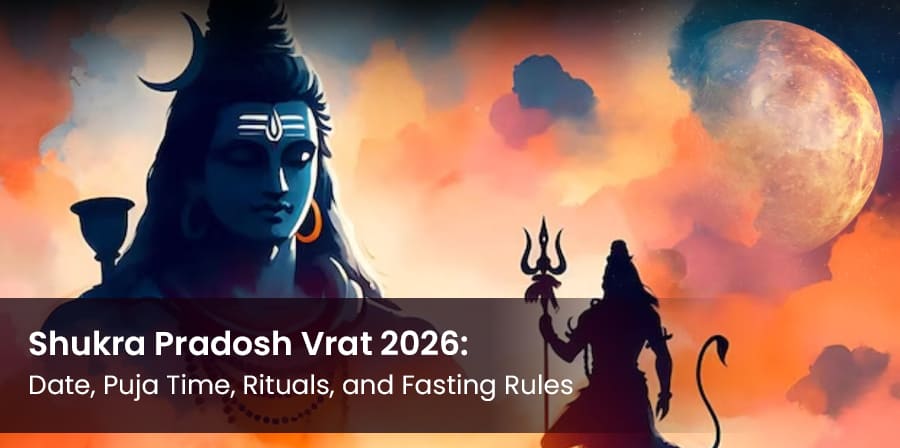
Shukra Pradosh Vrat is one of the most quietly powerful observances in the Hindu calendar. Dedicated to Lord Shiva and Goddess Parvati, this vrat is observed when Pradosh falls on a Friday, a day associated with Shukra Graha, or Venus. Because Venus governs love, beauty, comfort, and marital harmony, Shukra Pradosh Vrat is traditionally linked with happiness in relationships and emotional balance in life.
In 2026, Shukra Pradosh Vrat comes at a meaningful time in the year, just after the Sankranti period, when many families are already focused on renewal, discipline, and gratitude. For devotees, this vrat is less about grand rituals and more about inner alignment, patience, and devotion.
In 2026, Shukra Pradosh Vrat will be observed on Friday, 16 January.
Pradosh Vrat is observed on Trayodashi Tithi, but the vrat is considered valid only when Trayodashi overlaps with Pradosh Kaal, the period after sunset. In 2026, this overlap happens on Friday evening, which is why January 16 is the correct and widely accepted date for Shukra Pradosh observance.
As per the Panchang:
Since Trayodashi continues through Pradosh time on Friday evening, devotees observe the vrat on January 16.
The most important part of Shukra Pradosh Vrat is the evening Shiva puja, which must be performed during Pradosh Kaal.
This period begins shortly after sunset and is traditionally believed to be the time when Lord Shiva is most accessible to prayers. Many devotees begin the puja early within this window to ensure full observance
Pradosh Vrat is observed twice every lunar month, once during Shukla Paksha and once during Krishna Paksha. The vrat is dedicated to Lord Shiva and symbolises restraint, discipline, and the ability to rise above impulses.
The word Pradosh refers to the time just after sunset, a transitional phase between day and night. In Shaiva tradition, this period is considered spiritually sensitive and powerful.
When Pradosh falls on a Friday, it becomes Shukra Pradosh Vrat, adding the influence of Venus to the observance. This combination makes the vrat especially meaningful for matters related to love, marriage, beauty, and material comfort.
Friday is ruled by Shukra Graha, which governs:
According to traditional belief, Lord Shiva is the supreme controller of all planetary energies. Observing Shukra Pradosh Vrat with devotion is believed to reduce imbalance related to Venus and bring harmony in personal and domestic life.
This is why the vrat is often recommended for:
Spiritually, Shukra Pradosh Vrat teaches patience, emotional maturity, and restraint. It reminds devotees that love and harmony cannot be forced but must be nurtured through understanding and discipline.
Rather than focusing on external rewards, the vrat encourages inner stability. Many devotees believe that consistent observance strengthens faith and helps them respond calmly to challenges in relationships.
Shukra Pradosh is not about seeking perfection. It is about restoring balance where emotions, expectations, or attachments may have gone out of alignment.
The day usually begins with an early bath and a simple intention to observe the vrat. Devotees try to keep the day calm and avoid unnecessary conflict or emotional strain.
Some households light a lamp in the morning as a reminder of the vrat, even though the main worship takes place in the evening.
There is no single rigid rule for fasting. The approach depends on health, age, and personal capacity.
Common practices include:
Some devotees observe a strict fast without food, while others eat one simple meal before sunset. The purpose of fasting is discipline, not physical discomfort.
Evening worship is the heart of Shukra Pradosh Vrat.
A simple puja may include:
Many families prefer to keep the atmosphere quiet during this time, limiting conversation and distractions.
The traditional story associated with Shukra Pradosh Vrat tells of Dhanika’s son, whose married life was troubled due to unfavourable planetary influence related to Venus. Despite sincere efforts, harmony remained absent.
Through disciplined observance of Shukra Pradosh Vrat and devotion to Lord Shiva, his difficulties gradually eased, and peace returned to his household.
The story does not promise instant results. Instead, it emphasises patience, faith, and consistency.
Devotees are advised to avoid:
The vrat is meant to soften behaviour and encourage emotional restraint.
Traditionally, Shukra Pradosh Vrat is observed by:
That said, the vrat is open to anyone seeking calm, balance, and clarity.
In today’s fast-paced lifestyle, many devotees adapt the vrat to suit their schedules. Some perform a brief puja at home, others visit a Shiva temple in the evening. Even a few minutes of focused prayer during Pradosh time is considered meaningful.
The spirit of the vrat lies in intention, not complexity.
In a time when relationships often feel strained by expectations and pressure, Shukra Pradosh Vrat offers a pause. It encourages reflection, patience, and emotional responsibility.
Rather than promising dramatic change, the vrat gently guides devotees toward steadier, more mindful living.
Shukra Pradosh Vrat 2026, observed on Friday, 16 January, is a reminder that harmony begins within. When observed with sincerity, the vrat becomes less about ritual and more about realignment of emotions, priorities, and intentions.
In its quiet way, Shukra Pradosh continues to offer a path toward balance, understanding, and peace in relationships and in life itself.
Instant Report Based on Our Proprietary Framework, Developed by Experts