
Generate Free Online Kundli
-
 Translate
- Astropatri Values
- My Account
Translate

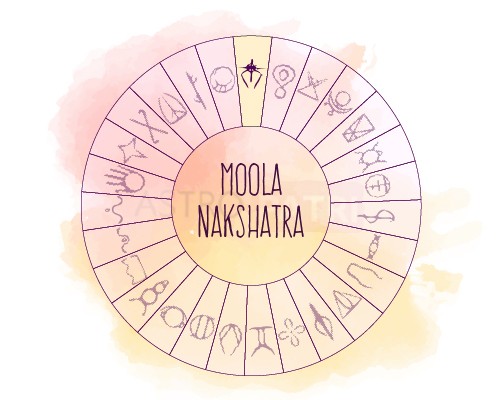
Moola, also spelled Mula, is the 19th of the 27 Nakshatras in Vedic astrology. It extends from 0°00′ to 13°20′ in Sagittarius (Dhanu Rashi) and is ruled by Ketu. Its presiding deity is Nirriti, traditionally associated with dissolution, decay and the forces that bring an established cycle to an end. The primary symbol of Moola Nakshatra is a bundle of roots tied together.
The word Moola means root, source, foundation or origin. This gives Moola Nakshatra its central quality: the urge to look beneath appearances and understand where something actually begins.
Moola Nakshatra is therefore associated with investigation, truth-seeking, philosophical inquiry, detachment and transformation. People with strong Moola influence often want to understand the reason behind an event rather than accepting its visible explanation.
In a birth chart, Moola becomes especially significant when the Moon, Ascendant, Ascendant lord or other important planets occupy it. Its results should always be understood through the complete horoscope rather than the Nakshatra alone.
 Moola Nakshatra: Quick Facts
What Is Moola Nakshatra?
Moola Nakshatra, Nirriti and the Symbolism of the Root
Mythological Significance of Moola Nakshatra
What Moola Nakshatra Symbolism Teaches
Moola Nakshatra Health
Physical Characteristics of Moola Nakshatra
Moola Nakshatra Padas
Moola Nakshatra Career and Profession
Moola Nakshatra and Money
Moola Nakshatra in Love and Marriage
Moola Nakshatra and Family
Moola Nakshatra Health Insights
Why Is Moola Nakshatra Considered Fearsome?
Moola Nakshatra and the Four Purusharthas
Moola Nakshatra Remedies
Astropatri Expert Insights on Moola Nakshatra
Final Thought
Frequently Asked Questions
Moola Nakshatra: Quick Facts
What Is Moola Nakshatra?
Moola Nakshatra, Nirriti and the Symbolism of the Root
Mythological Significance of Moola Nakshatra
What Moola Nakshatra Symbolism Teaches
Moola Nakshatra Health
Physical Characteristics of Moola Nakshatra
Moola Nakshatra Padas
Moola Nakshatra Career and Profession
Moola Nakshatra and Money
Moola Nakshatra in Love and Marriage
Moola Nakshatra and Family
Moola Nakshatra Health Insights
Why Is Moola Nakshatra Considered Fearsome?
Moola Nakshatra and the Four Purusharthas
Moola Nakshatra Remedies
Astropatri Expert Insights on Moola Nakshatra
Final Thought
Frequently Asked Questions
| Attribute | Details |
| Nakshatra Number | 19 |
| Name | Moola / Mula |
| Meaning | Root, source, foundation, origin |
| Degree Range | 0°00′ to 13°20′ Sagittarius |
| Rashi | Sagittarius / Dhanu |
| Nakshatra Lord | Ketu |
| Sign Lord | Jupiter |
| Deity | Nirriti |
| Symbol | Bundle of roots tied together |
| Gana | Rakshasa |
| Nature | Tikshna, sharp or dreadful |
| Guna | Tamas |
| Element | Air |
| Yoni / Animal Symbol | Male Dog |
| Nadi | Vata |
| Purushartha | Kama |
| Shakti | Barhana Shakti, the power to destroy or uproot |
| Padas | Aries, Taurus, Gemini and Cancer Navamsas |
| Traditional Name Syllables | Ye, Yo, Bha, Bhe |
Traditional Jyotisha places Moola Nakshatra between 0°00′ and 13°20′ Sagittarius, with Ketu as its planetary ruler, Nirriti as its presiding deity and tied roots as its central symbol.
The Sanskrit word Moola refers to the root or fundamental source of something. A root remains hidden beneath the surface, yet it supports and nourishes what can be seen.
This becomes the central symbolism of Moola Nakshatra.
Moola-born natives often want to know:
This root-seeking quality makes Moola Nakshatra relevant to research, investigation, philosophy, psychology, medicine, technology, occult studies and other subjects involving hidden or complex causes.
Moola’s position at the beginning of Sagittarius adds another layer. Sagittarius is ruled by Jupiter and is associated with knowledge, philosophy, higher learning and the search for meaning. Moola therefore brings together Ketu’s detachment and penetrating quality with Jupiter’s search for knowledge.
Ketu is traditionally associated with separation, inwardness and liberation. When this principle operates through Moola Nakshatra, the search often moves from the visible result toward the underlying cause.
This is why Moola should not be understood simply as a Nakshatra of destruction.
Its deeper question is: what remains when unnecessary layers have been removed?
Moola’s presiding deity is Nirriti, traditionally connected with dissolution, disorder, decay and the breaking down of established forms. This association gives Moola Nakshatra its intense reputation.
Yet dissolution does not automatically mean personal disaster.
Moola represents the stage where something is examined at its foundation. This could involve a belief, habit, relationship, career direction or assumption that no longer fits.
Its Barhana Shakti, traditionally described as the power to destroy or uproot, reflects this process.
This can appear constructively through:
The same quality can become difficult when it turns into unnecessary suspicion, harshness, impulsive rejection or a tendency to discard something before understanding its value.
The important lesson of Moola Nakshatra is therefore discernment.
Uprooting everything is not wisdom. Knowing what truly needs to be uprooted is.
Nirriti’s association with dissolution places Moola Nakshatra among the more intense Nakshatras. Her symbolism represents the forces that operate beyond ordinary order and the natural decline of forms that cannot continue indefinitely.
Ketu adds another dimension. In Jyotisha, Ketu is associated with separation, detachment, inward investigation and moksha. Moola’s position in Sagittarius connects these qualities with the search for knowledge and meaning.
This creates an important progression:
Nirriti dissolves → Ketu detaches → Sagittarius seeks meaning
Moola-born natives may therefore find themselves repeatedly questioning what lies beneath the surface.
Traditional interpretations associate Moola Nakshatra with people who investigate fundamental causes and pursue philosophical or spiritual questions. Its symbolism can also create an interest in subjects that require deeper examination rather than quick answers.
The mythology becomes more meaningful when viewed psychologically.
A strong Moola placement can coincide with periods when a person realises that an old belief, relationship, career direction or identity no longer fits.
The experience can feel unsettling at first. With time, however, it can lead to a clearer understanding of what genuinely matters.
This is why Moola Nakshatra is often associated with transformation through truth.
Moola-born natives are rarely satisfied with superficial answers. Their strongest quality often appears as a persistent need to understand the foundation of a subject.
Deeply Investigative
Moola Nakshatra natives often want to find causes rather than simply observe symptoms. They may continue asking questions until an explanation makes sense.
This quality can support research, investigation, science, medicine, psychology, technology and occult studies.
Independent Thinking
Ketu’s influence can make Moola natives less willing to accept established opinions without examination.
They often prefer developing their own understanding after questioning what they have been told.
Philosophical
Sagittarius gives Moola’s investigative nature a broader direction. The Moola-born native may want to understand not only how something works, but also what it means.
Resilient
Moola’s symbolism involves uprooting and rebuilding. Difficult transitions can therefore become important learning experiences for Moola natives.
Honest About Difficult Subjects
Moola-born natives may be comfortable discussing subjects others avoid. This can support work in investigation, counselling, research and advisory roles.
Harsh Communication
The desire to reach the truth can sometimes become bluntness. A Moola native may state what they believe is true without considering how their words will be received.
Restlessness
Sagittarius seeks movement while Ketu reduces attachment. Together, these influences can create dissatisfaction with repetitive situations.
Sudden Detachment
Once Moola natives decide something no longer serves them, they may withdraw quickly. The lesson is to distinguish genuine detachment from an emotional reaction.
Suspicion
The investigative instinct becomes difficult when every situation is treated as though something hidden must be wrong.
Strong Opinions
Once a Moola-born native reaches a conclusion, they may hold onto it strongly. Remaining open to new information becomes important.
Emotional Nature of Moola Nakshatra
Moola-born natives may experience emotions deeply while appearing detached on the outside.
Ketu can reduce the need to display every emotion, while Sagittarius encourages the native to step back and look at the larger picture.
As a result, Moola natives may prefer processing emotional experiences privately.
A healthier expression of Moola is emotional honesty without excessive attachment.
Spiritual Nature of Moola Nakshatra
Moola Nakshatra carries a strong spiritual theme because Ketu’s detachment combines with Sagittarius’s philosophical orientation.
Moola-born natives may develop an interest in:
The spiritual lesson is not simply to renounce everything.
It is to understand what is worth holding on to and what is no longer essential.
Traditional Jyotisha associates Moola Nakshatra with the feet and lower regions of the body, although classical references differ in their exact anatomical assignments.
Traditional descriptions may associate strong Moola placements with:
These are general astrological tendencies, not fixed physical rules.
Each Nakshatra covers 13°20′ and is divided into four padas of 3°20′ each. The four padas of Moola Nakshatra fall in Aries, Taurus, Gemini and Cancer Navamsas.
Degree: 0°00′ to 3°20′ Sagittarius
Navamsa: Aries
Pada Lord: Mars
Key Theme: Investigation and action
The first pada gives Moola Nakshatra a more forceful and action-oriented expression.
The Moola-born native may not be satisfied with identifying a problem. They want to do something about it.
This can produce courage, initiative and competitiveness. It can also create impatience when answers take too long.
Career: Research, surgery, engineering, investigation, defence, entrepreneurship and fields requiring decisive action can suit this expression.
Relationships: Independence is important. The native generally benefits from a partner who respects personal freedom and does not attempt to control every decision.
Degree: 3°20′ to 6°40′ Sagittarius
Navamsa: Taurus
Pada Lord: Venus
Key Theme: Practical application
The Taurus Navamsa gives the second pada a stronger interest in material stability and tangible results.
The investigative quality remains, but Moola-born natives may want their knowledge to produce something useful and practical.
Career: Finance, research, design, medicine, business, agriculture, food, luxury industries and specialised technical fields can attract this expression.
Relationships: Security becomes more important. The native may need emotional reliability and material stability in a relationship.
Degree: 6°40′ to 10°00′ Sagittarius
Navamsa: Gemini
Pada Lord: Mercury
Key Theme: Analysis and communication
The third pada gives Moola Nakshatra a strongly intellectual and communicative expression.
Moola-born natives with this pada may investigate through questioning, reading, writing, conversation and comparison.
Career: Journalism, research, data analysis, writing, technology, teaching, consulting, investigation and communication-based professions can be suitable.
Relationships: Communication becomes particularly important. The native needs intellectual engagement and may lose interest when conversations become repetitive or superficial.
Degree: 10°00′ to 13°20′ Sagittarius
Navamsa: Cancer
Pada Lord: Moon
Key Theme: Emotional understanding
The fourth pada brings a more sensitive dimension to Moola Nakshatra.
Moola-born natives with this pada may investigate not only facts but also emotional motives, family patterns and psychological causes.
Career: Psychology, counselling, healing traditions, research, social work, history, family studies and spiritual disciplines can appeal to this expression.
Relationships: Emotional safety becomes important. Although independence remains part of Moola’s nature, this pada often needs a strong sense of emotional belonging.
The strongest professional quality of Moola Nakshatra is the ability to look beneath the obvious.
Moola-born natives often perform well when their work involves finding causes, examining complex information or solving problems at their source.
Why Research Can Suit Moola Nakshatra
Research begins with a question.
Moola naturally asks what lies beneath an established explanation. This can make the Nakshatra suitable for scientific research, historical research, medical research, academic investigation and other fields where discovering an underlying cause matters.
Why Investigation Can Suit Moola Nakshatra
Investigation requires patience with incomplete information.
Moola’s symbolism encourages following a problem toward its source rather than stopping at the first explanation.
Possible fields include:
Why Surgery Can Suit Moola Nakshatra
Surgery involves reaching the source of a physical problem and removing or repairing what is causing it.
This does not mean every Moola-born native becomes a surgeon. The broader astrological principle is the Nakshatra’s association with reaching beneath the surface to address a root problem.
Why Astrology and Occult Research Can Suit Moola Nakshatra
Ketu and Sagittarius create a combination of detachment and philosophical inquiry.
Moola natives may therefore be attracted to subjects involving karma, consciousness, astrology, metaphysics, spiritual traditions and hidden systems.
Other Suitable Fields
Depending on the complete horoscope, Moola Nakshatra influence can support:
Career cannot be determined from Nakshatra alone. The 10th house, 10th lord, Ascendant, planetary strengths, Dashas and relevant divisional charts should also be considered.
Moola Nakshatra does not necessarily make wealth accumulation the primary goal.
The stronger themes are often freedom, knowledge and meaningful experience.
Moola-born natives may spend money on:
Sagittarius can encourage expansive spending, while Ketu can create periods of reduced attachment to possessions.
Financial Strengths
Moola natives can become financially capable when they give money a clear purpose. Their investigative nature can also help them understand complex financial matters.
Financial Challenges
Potential challenges include:
The practical lesson is simple:
Give money a structure even if your life remains flexible.
Moola Nakshatra does not automatically indicate an unsuccessful marriage.
Traditional popular astrology sometimes makes strong claims about separation or marital difficulties based only on Moola Nakshatra. Such conclusions are too broad.
Marriage should be judged through the 7th house, 7th lord, Venus, Jupiter, Navamsa, Upapada and relevant Dashas, along with the Moon and other relationship indicators.
Love Style
Moola-born natives often need honesty and personal space.
They may dislike relationships where every decision is dictated by social expectations. They generally respond better to partners who respect their independence while offering emotional reliability.
Marriage Expectations
Routine itself is not necessarily the problem for Moola natives. Meaningless routine can be.
The native may prefer a relationship where both partners continue learning, travelling, growing or exploring life together.
Relationship Challenges
Potential difficulties include:
Spiritual Lesson in Relationships
Moola teaches that emotional intimacy does not require losing independence.
A mature Moola relationship learns to combine freedom with responsibility.
The root symbolism of Moola Nakshatra makes family, ancestry and inherited patterns important themes.
Moola-born natives may question:
This does not mean every Moola native experiences difficult family circumstances.
In some birth charts, the same symbolism can produce a strong interest in genealogy, family history, cultural traditions or spiritual ancestry.
Relationship With Parents
The experience of parents depends heavily on the 4th house, 9th house, Sun, Moon, their lords and relevant planetary influences.
Moola Nakshatra alone cannot establish whether a native will receive support from parents.
Its deeper theme is often the development of an identity that is personally understood rather than blindly inherited.
Traditional Jyotisha associates Moola Nakshatra with areas including the feet and lower portions of the body. Some classical traditions provide different anatomical associations, so these should be treated as symbolic rather than diagnostic.
Traditional interpretations may discuss tendencies involving:
These are astrological traditions, not medical diagnoses.
Health cannot be predicted from Nakshatra alone. The Ascendant, 6th house, 8th house, 12th house, their lords, planetary influences, Dashas and overall chart need to be considered.
From a practical standpoint, Moola-born natives benefit from:
The fear surrounding Moola Nakshatra largely comes from its association with Nirriti, dissolution and uprooting.
Its Shakti is also traditionally connected with destruction or breaking apart.
But destruction has more than one expression.
One can be loss without understanding. Another can be the removal of something that has already become unsuitable.
Moola is better understood through the second principle.
A strong Moola period in a horoscope might coincide with questioning a career, ending an outdated relationship, changing a belief system or confronting something previously avoided.
The experience can be uncomfortable, but the constructive expression of Moola seeks greater clarity through understanding what needs to change.
The four Purusharthas are Dharma, Artha, Kama and Moksha. Traditional classifications associate Moola Nakshatra with Kama, the pursuit of desire and experience.
Dharma
Moola’s Dharma develops through questioning.
Moola-born natives may not accept a belief simply because it was inherited. They often need to discover what they personally consider meaningful and true.
Artha
Moola’s approach to Artha becomes practical when mature.
Money becomes useful when it creates freedom, knowledge and stability rather than becoming the sole measure of success.
Kama
Kama is Moola’s traditional Purushartha.
This can be expressed as a strong desire to explore life, travel, learn, experience different environments and pursue subjects that hold personal meaning.
Moksha
Moksha is where Moola’s Ketu influence becomes especially significant.
The root-seeking instinct eventually turns inward.
The question changes from:
“What is the truth about this?”
to:
“Who am I beneath all of this?”
This is where the investigative nature of Moola Nakshatra can become genuinely spiritual.
Moola Nakshatra remedies should be approached without fear.
The traditional purpose of a remedy is to cultivate balance and awareness rather than frighten a person about their birth Nakshatra.
Mantra Practice
Those following a traditional spiritual practice may use prayers or mantras associated with Ketu, Ganesha or their chosen form of the Divine, according to their spiritual tradition.
Charity
Charity can be directed toward people who genuinely need assistance. Food donations, educational support and service to vulnerable people are simple ways to express the principle of reducing suffering.
Meditation
Moola’s investigative quality benefits from periods of silence.
Meditation, breathwork and self-inquiry can help prevent the search for truth from turning into constant overthinking.
Simplifying Life
Moola’s symbolism encourages removing what is unnecessary.
Decluttering possessions, reducing unhealthy habits and stepping away from repetitive negative patterns can serve as practical expressions of the Nakshatra’s symbolism.
Spiritual Study
Reading philosophical or spiritual texts can channel Moola’s natural desire to investigate fundamental questions.
The goal should be understanding rather than collecting beliefs.
At Astropatri, our approach to Nakshatra interpretation is to read the birth star as one part of the complete horoscope rather than treating it as a standalone prediction.
A Moola-born native may begin with simple curiosity. Over time, the curiosity can become systematic. They want evidence, causes and explanations.
Career changes, belief systems, relationships or lifestyle shifts can become part of their development.
The important question is whether the change is conscious or reactive.
Moola’s symbolism often becomes clearer after a person experiences a major shift.
The experience itself is not automatically beneficial. Growth comes from understanding what the experience revealed.
Without a worthwhile subject to investigate, its energy can turn toward unnecessary questioning, suspicion or restlessness.
When directed toward research, learning or spiritual inquiry, the same intensity becomes productive.
Moon in Moola Nakshatra, Venus in Moola Nakshatra and Saturn in Moola Nakshatra will not produce identical results.
The planet occupying Moola, its house, dignity, aspects, conjunctions and current Dasha all modify its expression.
This is why a responsible Nakshatra reading should begin with the birth star and then move into the complete Kundli.
Moola Nakshatra teaches a simple but profound lesson: growth often begins when we are willing to examine our roots.
Its symbolism encourages Moola-born natives to question what no longer serves them, understand the truth beneath appearances and move forward with greater clarity.
When guided with awareness, Moola’s power to uproot can become a path toward wisdom, freedom and inner transformation.
Important Note
Nakshatra interpretations are traditional astrological frameworks. A single Nakshatra does not independently determine a person’s personality, health, career, marriage or life events. For personalised conclusions, the complete Kundli, planetary placements, Dashas, houses and divisional charts should be considered.
Moola is the 19th Nakshatra in Vedic astrology. It spans 0°00′ to 13°20′ Sagittarius, is ruled by Ketu and is associated with Nirriti and the symbolism of tied roots.
Moola means root, source, foundation or origin. Its symbolism represents reaching beneath the surface to understand the underlying cause.
The presiding deity is Nirriti, traditionally associated with dissolution and the forces that remove or break down established forms.
Ketu rules Moola Nakshatra in the Vimshottari Nakshatra system. Sagittarius, where Moola is located, is ruled by Jupiter.
Moola Nakshatra is neither inherently good nor bad. Its symbolism is intense and transformative. Its actual results depend on the planet placed in Moola, house placement, planetary strength, aspects, Dashas and the rest of the birth chart.
Research, investigation, medicine, surgery, psychology, journalism, law, data analysis, science, teaching, philosophy, astrology and specialised consulting can suit the root-seeking nature of Moola Nakshatra.
The complete horoscope should be examined before making a career judgment.
The four padas of Moola Nakshatra fall in:
Moola Nakshatra does not by itself determine whether a marriage will succeed or fail.
Marriage compatibility requires analysis of both birth charts, including the 7th house, 7th lord, Venus, Jupiter, Navamsa and relevant Dashas.
Moola combines Ketu’s detachment with Sagittarius’s search for knowledge. Its spiritual theme involves removing superficial attachments and searching for a deeper understanding of life.
The traditional naming sounds associated with Moola Nakshatra are Ye, Yo, Bha and Bhe.