
Generate Free Online Kundli
-
 Translate
- Astropatri Values
- My Account
Translate

Revati Nakshatra is the 27th and final Nakshatra in Vedic astrology, associated with prosperity, compassion, nourishment and the safe completion of life’s journeys. Ruled by Mercury and presided over by Pushan, the deity who nourishes and protects travellers, Revati represents the ability to guide others with kindness while finding meaning in personal experiences.
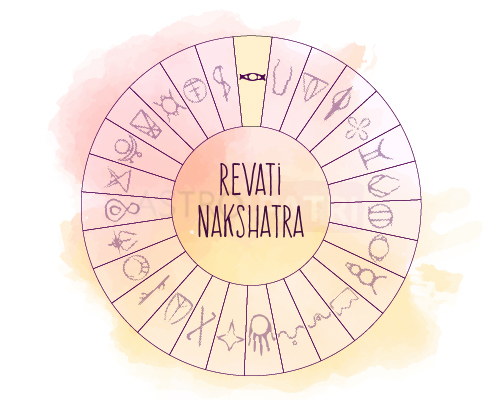
The word Revati is commonly interpreted as “wealthy,” “prosperous” or “abundant.” Its primary symbol is the fish, often represented as a pair of fish. This imagery connects the Nakshatra with movement, protection, adaptability and the ability to navigate uncertain circumstances.
People influenced by Revati are traditionally described as intuitive, imaginative, gentle and generous. They may be drawn to creative work, meaningful relationships and opportunities to help others. However, their sensitivity can sometimes make boundaries difficult to maintain, especially when they feel responsible for everyone else’s well-being.
Mercury, the Nakshatra lord, brings intelligence, communication and adaptability, while Jupiter, the ruler of Pisces, adds philosophical understanding, compassion and a search for meaning. The complete birth chart, including the Pada, planetary placements, houses and Dasha, helps refine how these traditional qualities may be interpreted.
 Revati Nakshatra: Quick Facts
What Is Revati Nakshatra?
Pushan: The Deity and Symbolism of Revati Nakshatra
Revati Nakshatra Personality Traits
Emotional Nature of Revati Nakshatra
Revati Nakshatra Padas
Revati Nakshatra Career and Profession
Revati Nakshatra and Money
Revati Nakshatra in Love and Marriage
Revati Nakshatra Compatibility
Revati Nakshatra and Family Life
Revati Nakshatra Health Insights
Is Revati Nakshatra Good or Bad?
What Is the Dark Side of Revati Nakshatra?
Moon in Revati Nakshatra
Revati Nakshatra and Vimshottari Dasha
Revati Nakshatra Remedies
Astropatri Expert Insights
Final Thought
Frequently Asked Questions
| Attribute | Details |
| Nakshatra Number | 27th of 27 |
| Meaning | Wealthy, prosperous or abundant |
| Zodiac Range | 16°40′–30°00′ Pisces |
| Nakshatra Lord | Mercury |
| Sign Lord | Jupiter |
| Presiding Deity | Pushan |
| Symbol | Fish or a pair of fish; sometimes a drum |
| Gana | Deva |
| Yoni | Elephant |
| Nadi | Antya |
| Padas | Four |
| Pada Navamsas | Sagittarius, Capricorn, Aquarius and Pisces |
| Traditional Name Sounds | De, Do, Cha and Chi |
| Vimshottari Mahadasha Lord | Mercury, with a full period of 17 years |
| Core Themes | Nourishment, protection, prosperity, compassion and completion |
Revati is associated with the final stage of the 27-Nakshatra cycle. In traditional astrology, this position symbolises completion, the integration of experience and preparation for a new beginning.
Its meaning goes beyond financial prosperity. Revati also represents the kind of abundance that comes from feeling supported, sharing knowledge, creating meaningful relationships and helping others move through uncertainty.
Mercury’s influence is associated with learning, communication, curiosity and the ability to adapt. Jupiter’s rulership of Pisces adds a philosophical dimension, encouraging reflection on values, compassion and the wider meaning of personal experiences.
This combination may be expressed through creative thinking, emotional intelligence or an interest in guiding and supporting others. Yet sensitivity can also become a challenge when someone struggles to say no or expects every situation to resolve peacefully.
The central lesson of Revati is to understand that genuine abundance includes caring for yourself as well as others. Generosity becomes more sustainable when it is accompanied by discernment and healthy boundaries.
Pushan is the presiding deity of Revati. In Vedic tradition, Pushan is associated with nourishment, the protection of travellers, the care of livestock and guidance along life’s journeys.
The deity’s role is especially meaningful when considered alongside Revati’s position as the final Nakshatra. A journey is not complete simply because someone reaches a destination; the journey also involves protection, learning and the support needed to move forward safely.
Pushan represents the act of nourishing and helping something grow. In the symbolism of Revati, nourishment can mean providing emotional support, sharing knowledge, protecting those who are vulnerable or creating circumstances in which others can develop.
This imagery also offers a practical lesson. Supporting another person does not require taking control of their life. Sometimes the most valuable help is providing guidance while allowing them to make their own choices.
Fish are the principal symbols of Revati. Their movement through water represents adaptability, continuity and the ability to navigate changing environments.
The fish also connects naturally with Pisces, the sign in which Revati lies entirely. Its symbolism suggests sensitivity to surroundings and the ability to adjust when circumstances change.
Some traditional descriptions also associate Revati with a drum. The drum can be interpreted as a symbol of rhythm, timing and the completion of a cycle.
Together, the symbols of fish and drum reinforce Revati’s association with movement, transitions and the ability to bring an experience to a meaningful conclusion.
Revati is traditionally associated with kindness, imagination, adaptability and an instinct to support others. People influenced by this Nakshatra may be attentive to emotional details that others overlook. They may notice when someone feels uncomfortable, remember small acts of kindness or try to make an unfamiliar situation easier for another person.
Compassionate: They may be sensitive to other people’s difficulties and willing to offer practical or emotional support.
Intuitive: They may pay attention to subtle changes in mood, behaviour and atmosphere.
Creative: Mercury’s influence and Pisces symbolism can be associated with imagination, writing, music, design and original thinking.
Diplomatic: They may prefer resolving disagreements through communication rather than confrontation.
Adaptable: They can adjust to changing circumstances and may find different ways to solve a problem.
Optimistic: They may retain faith in people and believe that difficult circumstances can improve.
Intellectually curious: They may enjoy learning, discussing ideas and exploring subjects that broaden their perspective.
Sensitivity can become overwhelming when someone takes every criticism personally or feels responsible for other people’s happiness. A desire to avoid conflict can also make it difficult to express disagreement or enforce boundaries.
Some individuals may struggle with indecision when several possibilities seem equally attractive. Others may retreat into daydreaming when practical responsibilities feel demanding.
Growth comes from combining kindness with discernment, imagination with consistent effort and emotional sensitivity with clear communication.
Revati is traditionally associated with a gentle and responsive emotional nature. People with this Nakshatra may value affection, thoughtful communication and relationships in which they feel understood rather than judged.
They may be particularly attentive to the emotional needs of loved ones. A reassuring conversation or a small gesture of care may matter more to them than an elaborate display of affection.
However, the same sensitivity can make disagreements difficult. Someone may avoid expressing disappointment because they do not want to hurt another person, only to find that unspoken feelings gradually become frustrating.
Emotional well-being depends on recognising that kindness does not require constant agreement. Saying no, asking for support and discussing uncomfortable issues can protect relationships rather than damage them.
Revati is divided into four Padas, or quarters, of 3°20′ each. Its Padas fall in Sagittarius, Capricorn, Aquarius and Pisces Navamsas. Each quarter adds a different emphasis to the Nakshatra’s broader symbolism.
Degrees: 16°40′–20°00′ Pisces
Navamsa: Sagittarius
Traditional name sound: De
The first Pada adds optimism, philosophical curiosity and an interest in learning. It combines Revati’s compassion with Sagittarius’s association with exploration, knowledge and broader perspectives.
People associated with this Pada may enjoy teaching, travelling, sharing ideas or helping others understand unfamiliar subjects. They may be motivated by a desire to do something meaningful.
The challenge is allowing idealism to become unrealistic. Good intentions are more effective when supported by practical planning and consistent effort.
Degrees: 20°00′–23°20′ Pisces
Navamsa: Capricorn
Traditional name sound: Do
The second Pada introduces a more disciplined and practical emphasis. Capricorn is associated with responsibility, structure and long-term goals, helping to ground Revati’s imaginative qualities.
These individuals may value dependable routines and take their commitments seriously. Work that requires patience, organisation or sustained care may appeal to them.
The challenge is taking on too many obligations. Responsibility should not become a reason to neglect personal needs or carry every burden alone.
Degrees: 23°20′–26°40′ Pisces
Navamsa: Aquarius
Traditional name sound: Cha
The third Pada emphasises independent thinking, communication and concern for the wider community. Aquarius adds a progressive dimension to Revati’s compassionate nature.
People associated with this Pada may be interested in social initiatives, technology, innovative ideas or collaborative projects. They may want their work to improve circumstances for more people than just themselves.
The challenge is balancing idealistic plans with practical realities. Change becomes more effective when ideas are matched with workable steps.
Degrees: 26°40′–30°00′ Pisces
Navamsa: Pisces
Traditional name sound: Chi
The fourth Pada reinforces Pisces themes of imagination, compassion and emotional sensitivity. It can be interpreted as an especially reflective expression of Revati’s traditional symbolism.
People associated with this Pada may be drawn to artistic expression, spiritual study or activities that offer emotional support to others.
The challenge is maintaining a clear distinction between empathy and absorbing everyone else’s worries. Compassion is sustainable when personal boundaries remain intact.
Revati is traditionally associated with careers that combine communication, creativity, guidance or service. Mercury supports the symbolism of learning and exchanging ideas, while Pushan’s association with protection and safe journeys adds a theme of helping people reach their destinations.
Potential fields include:
Writing and communication: Journalism, editing, publishing, content strategy and other roles involving language.
Teaching and education: Helping students understand information and develop skills.
Healthcare and care services: Appropriate clinical or support roles that require empathy and professional training.
Counselling and guidance: Work that involves listening, communication and supporting people through challenges, with suitable qualifications.
Creative professions: Music, art, design, film and imaginative work.
Travel and hospitality: Roles involving journeys, customer support, planning and visitor experiences.
Animal welfare and agriculture: Activities connected with animal care, farming or nurturing living environments.
Social and charitable services: Work focused on community welfare and practical assistance.
The common thread is the opportunity to use intelligence and sensitivity in a constructive way. However, a person’s best career depends on their interests, qualifications, skills and circumstances. A traditional astrological assessment would also consider the 10th house, its lord, planetary placements and current Dasha.
Revati’s association with prosperity traditionally extends beyond accumulating wealth. It also concerns how resources are used, whether people feel secure and how abundance can support others.
Some individuals may enjoy spending on education, creative interests, travel or family needs. Others may feel fulfilled when their resources allow them to contribute to a cause they care about.
The main challenge is maintaining financial boundaries. Generosity can become stressful when someone gives more than they can afford or makes decisions mainly to please others.
Budgeting, emergency savings and realistic financial goals provide a practical foundation for financial security. Revati Nakshatra does not guarantee wealth, social status or investment success. Financial decisions should be based on individual needs and reliable information.
Revati is traditionally associated with affection, gentleness and emotional connection. People influenced by this Nakshatra may value partners who listen carefully, show kindness through everyday actions and respect their sensitivity.
They may express love by remembering important details, supporting a partner during difficult moments or trying to create a peaceful home environment. Emotional understanding may matter as much as romantic attraction.
However, the desire to keep a relationship harmonious can lead to over-giving. Someone may repeatedly set aside their own needs in the hope that their partner will eventually recognise the effort.
A healthy relationship requires mutual care rather than one person constantly adjusting. Revati’s traditional symbolism encourages generosity, but it also invites discernment about where and how that generosity is offered.
Clear communication, realistic expectations and respect for individual boundaries help create a relationship in which both partners feel valued.
Traditional Vedic Kundli Matching considers factors such as Gana, Yoni, Nadi, Moon signs and other elements of both birth charts. Revati is commonly classified as Deva Gana, Elephant Yoni and Antya Nadi.
These classifications form part of the traditional Ashtakoota matching system. They do not independently establish whether a marriage will be successful or unsuitable.
A fuller assessment may consider both partners’ Moon placements, the seventh house, relevant planetary influences and Navamsa charts. Compatibility also depends on communication, values, emotional maturity and shared expectations.
There is no single Nakshatra that guarantees the best match for every Revati native. Marriage decisions should not be based on one astrological classification alone.
Revati’s symbolism of nourishment and protection can be reflected in a caring approach to family life. People influenced by the Nakshatra may want relatives to feel supported and may take an active interest in family well-being.
They may also try to reduce tension by mediating disagreements or offering practical help. These qualities can strengthen relationships when support is welcomed and responsibilities are shared.
The challenge is assuming that keeping everyone happy is a personal duty. Family harmony becomes more sustainable when individuals can express different opinions, respect boundaries and take responsibility for their own choices.
Traditional Jyotish associates Nakshatras with symbolic bodily areas. Revati is sometimes linked with the feet because of its placement in Pisces. These associations are part of astrological tradition and are not medically established predictions.
A person’s birth Nakshatra cannot diagnose an illness or determine whether a particular health condition will develop. Persistent symptoms or health concerns should be discussed with a qualified medical professional.
Consistent sleep, balanced nutrition, appropriate physical activity and access to medical care provide a more reliable foundation for everyday well-being.
Revati is neither inherently good nor bad. Its traditional symbolism highlights compassion, imagination, adaptability and the ability to support others through changing circumstances.
Its strengths may include emotional awareness, creative thinking and a willingness to help. Its challenges can include indecision, over-sensitivity, unrealistic expectations or difficulty establishing boundaries.
These tendencies are interpreted within the broader birth chart and should not be used to label someone or determine their future.
The challenging side of Revati may appear when compassion becomes self-neglect. A person may agree to responsibilities they cannot comfortably manage, avoid necessary disagreements or assume that love requires unlimited sacrifice.
Another possible challenge is escaping into daydreams rather than addressing an uncomfortable situation. Imagination can inspire original solutions, but practical problems still need attention.
The way forward is to combine kindness with discernment, creativity with consistency and empathy with self-respect.
When the Moon is placed in Revati, its symbolism becomes particularly relevant to the mind, emotions and instinctive responses in traditional Jyotish.
This placement is associated with sensitivity, imagination, adaptability and a desire for emotional understanding. A person may be attentive to other people’s needs and prefer environments where communication feels respectful.
The Pada adds another interpretive layer. The first emphasises learning and optimism, the second discipline, the third community-minded thinking and the fourth emotional sensitivity.
These are broad astrological associations. The Moon’s exact degree, house, aspects, conjunctions and condition in the complete Kundli are needed for an individual interpretation.
Mercury rules Revati, so Mercury Mahadasha is associated with the Nakshatra in the Vimshottari Dasha system. A full Mercury Mahadasha lasts 17 years.
When the birth Moon is in Revati, the remaining Mercury Mahadasha balance depends on the Moon’s exact position within the Nakshatra. The entire 17-year period may not remain from birth.
Traditional interpretations associate Mercury periods with learning, communication, trade, analytical thinking and adaptability. The actual significance of the period depends on Mercury’s placement, house ownership, strength, aspects and relationship with other planets in the complete Kundli.
Birth in Revati alone cannot predict educational success, career growth, marriage timing or financial outcomes during Mercury Mahadasha.
Traditional practices associated with Revati may focus on Mercury, the Nakshatra lord, and Pushan, its presiding deity. Practices vary across families and astrological traditions.
These practices are matters of faith and are not guaranteed methods for changing life outcomes. Gemstones and expensive rituals should not be treated as necessary purchases based on Nakshatra alone.
Revati’s deeper message lies in the relationship between nourishment and independence. Pushan represents guidance and protection, while the fish symbol suggests movement through changing circumstances.
Together, these images encourage a form of care that helps others move forward rather than making them dependent. Supporting someone may mean offering reassurance, sharing knowledge or helping them recognise their own abilities.
Revati’s position at the end of the Nakshatra cycle also gives it a symbolic connection with completion. Sometimes growth involves finishing an important chapter, learning from what has happened and preparing for a new direction.
Its most constructive expression combines kindness with discernment. When generosity is supported by boundaries and imagination is balanced with practical effort, compassion can become a lasting strength.
Revati Nakshatra represents prosperity in a broad sense: the ability to nurture relationships, share knowledge, adapt to change and help others find their way. Its association with Mercury supports learning and communication, while Pushan’s symbolism highlights protection and nourishment.
Its greatest lesson is that caring for others and caring for yourself are not competing responsibilities. Both are necessary for a meaningful and balanced life.
The complete Kundli helps explain how these themes may be interpreted in an individual’s life.
Important Note
Nakshatra interpretations belong to the traditional framework of Vedic astrology. They describe symbolic tendencies rather than guaranteed outcomes. Individual readings should consider the full birth chart, including planetary placements, houses, aspects, Navamsa and Dasha.
On Astropatri, you can create your Free Kundali using your birth details. Once your Kundali is created, your Birth Nakshatra details are available in the My Account section.
Revati is commonly interpreted as “wealthy,” “prosperous” or “abundant.” It is the 27th and final Nakshatra in Vedic astrology, associated with nourishment, protection, compassion and the completion of a journey.
Mercury, also known as Budh, rules Revati Nakshatra. Jupiter rules Pisces, the zodiac sign in which Revati lies. Traditional interpretations associate Mercury with intelligence and communication, while Jupiter adds themes of wisdom and broader understanding.
Pushan is the presiding deity of Revati. In Vedic tradition, Pushan is associated with nourishment, the protection of travellers, the care of livestock and guidance along life’s journeys. These associations contribute to Revati’s themes of compassion and safe passage.
The four Padas correspond to Sagittarius, Capricorn, Aquarius and Pisces Navamsas. Their traditional naming syllables are De, Do, Cha and Chi. Each Pada adds a different emphasis to Revati’s overall interpretation.
Instant Report Based on Our Proprietary Framework, Developed by Experts