
Generate Free Online Kundli
-
 Translate
- Astropatri Values
- My Account
Translate

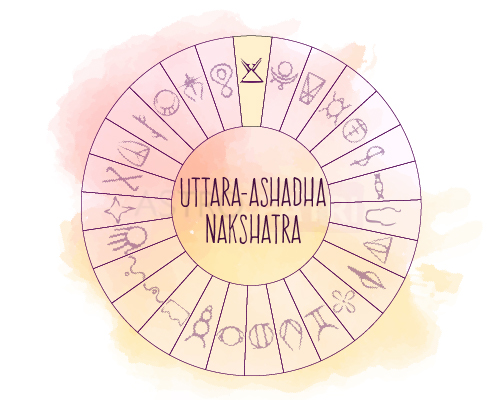
Uttara Ashadha is the 21st Nakshatra in Vedic Astrology. It spans from 26°40′ Sagittarius to 10°00′ Capricorn and is ruled by the Sun (Surya). Its presiding deities are the Vishwadevas, traditionally associated with universal values, integrity, duty and lasting success.
The name Uttara Ashadha is commonly interpreted as the “later invincible one.” The idea is not simply about defeating an opponent. It is about achieving something that continues to hold its value after the excitement of the first success has passed.
Its main symbol is the elephant tusk, which reflects strength, determination and endurance. The Nakshatra is also associated in some traditions with the planks of a bed, adding another layer of meaning: stability, support and a foundation strong enough to carry responsibility.
Uttara Ashadha is particularly interesting because it crosses two very different zodiac signs. Its first Pada lies in Sagittarius, bringing vision, principles and learning. The remaining three Padas fall in Capricorn, bringing discipline, structure and practical ambition. It is therefore a Nakshatra that can turn an idea into a long-term plan.
People strongly influenced by Uttara Ashadha may be drawn toward leadership, administration, law, education, management, public service or any path where reputation is built through consistency. At its best, this Nakshatra is less about being the most powerful person in the room and more about becoming the person others can trust with responsibility.
A Nakshatra, however, never works alone. The results depend on the planet placed in Uttara Ashadha, its house, Rashi, aspects, conjunctions, Pada, Navamsa and Dasha. The complete Kundli always gives the deeper picture.
 Uttara Ashadha Nakshatra: Quick Facts
What Is Uttara Ashadha Nakshatra?
Vishwadevas and the Symbolism of Uttara Ashadha
Uttara Ashadha Nakshatra Personality Traits
Emotional Nature of Uttara Ashadha
Uttara Ashadha Nakshatra Spiritual Significance
Uttara Ashadha Nakshatra Padas
Uttara Ashadha Nakshatra Career and Profession
Uttara Ashadha Nakshatra and Money
Uttara Ashadha Nakshatra in Love and Marriage
Uttara Ashadha Nakshatra Compatibility
Uttara Ashadha and Family Life
Uttara Ashadha Nakshatra Health Insights
Is Uttara Ashadha Nakshatra Good or Bad?
What Is the Dark Side of Uttara Ashadha?
Moon in Uttara Ashadha Nakshatra
Uttara Ashadha and Vimshottari Dasha
Uttara Ashadha Nakshatra and Spiritual Growth
Uttara Ashadha Nakshatra Remedies
Astropatri Expert Insights
Final Thought
Frequently Asked Questions
| Attribute | Details |
| Nakshatra Number | 21st of 27 |
| Meaning | Later or latter invincible one |
| Zodiac Signs | Sagittarius and Capricorn |
| Degree Range | 26°40′ Sagittarius to 10°00′ Capricorn |
| Nakshatra Lord | Sun |
| Sign Lords | Jupiter and Saturn |
| Deity | Vishwadevas |
| Symbol | Elephant tusk; bed |
| Gana | Manushya |
| Yoni | Mongoose |
| Nadi | Antya |
| Nature | Fixed (Dhruva) |
| Padas | 4 |
| Pada Navamsas | Sagittarius, Capricorn, Aquarius, Pisces |
| Traditional Name Sounds | Bhe, Bho, Ja, Ji |
Uttara Ashadha represents lasting achievement.
There is a difference between winning once and building a position that remains secure. This Nakshatra is traditionally connected with the second kind of success.
A person with strong Uttara Ashadha influence may not be satisfied with temporary recognition. They may want expertise, authority, financial stability or a career that becomes stronger with experience.
The Sagittarius side gives them a reason to aim high. The Capricorn side asks them to work patiently for the result.
This can make Uttara Ashadha people serious about commitments. They often think about consequences and may prefer decisions that make sense over the long term.
That quality can become a major advantage in fields where progress is gradual. It is also why some Uttara Ashadha natives appear to become more settled and confident as they grow older.
Their challenge is remembering that progress does not always have to be measured through achievement.
Uttara Ashadha is ruled by the Vishwadevas, a collective of universal deities. Their symbolism gives this Nakshatra a broader outlook.
The message is not simply “be strong.” It is about bringing different strengths together for a meaningful purpose.
The elephant tusk reflects firmness and the ability to continue despite obstacles. The bed symbol points toward support and stability.
This combination explains why Uttara Ashadha often feels more mature than its surroundings suggest. It may naturally think about responsibility, consequences and what will remain after a decision has been made.
The Sun adds authority and self-respect. Jupiter contributes principles and wisdom through Sagittarius. Saturn contributes discipline through Capricorn.
At the highest level, this creates a useful lesson:
Real authority is earned through character, not demanded through status.
Uttara Ashadha personalities often have a composed and purposeful quality. They may be friendly and social, but there is usually a serious side that knows what it wants to accomplish.
They can be ambitious without being impulsive. Once they choose an important goal, they may stay with it for a long time.
The Sun gives confidence and dignity. Sagittarius adds curiosity and idealism. Capricorn brings organisation and realism.
This blend can produce people who are good at turning broad ambitions into practical steps.
Uttara Ashadha is traditionally associated with determination, patience, responsibility and integrity.
These natives may take promises seriously. They often want their work to speak for itself and may be comfortable handling situations that require accountability.
Leadership can come naturally, especially when other people need direction.
They may also be good at thinking beyond the immediate moment. Instead of asking only, “What will I gain now?” they may think about reputation, security and future consequences.
Another strength is resilience. A setback can disappoint them deeply, but it may also make them more focused.
The same strengths can become difficult when taken too far.
Confidence may become pride. High standards may turn into perfectionism. Responsibility may become an inability to delegate.
Someone with strong Uttara Ashadha influence may also find it difficult to accept criticism, particularly when they feel their intentions were good.
There can be a tendency to hold on to a decision because changing course feels like admitting failure.
The healthier approach is to remain firm about values while staying flexible about methods.
Uttara Ashadha can be emotionally private.
Rather than immediately talking about what is bothering them, these individuals may first try to understand the problem and decide what to do next.
They may also express affection through reliability.
Showing up.
Keeping a promise.
Handling a difficult responsibility.
Helping someone practically when things become stressful.
These actions may communicate care more naturally than dramatic displays of emotion.
However, emotional strength should not become emotional silence.
A partner may understand responsibility as love, but they still need reassurance, affection and honest communication. Uttara Ashadha becomes more emotionally balanced when vulnerability is seen as part of strength rather than a threat to it.
Uttara Ashadha has a strong connection with dharma, integrity and responsible action.
Its deeper spiritual question is not only about success.
It asks what a person does with success.
Recognition can create responsibility. Authority can create accountability. Resources can create the opportunity to help others.
This is where the Vishwadevas become especially relevant.
The higher expression of Uttara Ashadha is not isolated achievement. It is contribution.
A person may begin with a desire to become successful. Over time, that ambition can mature into a desire to build something useful, protect what matters or create stability for others.
Each Uttara Ashadha Pada covers 3°20′. The Pada can significantly change how the Nakshatra behaves.
Degrees: 26°40′–30°00′ Sagittarius
Navamsa: Sagittarius
Pada Lord: Jupiter
Traditional sound: Bhe
The first Pada has a strong philosophical side. Knowledge, teaching, law, publishing, guidance and higher learning may attract this placement.
The person can be idealistic and may want their work to reflect a larger principle.
In relationships, shared beliefs can matter as much as attraction. The challenge is avoiding the assumption that personal convictions must become everyone else’s convictions.
Degrees: 0°00′–3°20′ Capricorn
Navamsa: Capricorn
Pada Lord: Saturn
Traditional sound: Bho
This is the most structured expression of Uttara Ashadha.
Career, stability, reputation and long-term achievement can become major priorities. The person may be patient with slow progress and comfortable working toward goals that take years.
Management, administration, finance, government and operations can suit this influence.
The challenge is bringing the same dedication to personal relationships that is often given to work.
Degrees: 3°20′–6°40′ Capricorn
Navamsa: Aquarius
Pada Lord: Saturn
Traditional sound: Ja
The third Pada adds an intellectual and collective dimension.
Technology, institutions, organisational systems, social development and reform-oriented work may appeal.
This placement can question old methods and look for ways to improve them.
Its strength lies in thinking beyond personal success. Its challenge is avoiding unnecessary resistance simply because an idea is unfamiliar.
Degrees: 6°40′–10°00′ Capricorn
Navamsa: Pisces
Pada Lord: Jupiter
Traditional sound: Ji
The fourth Pada brings more sensitivity and imagination into Uttara Ashadha.
The person can remain ambitious while becoming increasingly interested in meaning, compassion and service.
Teaching, counselling, spiritual study, creative work and social-impact roles can appeal.
In relationships, emotional understanding becomes especially important. Success feels more satisfying when it supports inner peace rather than replacing it.
Uttara Ashadha can work well in careers that reward leadership, discipline and long-term responsibility.
Possible fields include government, civil services, law, administration, management, finance, education, engineering, policy, consulting, public service and entrepreneurship.
The first Pada may be more drawn to knowledge and leadership. The Capricorn Padas often prefer systems, structure and measurable progress.
A particularly useful career quality here is patience.
Uttara Ashadha may be willing to keep working when another person has already lost interest. That makes it valuable for careers where credibility is built gradually.
Still, career success should not be judged from Nakshatra alone. The 10th house, its lord, Sun, Saturn, Jupiter and running Dasha provide much stronger context for individual career questions.
Financial security can matter greatly to Uttara Ashadha.
Capricorn encourages planning, while Sagittarius may create spending around travel, learning and experiences. The Sun can also create an appreciation for quality and status.
This means financial discipline is important.
The better expression is not simply earning more. It is knowing what deserves long-term investment and what is merely an impulse.
Budgeting, emergency savings and a clear investment strategy can support the practical side of this Nakshatra.
Astrology should complement, not replace, sound financial planning.
Uttara Ashadha usually looks for substance in a relationship.
Attraction matters, but reliability, character and shared values often matter just as much.
These natives may take time before trusting a partner completely.
They can be attracted to someone who is independent, mature, principled and dependable.
Once committed, they may show love through consistency. They remember responsibilities, stand by the relationship during difficult periods and think about the future.
They generally do best with a partner who respects their ambitions without allowing the relationship to become entirely work-oriented.
The main challenge can be excessive practicality.
A person who is used to taking responsibility may unintentionally start managing their partner’s life too.
Work can also become more important than romance, particularly during demanding phases of life.
Pride during disagreements is another area to watch.
A strong marriage needs responsibility, but it also needs warmth, playfulness, emotional honesty and the freedom to be imperfect.
In traditional Kundli Matching, Uttara Ashadha is classified as Manushya Gana, Mongoose Yoni and Antya Nadi.
These classifications are used in traditional Ashtakoota matching, but they are not enough to decide whether two people will have a successful marriage.
A complete compatibility reading should examine the seventh house, seventh lord, Venus, Jupiter, Moon, Navamsa and relevant Dashas in both charts.
So, instead of asking which Nakshatra is automatically the best match, it is more meaningful to compare the full Kundlis.
Family responsibility may become a major part of the Uttara Ashadha experience.
They can naturally become the person relatives rely on for practical decisions, planning or support during difficult periods.
That reliability is valuable.
However, support should not become control.
Family members may appreciate guidance while still wanting the freedom to make their own choices. Mature Uttara Ashadha understands that being dependable does not mean having to direct everything.
Traditional Jyotish associates Uttara Ashadha with areas such as the thighs and, through its Capricorn portion, the knees and structural parts of the body.
These are symbolic astrological associations, not medical diagnoses.
A Nakshatra cannot diagnose an illness or confirm that a particular health condition will occur. General movement, adequate rest and healthy routines are sensible practices. Persistent pain or concerning symptoms should be evaluated by a qualified healthcare professional.
Uttara Ashadha is neither inherently good nor bad.
Its traditional strengths include persistence, responsibility, integrity, leadership and the ability to work toward long-term goals.
Its difficult expression can include pride, rigidity, perfectionism and becoming overly attached to achievement.
The difference often comes down to awareness.
Confidence becomes leadership when it includes humility.
Responsibility becomes service when it does not become control.
Persistence becomes wisdom when a person also knows when to change direction.
The complete birth chart determines how these qualities manifest.
The shadow side appears when achievement becomes a measure of personal worth.
A person may feel that they always need to look capable. Asking for help may become uncomfortable. Delegating may feel risky.
There can also be a strong attachment to reputation. A mistake may feel threatening because it challenges the image of competence the person has built.
Another challenge is moral rigidity. Having strong principles is valuable, but mature judgment also requires context.
The most balanced expression of Uttara Ashadha is therefore not softer ambition.
It is flexible strength.
When the Moon is placed in Uttara Ashadha, the Nakshatra’s themes become especially relevant to the mind and emotional nature.
The person may develop a strong sense of duty and prefer to handle problems constructively.
They may take time before trusting someone deeply. Respect and emotional dignity can matter greatly.
Moon in the Sagittarius portion may appear more idealistic, philosophical and freedom-loving. Moon in the Capricorn portion can be more practical, reserved and achievement-focused.
The exact house, Pada, sign strength, aspects, conjunctions and Dasha must be considered for a personal reading.
Uttara Ashadha is ruled by the Sun. Therefore, when the birth Moon is placed in this Nakshatra, the Vimshottari Dasha sequence begins with Sun Mahadasha, subject to the balance remaining at birth.
Sun Mahadasha has a total duration of six years.
The actual balance at birth depends on the Moon’s exact position within Uttara Ashadha. This is one reason accurate birth details matter when calculating a Dasha timeline.
Uttara Ashadha’s deeper lesson is not simply how to win.
It is how to become worthy of what you have achieved.
Success creates responsibility. Authority creates accountability. Influence creates the chance to make a difference.
The Nakshatra becomes more evolved when achievement extends beyond the self.
Build something useful.
Share what you know.
Create stability.
Protect what deserves protection.
That is the difference between temporary success and lasting significance.
Traditional remedies for Uttara Ashadha often focus on the Sun, disciplined action, humility and service.
A gemstone should not be selected from the Nakshatra alone. Traditional gemstone recommendations require assessment of the complete Kundli.
Uttara Ashadha is often described simply as the Nakshatra of lasting victory.
But the more interesting question is: what makes victory last?
Not force alone.
It is credibility. Preparation. Discipline. The willingness to keep showing up after the excitement is gone.
That is why this Nakshatra can become more impressive with maturity.
A young Uttara Ashadha may want recognition. An older, more evolved expression may care more about responsibility.
The strongest version does not need to dominate every conversation.
It becomes the person people trust when something genuinely important is at stake.
Uttara Ashadha combines the vision of Sagittarius with the discipline of Capricorn. Ruled by the Sun and guided by the Vishwadevas, it represents achievement that gains meaning through responsibility.
Its lesson is not simply to become impossible to defeat.
It is to build a life, reputation or contribution that can stand strong long after the moment of victory has passed.
Important Note
Nakshatra interpretations are based on traditional Vedic Astrology principles and should not be treated as fixed predictions.
The results of Uttara Ashadha depend on the complete Kundli, including the planet occupying the Nakshatra, house placement, Rashi, aspects, conjunctions, Pada, Navamsa and Dasha.
On Astropatri, you can create your Free Kundali using your date of birth, birth time and birthplace. Once your Kundali is created, your Birth Nakshatra details are available in the My Account section.
Uttara Ashadha is the 21st Nakshatra in Vedic Astrology and is traditionally known as the “later” or “latter invincible one.” It represents lasting achievement, determination, integrity, responsibility and success that develops through sustained effort. It spans Sagittarius and Capricorn and is ruled by the Sun.
The Sun rules Uttara Ashadha Nakshatra. Its influence is traditionally associated with leadership, confidence, authority, dignity and responsibility. Jupiter and Saturn also shape its expression because Uttara Ashadha crosses Sagittarius and Capricorn.
The Vishwadevas are the presiding deities of Uttara Ashadha. They represent a collective of universal divine principles and are associated with integrity, cooperation, duty and higher values. This gives the Nakshatra a strong connection with responsibility toward a larger purpose.
Uttara Ashadha has four Padas. The first is in Sagittarius Navamsa, the second in Capricorn Navamsa, the third in Aquarius Navamsa and the fourth in Pisces Navamsa. Their traditional name sounds are Bhe, Bho, Ja and Ji. The Pada can change how the Nakshatra expresses its ambition, thinking and relationships.
Instant Report Based on Our Proprietary Framework, Developed by Experts