-
 Translate
- Astropatri Values
- My Account
Translate

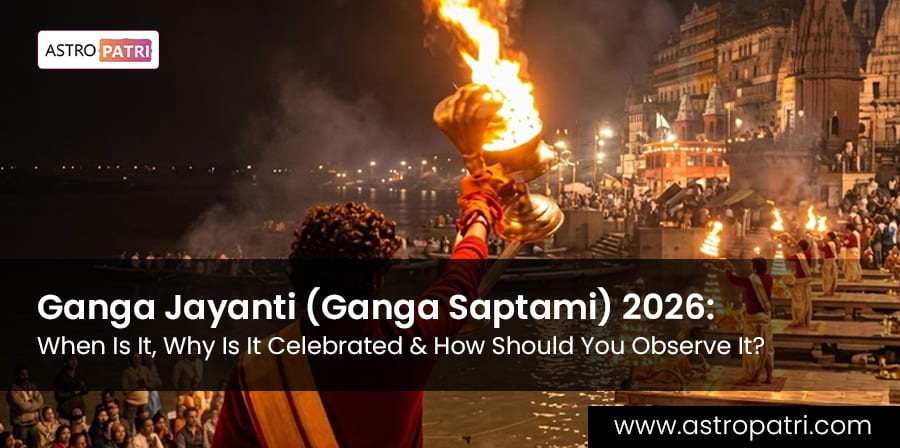
Ganga Jayanti 2026, observed on 23 April, marks the rebirth of Goddess Ganga and is considered a powerful day for inner cleansing, spiritual clarity, and karmic balance.
Ganga Jayanti, also known as Ganga Saptami, is dedicated to the divine river Ganga. Unlike Ganga Dussehra, which celebrates her descent to Earth, this day marks her reappearance after being absorbed by Sage Jahnu.
This distinction is important. Ganga Jayanti represents restoration after interruption. It reflects the idea that even when life feels blocked, clarity and movement can return.
This day is not limited to rituals. It offers a chance to pause, release emotional burden, and begin again with a clearer mindset.
Understanding the correct timing helps you observe the day with focus.
The midday muhurat is considered the most suitable period for performing puja because the mind is naturally more alert and balanced.
The story of Ganga Jayanti is not only symbolic but deeply relevant.
King Bhagiratha performed intense penance to bring Ganga to Earth. When she descended, her force was too strong. To control this, Lord Shiva held her in his matted hair and released her slowly.
Later, her flow disturbed the meditation of Sage Jahnu. In anger, he stopped the river by absorbing it completely.
For a moment, the flow of the Ganga ended.
However, through patience and prayer, she was released again. This moment is celebrated as Ganga Jayanti.
The message is clear:
This applies directly to life situations where emotions or reactions interrupt clarity.
From an astrological perspective, Ganga Jayanti is considered a karmic cleansing period.
It is believed to:
This day is also linked with balancing the effects of Mars, which governs anger and impulsive action.
By observing Ganga Jayanti with awareness, you naturally:
This is how the “astrological benefit” works in practical terms.
The rituals are simple, but intention matters more than complexity.
Take a bath early in the morning. If available, add a few drops of Ganga water. This step symbolizes a fresh beginning.
Sit calmly and avoid distractions. Light a lamp and focus your attention.
You may chant:
The purpose is not repetition but focus.
Take a few minutes to observe your thoughts. Let go of what feels heavy or unnecessary.
Helping others reflects the nature of Ganga, which gives without expectation.
Many people get confused between these two festivals. Here is a simple comparison:
| Aspect | Ganga Jayanti | Ganga Dussehra |
| Meaning | Rebirth of Ganga | Descent of Ganga |
| Tithi | Vaishakh Shukla Saptami | Jyeshtha Shukla Dashami |
| Focus | Inner purification | Removal of sins |
| Importance | Spiritual renewal | Divine arrival |
Bathing in the Ganga is considered auspicious, but it is not essential.
The deeper meaning of bathing is:
If you are not near the river, you can still observe the day fully with awareness and intention.
To maintain the calm and clarity of the day, avoid:
The focus should remain on stillness and awareness.
Ganga represents a simple but powerful way of living.
| Symbol | Meaning in Life |
| Flow | Move forward without resistance |
| Purity | Maintain clarity in thoughts |
| Balance | Control emotional reactions |
| Giving | Help others without expectation |
| Continuity | Stay consistent despite challenges |
These are not abstract ideas. They are practical ways to improve daily life.
Modern life creates constant pressure. People often feel overwhelmed, distracted, or uncertain.
Ganga Jayanti offers a pause.
It allows you to:
This is why the day continues to hold meaning even today.
Ganga Jayanti 2026 is not only a ritual date. It is a moment to return to clarity, patience, and balance. The story of Goddess Ganga reminds us that even when life feels blocked, flow can begin again with awareness and steady effort.
This day invites you to pause, reflect, and release what no longer supports you. Simple actions like prayer, silence, and mindful choices can bring a real shift in how you think and respond.
At Astropatri, the aim is to make such ancient wisdom practical and relevant for modern life. When you understand the deeper meaning behind these observances, your decisions become more aligned and purposeful.
1. What does Ganga Jayanti symbolize spiritually?
Ganga Jayanti symbolizes renewal and the return of flow after interruption. It reflects the idea of letting go of past burdens and starting again with clarity, both mentally and emotionally.
2. Why is Ganga called Jahnavi on Ganga Saptami?
Goddess Ganga is called Jahnavi because Sage Jahnu released her from his ear after stopping her flow. This event represents her rebirth, which is why the day is also known as Jahnu Saptami.
3. Which planetary effects can be balanced on Ganga Jayanti?
Ganga Jayanti is believed to help balance emotional instability and reduce the negative influence of Mars, especially related to anger, impulsiveness, and conflicts in daily life.
4. Can Ganga Jayanti be observed without visiting a river?
Yes, the day can be observed at home. The essence lies in intention, reflection, and simple practices like prayer, silence, and mindful actions, rather than physical location.
5. What mindset should be maintained on Ganga Jayanti?
A calm and reflective mindset is important. The day is ideal for introspection, reducing mental noise, and avoiding unnecessary reactions or emotional decisions.
6. What makes Ganga Jayanti relevant in modern life?
In today’s fast-paced life, Ganga Jayanti offers a chance to pause and reset. It helps in clearing mental clutter, improving focus, and reconnecting with a more balanced and grounded state of mind.





Instant Report Based on Our Proprietary Framework, Developed by Experts