
 Pitru Dosha (Ancestral Neglect)
Generate Free Online Kundli
-
 Translate
- Astropatri Values
- My Account
Translate

In Indian culture, ancestors (Pitrs) hold a place of utmost reverence. Scriptures describe them as divine, akin to the gods. The truth is, everything we are today is due to our ancestors. Their blessings bring protection, prosperity, and peace.
However, it has been believed through time immemorial that when the Pitra Gan are displeased, their grace turns into karmic challenges, manifesting as delays, disruptions, and sorrow.
This displeasure appears in three distinct forms — Pitru Dosha, Pitru Shaap, and Pitru Kopa. While often used interchangeably, these are unique experiences. Let us understand each clearly. However, we must understand that this article should only be used for academic interest and people in general need not feel unnecessarily scared if they have not done anything wrong intentionally with their elders.
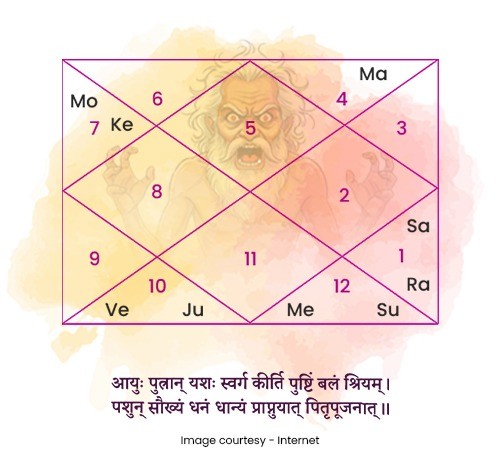
This arises when one fails to perform even the basic duties towards their ancestors. Rituals like Shraddha, Tarpan, Pind Daan, and regular remembrance are considered sacred responsibilities. Ignoring these, either due to forgetfulness or modern distractions, may lead to Pitru Dosha.
Signs:
Repeated obstacles or disruptions in important tasks
Challenges related to marriage or childbirth
Lack of harmony within the family
Internal restlessness or feelings of despair
Remedies:
Perform Shraddha and Tarpan with devotion: Done sincerely, these calm the Dosha and invoke ancestral blessings. Often, ancestors are merely hurt by neglect — heartfelt remembrance brings peace.
Donate to cows, Brahmins, and the needy: Offering food, clothes, and essentials — especially during Pitru Paksha — helps fulfill ancestral needs.
Charity and service in their name: Helping the poor, serving in temples or cowsheds (Gaushalas) is considered a noble tribute and helps calm any inherited discontent.
Pitru Shaap is more intense than Dosha — it represents unresolved pain carried by an ancestor due to injustice, humiliation, or suffering. If such a soul curses its lineage, the effects can persist across generations.
Signs:
Repeated misfortune or failure in the family
Blocked lineage or absence of progeny
Sudden illness, accidents, or untimely death
Ongoing conflicts and breakdowns within the household
Remedies:
Special ancestral peace rituals: Under the guidance of a learned Acharya, specific Yagyas and ceremonies can pacify troubled ancestral souls.
Charity during Pitru Paksha: Donating food, clothing, or money — particularly to orphans or cowsheds — can soothe such deep-rooted energy.
Pind Daan at sacred places: Performing these rites at Gaya, Varanasi, or Prayagraj helps liberate the soul and reduce the curse’s intensity.
This is the gravest form of ancestral displeasure. Here, the ancestors no longer offer protection — they actively withdraw blessings and may cause suffering. This occurs when a person or their lineage commits an unforgivable act.
Examples:
Violence or murder of one’s parents
Public humiliation or disrespect of aged parents
Neglecting elders in their time of need
Abandoning them or leaving them alone in shameful conditions
Remedies:
Heartfelt repentance: One must deeply and sincerely ask for forgiveness during Shraddha, Tarpan, or meditation. When remorse is genuine, ancestors may begin to forgive.
Inner transformation: True service and care for parents and elders must become part of daily life — not just ritual.
Atonement and guided rituals: Under a wise Acharya, specific Pitr Shanti Yagyas and collective prayers help initiate healing.
Positive karmic action: Serving elders, helping the helpless, and engaging in honorable deeds gradually calms the ancestral anger.
Pitru Puja plays a vital role in Indian tradition — it brings peace to departed souls and invites well-being for the family. The following rituals are practiced to resolve ancestral disturbances:
1. Narayan Bali Puja
Purpose: For ancestors who passed away suddenly or unnaturally.
Significance: Offers peace to those whose final rites were incomplete or improper.
Process: Conducted with sacred chants and symbolic offerings under expert guidance, leading the soul toward liberation.
2. Shodash Pindi Puja
Purpose: Performed for ancestors from up to sixteen generations.
Significance: Brings peace to ancestral souls and blessings for family growth.
Process: Sixteen symbolic rice balls (pindas) are offered, each representing one ancestor.
3. Tripindi Shraddha
Purpose: For ancestors of the last three generations.
Significance: Brings health, happiness, and spiritual freshness to the living family.
Process: Three pindas are offered with devotion and sacred recitation.
4. Navapindi Shraddha
Purpose: For up to nine ancestral generations.
Significance: Particularly effective in clearing deep ancestral karma.
Process: Nine pindas are offered with individual dedications during Tarpan.
5. Special Pitru Shanti Yagya
Purpose: For intense Pitru Dosha or Shaap causing repeated family distress.
Significance: Deeply purifies ancestral lineage and brings profound changes.
Process: Includes mantras, fire offerings, and repentance rituals with full family participation.
6. Pind Daan at Sacred Rivers and Pilgrimage Sites
Purpose: For spiritual peace and moksha (liberation) of ancestors.
Significance: Performing Pind Daan at Gaya, Prayagraj, or Haridwar ensures immediate soul satisfaction and blessings.
Process: Ritual offerings made on riverbanks or shrines, with mantras and water libations. Phalgu River holds special importance — it is where Mata Sita herself offered Pind Daan.