 What Karwa Chauth Represents
Generate Free Online Kundli
-
 Translate
- Astropatri Values
- My Account
Translate

Karwa Chauth is a traditional Hindu fast observed with quiet discipline and emotional depth. It is usually kept by married women who pray for the long life and well-being of their husbands. The fast begins before sunrise and continues until the moon is sighted at night.
Over the years, Karwa Chauth has moved beyond ritual alone. It now reflects a deeper sense of connection, where patience, care, and shared responsibility take center stage. While its roots remain strong in North India, the observance is now followed across different regions and communities.
Many people look for clear guidance on Karwa Chauth puja vidhi, vrat katha, and moon rituals to follow the fast properly. Understanding each step helps in observing the vrat with clarity rather than confusion.
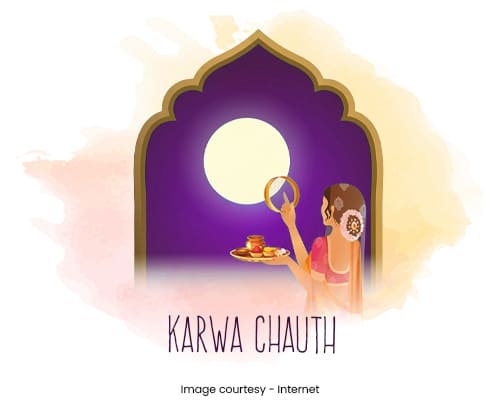
Karwa Chauth falls on the fourth day of Krishna Paksha in the Kartik month. The word “Karwa” refers to a clay pot used during the ritual, and “Chauth” means the fourth lunar day.
The purpose of the fast is simple but meaningful:
In earlier times, the festival also created a sense of community among women. They gathered, shared stories, and supported one another through the fast. Even today, that sense of togetherness remains, though the setting may have changed.
At a broader level, Karwa Chauth now reflects emotional strength and mutual respect within relationships.
The structure of Karwa Chauth remains steady, even if small customs vary across regions.
The day begins before sunrise with Sargi. This meal is usually prepared by the mother-in-law and includes fruits, dry fruits, sweets, and light food. It provides energy for the long day ahead.
After Sargi, the fast begins. From this point onward, no food or water is consumed.
The day is generally calm. Women avoid heavy work and spend time preparing for the evening rituals. Mehndi is applied, traditional attire is chosen, and the puja thali is arranged carefully.
After sunset, the Karwa Chauth puja is performed. Women gather, light a diya, offer prayers, and listen to the vrat katha. This part of the day carries both ritual and reflection.
The fast ends only after sighting the moon. Women step outside, look at the moon through a sieve, offer water, and then look at their husbands before breaking the fast.
This final moment is often the most awaited part of the day.
Moon sighting marks the completion of the fast. It is not just a ritual step but a moment of closure after a full day of restraint.
The moon is associated with calmness and balance. Watching it after fasting creates a sense of relief and emotional completion.
The ritual usually follows a fixed order:
This sequence reflects a transition from discipline to fulfillment.
Karwa Chauth puja is dedicated mainly to Goddess Parvati, who represents devotion and strength in marriage.
Along with her, the following deities are worshipped:
Together, they symbolize balance, protection, and continuity within family life.
Following the puja vidhi helps maintain the structure of the fast.
Step 1: Sankalp in the Morning
Take a clear intention to observe the fast.
Step 2: Prepare the Puja Thali
Include diya, sweets, roli, rice, water pot, and sieve.
Step 3: Set Up the Puja Space
Place an image or idol of Goddess Parvati and arrange the items neatly.
Step 4: Perform Evening Puja
Light the diya, offer flowers, and recite prayers.
Step 5: Listen to Vrat Katha
Hearing the story is an essential part of the ritual.
Step 6: Offer Karwa and Dakshina
This step reflects sharing and gratitude.
Step 7: Perform Moon Ritual
Offer water to the moon and complete the puja.
Step 8: Break the Fast
Drink water and eat after the rituals are complete.
The process remains simple. Consistency matters more than complexity.
The vrat katha explains why the fast is observed with discipline.
Veeravati was the only sister among seven brothers. After her marriage, she kept her first Karwa Chauth fast. As the day went on, she grew weak due to hunger.
Her brothers could not see her condition. They created a false image of the moon using a lamp behind a sieve. Believing it to be real, she broke her fast early.
Soon after, she received the news of her husband’s death. In grief, she turned to prayer and understood her mistake.
She observed the fast again with full sincerity and patience. Over time, her husband was restored to life.
The story highlights one clear idea. The fast should be followed with care and honesty.
Traditionally, Karwa Chauth is observed by married women. However, the practice has evolved.
The structure of the fast remains the same, but the intention now reflects personal choice as well.
Observing the fast with balance helps maintain both health and focus.
Karwa Chauth is about steadiness. It is not meant to push the body beyond its limits.
Beyond rituals, Karwa Chauth is a practice of self-control and awareness.
Fasting slows down daily activity. It creates space to pause and reflect. The wait for moonrise builds patience and discipline.
There is also a quiet emotional layer. The fast is observed without display, yet it holds meaning for the person keeping it.
Over time, the festival has come to represent effort in relationships. It reminds people that consistency and care are what sustain a bond.
Karwa Chauth continues to hold its place as a meaningful observance built on patience, devotion, and emotional connection.
Each part of the day carries its own role, from early preparation to the final sight of the moon. While customs may shift slightly over time, the core idea remains steady.
The value of Karwa Chauth lies in how it is observed. A calm, sincere approach often carries more weight than outward form.
Karwa Chauth is a one-day fast observed for the long life and well-being of the husband and for maintaining harmony in marriage.
It includes Sankalp, evening puja, listening to vrat katha, moon sighting, and breaking the fast.
It is the story of Veeravati, which explains the importance of observing the fast with sincerity.
No. It is a Nirjala fast without food or water.
Married women traditionally observe it, but unmarried women and even men may also participate.
Moon sighting marks the completion of the fast and is considered the final ritual step.
No. It is a voluntary fast based on personal belief and tradition.
Practices vary by belief. Some women choose to observe mentally, while others may skip rituals.
The festival reflects patience, emotional strength, and commitment in relationships.
Instant Report Based on Our Proprietary Framework, Developed by Experts