 What is Vrat in Hinduism
Generate Free Online Kundli
-
 Translate
- Astropatri Values
- My Account
Translate

Vrat is one of the most quietly powerful practices in Hindu tradition. At first glance, it may appear to be only about fasting, but its true purpose goes beyond food. It is a way of bringing awareness, restraint, and intention into everyday life.
In many homes, vrat is not treated as an occasional ritual. It is part of a rhythm that repeats through the month and the year. Certain days are set aside for reflection, prayer, and discipline. Over time, this rhythm creates a sense of order and calm, even in a busy life.
This page is meant to give a clear understanding of vrat, why it is observed, and how it connects with the lunar calendar and personal discipline.
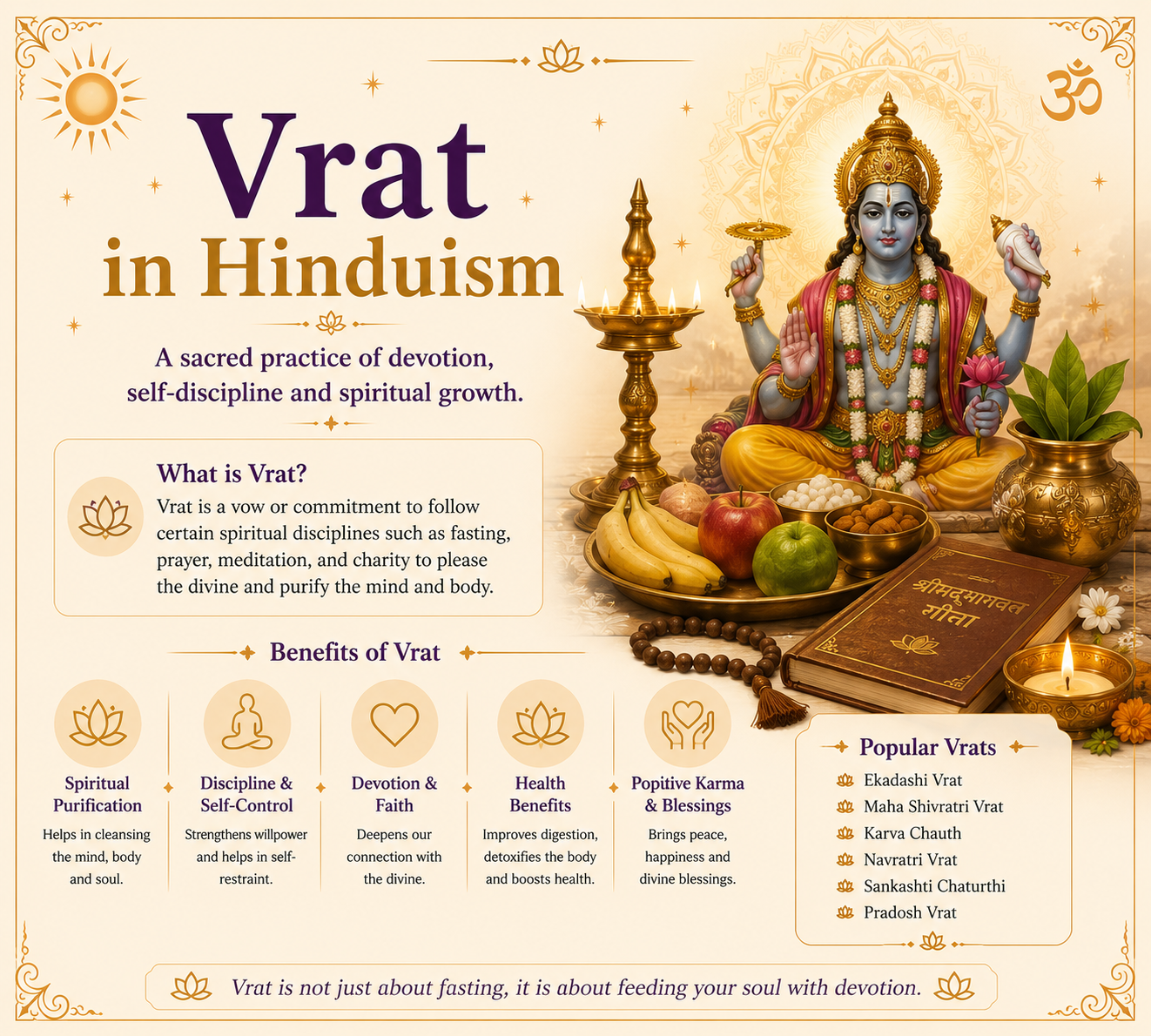
In Hinduism, vrat means taking a vow with sincerity and purpose. It is a conscious decision to follow certain rules for a fixed period, usually for a day.
Fasting is one part of it, but not the whole. A vrat may include:
The focus is not on hardship but on awareness. By limiting external habits, a person becomes more aware of inner thoughts and actions.
Different vrats have different methods. Some are strict, where even water is avoided. Others are flexible and allow light meals. What remains common is the intention behind the practice.
The reasons for observing vrat vary from person to person, but they often fall into a few clear areas.
Many people observe vrats as an act of devotion. Each vrat is usually connected to a deity, and the practice becomes a way to express faith and seek blessings.
Some observe vrats for specific wishes. It may be for good health, peace in the family, success in work, or stability in relationships. For example, certain vrats are traditionally linked with marital harmony or the removal of obstacles.
There is also a practical side. Fasting gives the body a break from regular eating patterns. It can bring a sense of lightness and clarity. At the same time, following rules for a day builds self-control.
In modern life, where distractions are constant, vrat offers a pause. It allows a person to step back, slow down, and return to a more balanced state of mind.
One of the most important aspects of vrat is its connection with tithi, or the lunar day.
The Hindu calendar does not follow fixed dates like the solar calendar. Instead, it is based on the movement of the moon. Each phase of the moon creates a different tithi, and each tithi carries its own significance.
Many vrats are tied directly to these lunar days:
Because tithis change every month, vrat dates also shift. This keeps the practice connected to natural cycles rather than fixed calendar dates.
Over time, following vrats according to tithi creates discipline. A person becomes aware of time in a different way, not just through days and dates, but through phases and patterns.
This regular observance builds patience. It trains the mind to follow a routine without force.
Sankashti Chaturthi – 26 Dec
Tithi-Based (Lunar System)
Most vrats are based on the position of the moon. Each lunar day, or tithi, determines the vrat timing.
Weekday-Based Vrats
Some vrats are linked to specific weekdays:
Regional Panchang Differences
Slight variations in sunrise and moonrise timings can shift vrat dates across regions.
Vrat is a gradual practice that builds patience and awareness over time. It connects daily life with spiritual rhythm without demanding complexity.
When understood properly, vrat is not about restriction alone. It is about creating space for clarity, intention, and balance.
It does not demand perfection. It asks for consistency. Even a simple vrat, followed with sincerity, can bring a noticeable shift in how one thinks, acts, and experiences daily life.
Instant Report Based on Our Proprietary Framework, Developed by Experts