 Pradosh Vrat Dates 2026 (Complete List)
Generate Free Online Kundli
-
 Translate
- Astropatri Values
- My Account
Translate

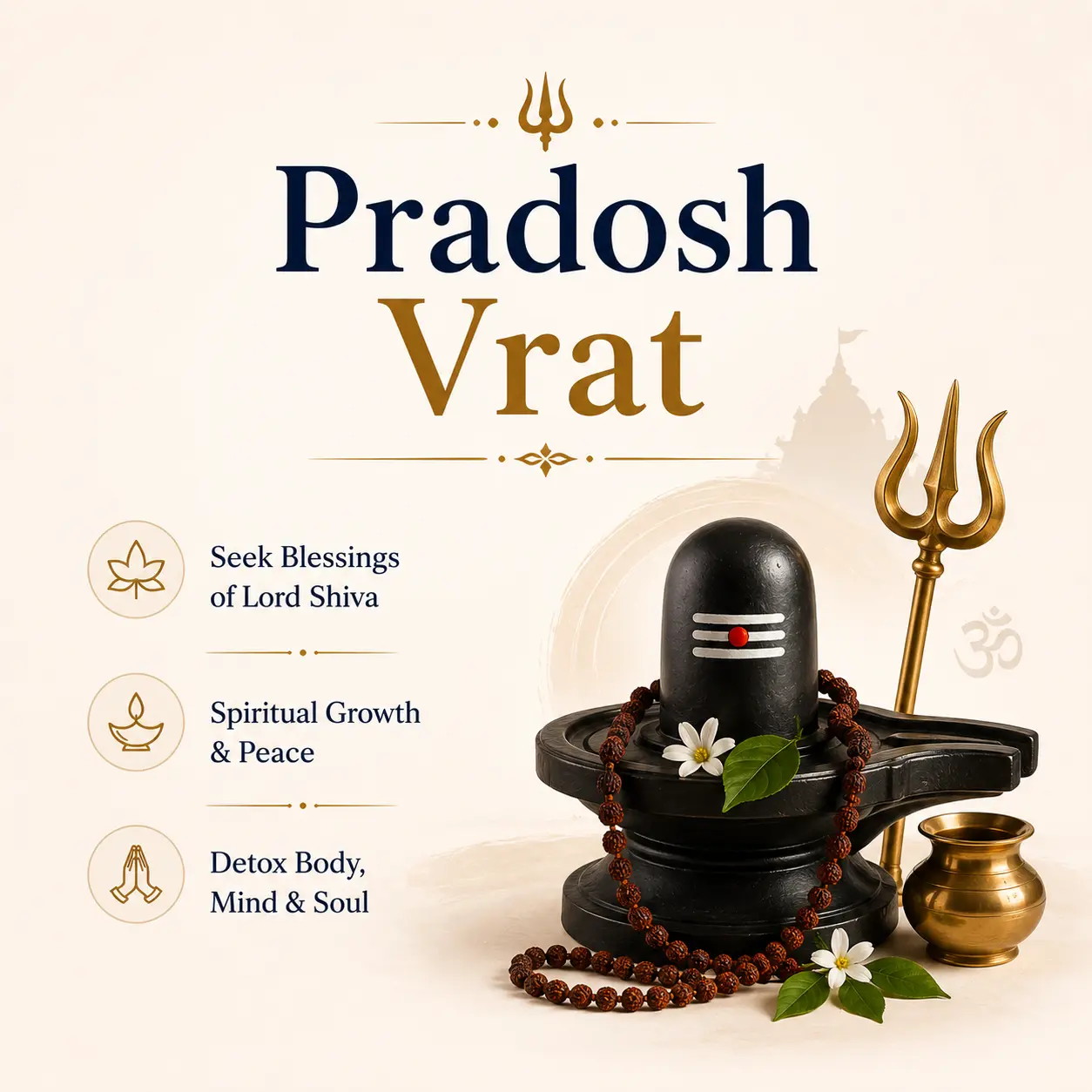
Pradosh Vrat, also known as Pradosham, is an important fasting observance dedicated to Lord Shiva. It is observed on Trayodashi Tithi, which occurs twice every month during both Krishna Paksha and Shukla Paksha.
The vrat is performed during the evening period known as Pradosh Kaal, which begins shortly after sunset. This time is considered suitable for Shiva Puja and disciplined observance.
Pradosh Vrat is followed for structured spiritual practice, controlled routine, and consistency in devotion. It is widely observed across India, with some regional variations in naming and method.
The following table lists all Pradosh Vrat dates in 2026 along with the day type.
| Month | Pradosh Vrat | Date | Day |
| January | Guru Pradosh | 1 January 2026 | Thursday |
| January | Shukra Pradosh | 16 January 2026 | Friday |
| January | Shukra Pradosh | 30 January 2026 | Friday |
| February | Shani Pradosh | 14 February 2026 | Saturday |
| March | Ravi Pradosh | 1 March 2026 | Sunday |
| March | Soma Pradosh | 16 March 2026 | Monday |
| March | Soma Pradosh | 30 March 2026 | Monday |
| April | Budha Pradosh | 15 April 2026 | Wednesday |
| April | Bhauma Pradosh | 28 April 2026 | Tuesday |
| May | Guru Pradosh | 14 May 2026 | Thursday |
| May | Guru Pradosh | 28 May 2026 | Thursday |
| June | Shukra Pradosh | 12 June 2026 | Friday |
| June | Shani Pradosh | 27 June 2026 | Saturday |
| July | Ravi Pradosh | 12 July 2026 | Sunday |
| July | Ravi Pradosh | 26 July 2026 | Sunday |
| August | Soma Pradosh | 10 August 2026 | Monday |
| August | Bhauma Pradosh | 25 August 2026 | Tuesday |
| September | Bhauma Pradosh | 8 September 2026 | Tuesday |
| September | Guru Pradosh | 24 September 2026 | Thursday |
| October | Guru Pradosh | 8 October 2026 | Thursday |
| October | Shukra Pradosh | 23 October 2026 | Friday |
| November | Shukra Pradosh | 6 November 2026 | Friday |
| November | Ravi Pradosh | 22 November 2026 | Sunday |
| December | Ravi Pradosh | 6 December 2026 | Sunday |
| December | Soma Pradosh | 21 December 2026 | Monday |
All timings are based on local Panchang calculations for India.
Pradosh Kaal is the evening period just after sunset when Trayodashi Tithi is active. This time window is considered appropriate for performing the Shiva Puja.
The vrat is not observed throughout the entire day in the same way as Ekadashi. The key focus is on this specific evening duration.
Typical duration of Pradosh Kaal ranges between 2 to 3 hours after sunset, depending on the date and location.
The alignment of Trayodashi Tithi with this time period determines the correct day for fasting and Pooja.
Pradosh Vrat is classified based on the weekday on which it falls. Each type is associated with a slightly different significance.
Among these, Soma Pradosh and Shani Pradosh are widely observed.
Pradosh Vrat follows a simple structure focused on discipline and evening worship.
The method can vary, but the focus remains on the evening Pooja.
Pradosh Puja is centered around Lord Shiva and follows a structured approach.
Common practices include:
The puja is usually performed at home or in a temple during Pradosh Kaal.
Food discipline is flexible compared to Ekadashi but still important.
Many devotees prefer light eating or fasting until the evening puja.
Pradosh Vrat Katha is associated with Lord Shiva and is often recited during the Pooja.
The katha explains the importance of observing Trayodashi during Pradosh Kaal and highlights the role of discipline and regular practice.
The stories typically focus on:
Listening to or reading the katha is considered part of the ritual.
Each Pradosh Vrat is associated with a specific katha based on the weekday on which Trayodashi Tithi falls. These kathas explain the importance of the vrat and highlight how disciplined observance is linked with the resolution of difficulties and improvement in life conditions.
Below is a structured overview of the main Pradosh Vrat Kathas:
When Trayodashi falls on a Sunday, it is observed as Ravi Pradosh. The associated katha describes the transformation of a poor Brahmin whose financial condition improves after regular observance of this vrat. The narrative focuses on discipline, consistency, and the gradual improvement of circumstances through structured worship.
Soma Pradosh occurs when Trayodashi coincides with Monday. The katha explains how a widow Brahmini and her son overcome prolonged hardship through regular fasting and devotion. The story highlights stability, patience, and relief from ongoing difficulties through continued observance.
Bhauma or Mangal Pradosh is observed when Trayodashi falls on Tuesday. The traditional katha describes how Lord Hanuman tests the devotion of an elderly woman. The story focuses on sincerity in practice and the importance of unwavering discipline in religious observance.
Budha Pradosh occurs on Wednesday. The katha is centered on a situation where actions taken at an unsuitable time lead to complications, which are later resolved through Lord Shiva’s grace. The narrative emphasizes timing, awareness, and corrective discipline.
When Trayodashi falls on Thursday, it is known as Guru Pradosh. According to the katha, the Devas, guided by Devaguru Brihaspati, observe this vrat to overcome the demon Vritrasura. The story highlights structured effort, guidance, and collective discipline.
Shukra Pradosh is observed when Trayodashi coincides with Friday. The katha narrates the incident of a wealthy man’s son whose life is endangered due to the improper timing of marriage rituals. His life is later saved due to the merit gained from observing the vrat. The story focuses on timing, discipline, and corrective practices.
Shani Pradosh occurs on Saturday and is considered significant. The katha describes how Prince Dharmagupta regains his lost kingdom, status, and position through the observance of this vrat. It also includes his marriage to Anshumati, a Gandharva kanya. The narrative highlights restoration, effort, and long-term results of consistent practice.
These kathas are traditionally read or listened to during Pradosh Vrat, especially during the evening puja. While the stories differ, the central theme remains consistent:
The purpose of these kathas is to reinforce structured practice rather than provide instant outcomes.
Pradosh fasting depends on sunset timing, which varies by location.
Because of this:
This is why Panchang-based calculations are important for accurate observance.
In some cases, Ekadashi and Pradosh occur on consecutive days.
In such situations:
This practice is commonly followed and accepted.
Pradosh Vrat is observed for maintaining discipline and a structured routine.
Regular observance may support:
The vrat combines fasting, prayer, and timing-based discipline.
Some common issues during Pradosh Vrat include:
Following the correct time window is essential for proper observance.
Pradosh Vrat is a time-based fasting and puja practice dedicated to Lord Shiva. It is observed twice a month and focuses on the evening period after sunset.
The vrat is flexible in terms of fasting method but strict in terms of timing. The key aspect is performing Shiva Puja during Pradosh Kaal.
Consistency and correct timing are considered more important than strict fasting.
Pradosh Vrat is a fasting and puja observed on Trayodashi Tithi during the evening Pradosh Kaal, dedicated to Lord Shiva.
Pradosh Kaal begins after sunset and lasts for around 2 to 3 hours. Exact timing varies by date and location.
Yes. Some follow partial fasting or light meals, while others observe full fasting.
Soma Pradosh (Monday) and Shani Pradosh (Saturday) are widely observed.
No. It is optional and can be followed based on belief and capacity.
Instant Report Based on Our Proprietary Framework, Developed by Experts