
Generate Free Online Kundli
-
 Translate
- Astropatri Values
- My Account
Translate

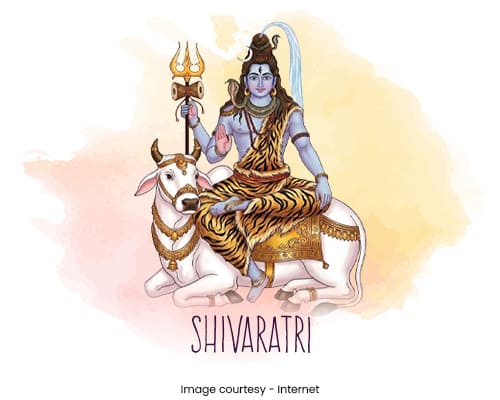
Shivaratri is a recurring observance dedicated to Lord Shiva, followed through fasting, night worship, and structured rituals. It occurs every month as Masik Shivaratri and once a year as Maha Shivaratri, which is considered the most important among all Shivaratri observances.
The vrat is observed on Krishna Paksha Chaturdashi Tithi, with the main ritual performed during the midnight period known as Nishita Kaal. This timing is central to Shivaratri and is calculated using Panchang-based methods.
Shivaratri is followed by individuals who maintain a consistent fasting and puja routine aligned with lunar cycles. It is a time-based observance where correct timing is more important than the intensity of fasting.
 Masik Shivaratri 2026: Dates with Nishita Kaal Timings
What Is Shivaratri and How It Is Observed
Maha Shivaratri 2026: Date and Observance
Difference Between Masik Shivaratri and Maha Shivaratri
Importance of Nishita Kaal
Shivaratri Vrat Rules and Step-by-Step Method
Shivaratri Puja Samagri List
What to Eat During Shivaratri Fast
Who Can Observe Shivaratri Vrat
Special Shivaratri Days in 2026
Common Mistakes to Avoid During Shivaratri
Benefits of Observing Shivaratri Vrat
Practical Tips for First-Time Observers
Conclusion
Masik Shivaratri 2026: Dates with Nishita Kaal Timings
What Is Shivaratri and How It Is Observed
Maha Shivaratri 2026: Date and Observance
Difference Between Masik Shivaratri and Maha Shivaratri
Importance of Nishita Kaal
Shivaratri Vrat Rules and Step-by-Step Method
Shivaratri Puja Samagri List
What to Eat During Shivaratri Fast
Who Can Observe Shivaratri Vrat
Special Shivaratri Days in 2026
Common Mistakes to Avoid During Shivaratri
Benefits of Observing Shivaratri Vrat
Practical Tips for First-Time Observers
Conclusion
Below is the complete list of Masik Shivaratri dates for 2026, including midnight puja timings:
| Month | Date | Nishita Kaal Timing |
| January | 16 January 2026 | 12:04 AM – 12:58 AM (Jan 17) |
| February (Maha Shivaratri) | 15 February 2026 | 12:09 AM – 01:01 AM (Feb 16) |
| March | 17 March 2026 | 12:05 AM – 12:53 AM (Mar 18) |
| April | 15 April 2026 | 11:59 PM – 12:43 AM (Apr 16) |
| May | 15 May 2026 | 11:57 PM – 12:38 AM (May 16) |
| June (Adhika) | 13 June 2026 | 12:01 AM – 12:41 AM (Jun 14) |
| July | 12 July 2026 | 12:07 AM – 12:47 AM (Jul 13) |
| August (Sawan Shivaratri) | 11 August 2026 | 12:05 AM – 12:48 AM (Aug 12) |
| September | 9 September 2026 | 11:55 PM – 12:41 AM (Sep 10) |
| October | 8 October 2026 | 11:44 PM – 12:33 AM (Oct 09) |
| November | 7 November 2026 | 11:39 PM – 12:31 AM (Nov 08) |
| December | 7 December 2026 | 11:46 PM – 12:40 AM (Dec 08) |
All timings follow standard Panchang calculations used in India.
Shivaratri is observed on the Chaturdashi Tithi of Krishna Paksha each month. It includes fasting, evening preparation, and midnight worship of Lord Shiva.
The observance is structured into three main phases:
Masik Shivaratri provides a regular monthly cycle, while Maha Shivaratri is observed as the primary annual event.
Maha Shivaratri 2026 was observed on 15 February 2026 (Sunday).
This is the most significant Shivaratri of the year. The observance includes extended fasting, multiple rounds of Shiva Puja, and a night vigil in many traditions.
Traditional belief states that Lord Shiva manifested in the form of a Shiva Linga at midnight. It is also believed that Lord Vishnu and Lord Brahma worshipped the Linga at that time.
Because of this, Maha Shivaratri is associated with structured midnight worship and disciplined observance.
| Aspect | Masik Shivaratri | Maha Shivaratri |
| Frequency | Monthly | Once a year |
| Importance | Regular observance | Highest significance |
| Ritual Scale | Simple | Elaborate |
| Participation | Individual | Large-scale |
Both follow the same tithi but differ in importance and scale.
Nishita Kaal is the midnight period during which Shiva Puja is performed. It is the most important time for Shivaratri observance.
Puja performed during Nishita Kaal is considered central to the vrat.
The vrat follows a structured routine.
Common items required for puja include:
These are used during the midnight pooja.
The focus remains on light and controlled intake.
Shivaratri Vrat is not restricted to any specific group. It is followed by:
Traditionally, different groups observe it for different purposes, but the practice itself remains open to all.
Certain Shivaratri days are considered more significant:
These days usually see higher observance.
Correct timing is the most important factor.
Regular observance may support:
The vrat combines fasting with timing-based rituals.
For those observing Shivaratri for the first time:
The vrat can be adapted based on individual capacity.
Shivaratri is a structured observance based on Krishna Paksha Chaturdashi, with emphasis on midnight puja during Nishita Kaal.
Masik Shivaratri offers a monthly opportunity for discipline, while Maha Shivaratri remains the primary annual observance.
The key aspects of this vrat are correct timing, controlled fasting, and consistent practice.
Shivratri means “the night of Lord Shiva.” It is a sacred time dedicated to worship, prayer, and inner reflection. Devotees observe fasts, chant mantras, and perform rituals to seek Shiva’s blessings.
Masik Shivratri is observed monthly because the Chaturdashi tithi (14th lunar day) is considered especially powerful for connecting with Shiva. It is believed that spiritual energy is strongest on this night.
Fasting is optional but recommended. Many people keep a fast on Maha Shivratri, while on Masik Shivratri, they may follow a lighter fast or simply offer prayers.