-
 Translate
- Astropatri Values
- My Account
Translate

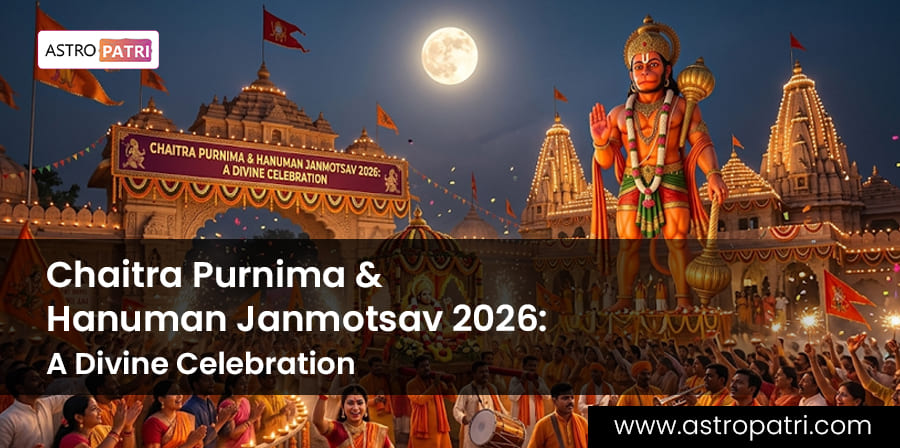
Chaitra Purnima Vrat in 2026 falls on April 1, while Chaitra Purnima and Hanuman Janmotsav are celebrated on April 2, 2026.
There are certain days in the Hindu calendar that carry both clarity and confusion at the same time. Chaitra Purnima is one such occasion. People often find themselves unsure about whether to fast, when to perform the puja, and which date truly matters.
The first day of Chaitra Purnima is about discipline and restraint through fasting. The second day is about completion through prayer, moon worship, and celebration. Along with this, the same day also marks the birth anniversary of Lord Hanuman, which adds emotional and spiritual depth to the observance.
This combination makes the day more than a ritual. It becomes a moment to pause, reflect, and reconnect with strength and intention.
To understand the observance properly, it helps to look at the exact timings.
| Event | Date and Time |
| Purnima Tithi Begins | April 1, 2026, at 07:06 AM |
| Purnima Tithi Ends | April 2, 2026, at 07:41 AM |
| Chaitra Purnima Vrat | April 1, 2026 |
| Chaitra Purnima Puja | April 2, 2026 |
| Moonrise Time | April 2, 2026, at 07:07 PM |
| Hanuman Janmotsav | April 2, 2026 |
The structure becomes clear when broken down simply. The day when the tithi is present at sunrise is considered suitable for fasting. That is why April 1 is chosen for the vrat. The rituals, however, depend on moonrise, which takes place on April 2. As a result, the puja and completion of the fast happen on that day.
This sequence is followed across North India and is based on traditional Panchang calculations.
The logic behind the vrat date comes from a long-standing rule in Hindu tradition. Fasting is observed on the day when the tithi is active at sunrise. Since Purnima begins on the morning of April 1 and continues throughout the day, that day becomes suitable for observing the fast.
At the same time, the full moon appears only on the evening of April 2. Since moon worship is an essential part of Purnima rituals, the main puja shifts to the next day.
This is why both dates hold importance, but each serves a different purpose.
Chaitra Purnima is not treated as an ordinary full moon. It holds a distinct position in the Hindu calendar.
It is the first full moon after the beginning of the Hindu New Year, which is marked by festivals such as Ugadi and Gudi Padwa. This timing gives it a symbolic meaning. It represents a moment when intentions begin to take shape after the start of a new cycle.
There is also a sense of emotional clarity associated with this day. Full moon phases are often linked with awareness and reflection. Many people use this time to step back from routine and bring attention to their thoughts and actions.
In many households, this day is dedicated to the worship of Lord Vishnu through the Satyanarayana puja. It is believed that such worship brings stability, prosperity, and a sense of balance in life.
In North India, Chaitra Purnima is also observed as Hanuman Janmotsav. This day marks the birth of Lord Hanuman, a figure deeply associated with strength, discipline, and devotion.
The connection between Chaitra Purnima and Hanuman Janmotsav creates a unique balance. On one side, the day encourages calm reflection and spiritual alignment. On the other, it brings energy, courage, and action.
People often relate to Hanuman not only as a divine figure but also as a symbol of qualities they wish to develop. His character reflects focus in times of distraction, strength in times of difficulty, and faith when outcomes are uncertain.
Following the observance in a structured way helps maintain both discipline and clarity.
The fasting day begins early in the morning. Devotees wake up before sunrise, take a bath, and make a conscious decision to observe the fast. The fast can be strict or simple, depending on individual capacity. Some choose to remain without food and water, while others follow a fruit-based or light satvik diet.
The day is ideally spent in a calm manner. Reading sacred texts, listening to devotional content, or maintaining silence helps create a focused environment.
The second day, which coincides with moonrise, is dedicated to completing the rituals. After the moon appears in the evening, devotees offer water as a mark of respect. A lamp is lit, and prayers are offered for peace, clarity, and stability.
Many households also perform the Satyanarayana puja during this time.
On the same day, Hanuman Janmotsav is observed with devotion. The puja is simple yet meaningful. An idol or image of Hanuman is placed in a clean space. Sindoor and jasmine oil are offered, followed by prasad such as laddoos and bananas.
Reciting Hanuman Chalisa remains one of the most common practices. The prayer is often read slowly, allowing the mind to settle.
The food consumed during the vrat is light and simple. Fruits, milk, sabudana preparations, and dry fruits are commonly included. The idea is to maintain energy while keeping the body light.
After the fast is broken, it is advised to continue with simple food. Heavy or oily meals are usually avoided, as the body needs time to adjust after fasting.
One of the lesser-known aspects of Hanuman worship is that Hanuman Jayanti is not observed on a single fixed date across India.
In North India, it is celebrated on Chaitra Purnima, which falls in March or April. This is the most widely recognized form of the festival.
In several South Indian states such as Tamil Nadu, Karnataka, Telangana, and Andhra Pradesh, Hanuman Jayanti is observed during the Margashirsha month, which falls around December or January.
In these regions, the observance often includes a longer period of spiritual discipline leading up to the main day.
The reason behind this difference lies in varying interpretations of ancient texts and regional traditions. Over time, both practices have continued independently and are equally respected.
Despite the difference in dates, the essence remains the same. Devotees chant Hanuman Chalisa, visit temples, and engage in acts of service. The focus stays on strength, humility, and devotion.
Many people believe that observing Chaitra Purnima and Hanuman Janmotsav brings a sense of mental clarity and emotional balance. The structured routine of fasting and prayer helps reduce distractions and creates space for reflection.
There is also a sense of inner strength that people associate with Hanuman worship. It is not always about visible outcomes but about feeling more stable and composed.
From a practical perspective, dedicating a day to discipline and silence often leads to better focus and a calmer state of mind.
Chaitra Purnima and Hanuman Janmotsav in 2026 follow a clear sequence that reflects both discipline and devotion. The vrat is observed on April 1, and the rituals reach completion on April 2 with moon worship and Hanuman puja.
Understanding this structure removes confusion and allows the day to be followed with clarity. Beyond the rituals, the day offers a chance to step back from routine, regain focus, and reconnect with a sense of inner balance.
That quiet shift often becomes the most lasting part of the observance.
What is the correct date of Chaitra Purnima 2026?
Chaitra Purnima falls on April 2, 2026, while the vrat is observed on April 1.
When should the Chaitra Purnima fast be broken?
The fast is typically broken after moonrise on April 2, once the rituals are completed.
Is Hanuman Janmotsav on April 1 or April 2?
Hanuman Janmotsav is celebrated on April 2, 2026.
Can both Chaitra Purnima and Hanuman puja be performed together?
Yes, many households perform both rituals on the same day.
Why are there two Hanuman Jayanti dates?
Different regions follow different traditions, leading to two separate observances.
Is fasting necessary for Chaitra Purnima?
Fasting is optional. The intention behind the observance is considered more important.
Instant Report Based on Our Proprietary Framework, Developed by Experts