-
 Translate
- Astropatri Values
- My Account
Translate

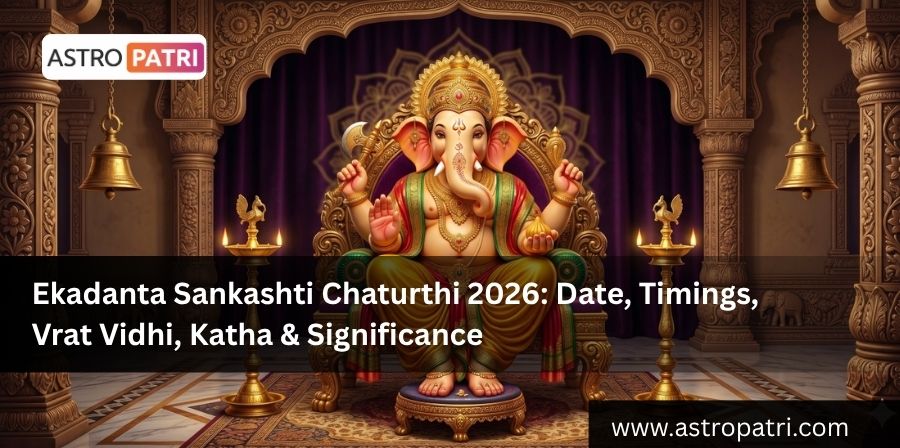
Ekadanta Sankashti Chaturthi is one of the most observed monthly fasts dedicated to Lord Ganesha. It is believed to help remove obstacles, bring clarity, and restore balance in life. Unlike festive celebrations, this day is quiet, disciplined, and deeply personal.
In 2026, Ekadanta Sankashti will fall on Tuesday, May 5. The combination of Sankashti Chaturthi and Tuesday is traditionally considered powerful, especially for those seeking relief from ongoing problems related to work, finances, or emotional stress.
This guide explains everything in clear, practical terms, so you can understand not just how to observe the vrat, but why it matters.
For New Delhi, here are the correct Panchang timings:
| Event | Date & Time |
| Ekadanta Sankashti Chaturthi 2026 | Tuesday, May 5, 2026 |
| Chaturthi Tithi Begins | 05:24 AM |
| Chaturthi Tithi Ends | 07:51 AM (May 6) |
| Moonrise Time on Sankashti Day | 10:35 PM |
The vrat starts in the morning and ends only after moonrise. Seeing the Moon and offering water (Arghya) is an essential step before breaking the fast.
Ekadanta Sankashti Chaturthi is observed every month during the Krishna Paksha on the fourth lunar day. Each Sankashti is linked to a different form of Lord Ganesha. The Sankashti in the Vaishakha month is dedicated to Ekadanta.
The word “Sankashti” means freedom from troubles. This is why people observe this fast when they are going through challenges in career, finances, relationships, or personal growth.
Ekadanta Sankashti Chaturthi is not only about rituals. It is about discipline, patience, and focusing on what matters in life.
The name Ekadanta means “the one with a single tooth.” This form of Ganesha carries strong symbolic meaning.
One well-known story involves Lord Parashurama. When he came to meet Lord Shiva, Ganesha stopped him. In anger, Parashurama threw his axe, which broke one of Ganesha’s tusks. Ganesha accepted it without reacting.
Another reference comes from the Mudgala Purana. In this text, Ganesha takes the Ekadanta form to defeat the demon Madasura, who represents pride and ego.
There is also a popular belief that Ganesha used his broken tusk to write the Mahabharata. This story highlights dedication and commitment to knowledge.
The meaning is simple. Sometimes growth requires letting go of comfort and ego.
Observing Ekadanta Sankashti Chaturthi vrat does not require complex rituals. It can be followed in a simple and sincere way.
Wake up early and take a bath. Clean your puja space and place an idol or image of Lord Ganesha. Take a sankalp to observe the vrat for the day.
Devotees can choose the type of fast based on their ability:
Avoid grains, onions, garlic, and heavy meals during the fast.
Keep your routine calm and focused. Avoid unnecessary arguments or distractions. Chanting “Om Gan Ganapataye Namah” or reading Ganesh stotras is considered beneficial.
In the evening, light a diya and incense sticks. Offer durva grass, fruits, and modak to Lord Ganesha. Even a simple offering with focus is enough.
The most important part of Ekadanta Sankashti Chaturthi vrat is the moonrise ritual. At 10:35 PM, offer water to the Moon and pray. After this, you can break your fast.
People often look for clear vrat rules. Here are the main ones:
These are simple rules that can be adjusted based on personal capacity.
The Ekadanta Sankashti Vrat Katha is an important part of the observance.
It is the story of a Brahmin named Dayadeva who lived a life of struggle. Despite his situation, he followed the Sankashti vrat regularly with faith and discipline.
Gradually, his life improved. His financial problems were reduced, and he gained stability.
The story does not promise instant results. It shows that consistent effort and belief can lead to change over time.
People observe Ekadanta Sankashti Chaturthi for both spiritual and practical reasons.
Some commonly believed benefits include:
From a practical perspective, fasting improves self-control. Prayer creates awareness. Together, they help in handling life situations better.
If you are not following a strict fast, you can include simple vrat-friendly foods:
Keep the food light and easy to digest.
Many people follow the vrat but miss key aspects. Here are a few things to keep in mind:
The vrat is more effective when done with attention rather than as a routine task.
Ekadanta is not just a physical form of Ganesha. It reflects a deeper way of thinking.
The single tusk represents focus. The broken tusk represents acceptance.
Together, they suggest a simple approach to life. Focus on what is important and let go of unnecessary stress.
In daily life, this can mean:
This is the real lesson behind Ekadanta Sankashti Chaturthi.
Some common mistakes include:
The vrat works better when followed with attention.
Ekadanta Sankashti Chaturthi 2026 is not only a religious observance but also a practical way to bring discipline into life.
The vrat encourages patience, focus, and awareness. It reminds us to simplify our routine and pay attention to our actions.
By observing Ekadanta Sankashti Chaturthi with sincerity, even in a simple way, you can experience a positive shift in how you approach challenges and decisions.
The essence of this vrat lies in consistency and intention. When followed with understanding, it becomes more than a ritual. It becomes a meaningful part of life.
1. When is Ekadanta Sankashti Chaturthi 2026 and what is the moonrise time?
It will be observed on May 5, 2026. The moonrise time is 10:35 PM, and the fast is broken only after moon darshan.
2. What is the correct way to do Sankashti Chaturthi vrat?
Start the fast in the morning, avoid grains, perform evening puja of Lord Ganesha, and break the fast after offering water to the Moon.
3. Can I drink water during Sankashti Chaturthi fast?
Yes, many people follow a fruit and water fast. Strict fasting is optional and depends on personal capacity.
4. Why is Ekadanta Sankashti considered important?
It is believed to remove obstacles, improve focus, and bring clarity in life, especially during difficult phases.
5. What should I eat during Sankashti Chaturthi fast?
You can have fruits, milk, sabudana dishes, and dry fruits. Keep the food light and simple.
Instant Report Based on Our Proprietary Framework, Developed by Experts