-
 Translate
- Astropatri Values
- My Account
Translate

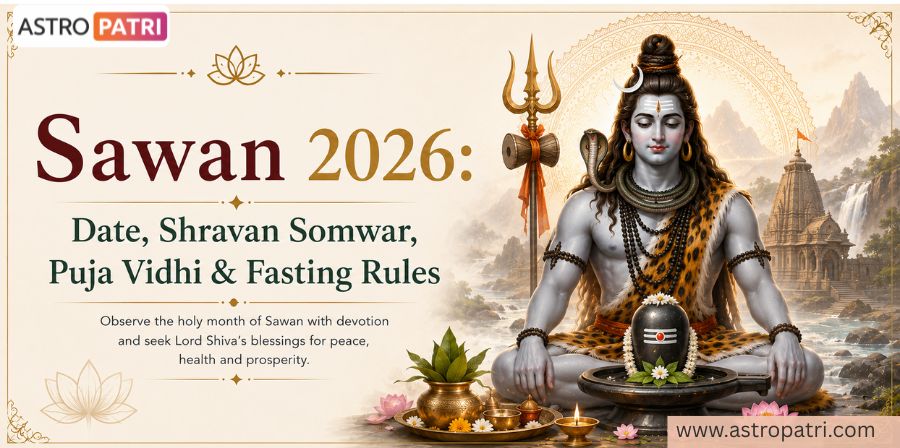
Sawan, also known as Shravan Maas, is one of the holiest months in the Hindu calendar and is entirely dedicated to the worship of Lord Shiva. Throughout this sacred month, millions of devotees observe Shravan Somwar Vrat, perform Rudrabhishek, chant Om Namah Shivaya, and visit Shiva temples to seek blessings for health, prosperity, peace, and spiritual growth.
What makes Sawan special is not only the rituals but also the belief that prayers offered during this period are especially auspicious. According to Hindu scriptures, Lord Shiva is believed to be more easily pleased by sincere devotion during Shravan, making it one of the most spiritually significant months of the year.
The month is also associated with self-discipline, gratitude, simplicity, and inner transformation. Many devotees give up favourite foods, observe fasts, perform daily Shiva Puja, and dedicate time to prayer and meditation. Whether you are observing your first Sawan Somwar Vrat or have followed these traditions for years, understanding the meaning behind them can make your spiritual journey more fulfilling.
Mondays during Sawan are considered especially sacred because they are dedicated to Lord Shiva.
| Shravan Somwar | Date |
| First Shravan Somwar | 3 August 2026 |
| Second Shravan Somwar | 10 August 2026 |
| Third Shravan Somwar | 17 August 2026 |
| Fourth Shravan Somwar | 24 August 2026 |
The connection between Sawan and Lord Shiva is deeply rooted in Hindu mythology.
According to the Samudra Manthan (Churning of the Ocean) described in the Puranas, gods and demons churned the cosmic ocean in search of Amrit, the nectar of immortality. Before the nectar appeared, a deadly poison known as Halahala emerged. The poison was so powerful that it threatened to destroy all creation.
To protect the universe, Lord Shiva consumed the poison. Goddess Parvati immediately held His throat to prevent the poison from spreading through His body, causing His neck to turn blue. This is why Lord Shiva is worshipped as Neelkanth, meaning “the Blue-Throated One.”
It is believed that during Shravan, devotees offered sacred water to Lord Shiva to cool the effect of the poison. This tradition continues today through Jalabhishek, where water, milk, Gangajal, honey, curd, and Bel Patra are offered to the Shivling with devotion.
This story is also a reminder of Shiva’s qualities of sacrifice, compassion, and protection. Worship during Sawan is therefore seen not only as a ritual but also as an expression of gratitude for the Lord who accepted suffering for the welfare of the universe.
Shravan is often described as a month of devotion, but its significance goes much deeper.
Unlike festivals centred on celebration, Shravan encourages inner discipline. Devotees are encouraged to simplify their lifestyle, practise self-control, avoid unnecessary indulgence, and dedicate more time to prayer and spiritual reflection.
Many spiritual teachers believe this month offers an opportunity to strengthen qualities such as patience, humility, compassion, and gratitude. Daily chanting of “Om Namah Shivaya,” reading the Shiva Purana, performing Rudrabhishek, and helping those in need are all considered highly meritorious during this period.
For many families, Sawan is also a time when generations come together to visit temples, perform evening aartis, and continue traditions that have been followed for centuries.
Every Monday is considered auspicious for Lord Shiva, but Mondays during Shravan hold even greater religious significance.
According to Hindu beliefs, observing Shravan Somwar Vrat with sincerity is believed to bring peace, remove obstacles, improve family harmony, and fulfil heartfelt wishes. Unmarried devotees often observe the fast while praying for a suitable life partner, inspired by Goddess Parvati’s devotion to Lord Shiva. Married couples seek blessings for a happy and harmonious family life, while many others undertake the vrat for good health, prosperity, and spiritual progress.
More than the fast itself, Shravan Somwar reminds devotees to cultivate discipline, simplicity, and unwavering faith. It is these qualities, rather than elaborate rituals alone, that are considered the true essence of Shiva worship.
Shravan Somwar Vrat is one of the most widely observed fasts dedicated to Lord Shiva. While traditions may vary across regions and families, the essence of the vrat remains the same: devotion, simplicity, and self-discipline.
Devotees begin the day before sunrise by taking a bath and wearing clean clothes, preferably white or light-coloured. After cleaning the home temple, a Sankalp (vow) is taken to observe the fast with sincerity. Lord Ganesha is worshipped first, followed by the worship of Lord Shiva and Goddess Parvati.
The Shivling is then bathed with sacred offerings such as water, Gangajal, milk, curd, honey, ghee, and sugar. This ritual, known as Rudrabhishek or Shivling Abhishek, is considered one of the most important acts of worship during Shravan.
After the Abhishek, devotees offer Bel Patra, Dhatura, Bhasma, sandalwood paste, white flowers, fruits, incense, and a lit diya. Chanting “Om Namah Shivaya”, reciting the Mahamrityunjaya Mantra, Shiva Chalisa, or reading the Shiva Purana is also considered highly auspicious.
Many devotees observe a full-day fast, while others consume fruits, milk, or vrat-approved foods depending on family traditions. The fast is usually completed after the evening puja.
Every offering made to Lord Shiva carries symbolic meaning in Hindu tradition. Rather than being mere rituals, these offerings represent qualities that devotees seek to cultivate in their own lives.
| Offering | Symbolic Significance |
| Gangajal (Holy Water) | Purity, peace, and spiritual cleansing |
| Bel Patra | One of Lord Shiva’s most beloved offerings, symbolising purity and devotion |
| Milk | Calmness, nourishment, and inner peace |
| Curd | Good health and prosperity |
| Honey | Sweetness in relationships and speech |
| Sugar | Happiness and positive energy |
| Sandalwood Paste | Mental peace and devotion |
| White Flowers | Simplicity, purity, and surrender |
| Dhatura & Bhang | Traditional offerings associated with Lord Shiva in many scriptures |
While these offerings hold religious significance, Hindu scriptures also emphasise that sincere devotion is valued above expensive rituals.
Sawan is considered an ideal time to strengthen both spiritual and personal discipline. Many devotees adopt simple practices throughout the month as a way of expressing devotion to Lord Shiva.
Some commonly followed practices include:
These practices help transform Sawan from a month of rituals into a month of personal growth and spiritual reflection.
Apart from fasting, many devotees voluntarily follow personal vows throughout Shravan as an act of devotion.
Common practices include:
The purpose of these austerities is not hardship for its own sake. They are meant to cultivate self-control, gratitude, and mindfulness while deepening one’s connection with Lord Shiva.
One of the lesser-known traditions associated with Shravan is Agastya Arghya.
This ritual is performed when Agastya Tara (the star Canopus) becomes visible again after remaining hidden for several months. On this day, devotees offer Arghya (water offering) to Sage Agastya, one of the revered sages in Hindu tradition.
According to traditional beliefs, offering Agastya Arghya is associated with gratitude, wisdom, and spiritual purification. Although the ritual is not as widely practised as Shravan Somwar or Nag Panchami, it continues to hold significance in several regions of India.
Its observance also reflects the broader spirit of Shravan, which honours not only Lord Shiva but also saints, sages, and the values of knowledge, humility, and service.
Sawan is much more than a sacred month of fasting. It is a time to reconnect with faith, cultivate self-discipline, and deepen your relationship with Lord Shiva. Every ritual, from offering Gangajal to the Shivling to observing Shravan Somwar Vrat, reflects values that remain relevant even today, including patience, humility, compassion, and gratitude.
Whether you visit a Shiva temple every Monday, perform Rudrabhishek at home, chant Om Namah Shivaya, or simply dedicate a few quiet moments each day to prayer, the true purpose of Shravan lies in sincere devotion rather than elaborate rituals. By embracing the spirit of this holy month with faith and consistency, devotees seek not only Lord Shiva’s blessings but also greater inner peace, wisdom, and strength to navigate life’s journey.
Sawan is considered the holiest month for Lord Shiva because, according to Hindu scriptures, He consumed the deadly Halahala poison during the Samudra Manthan to protect the universe. Devotees believe that worshipping Lord Shiva during Shravan, especially by offering Gangajal, Bel Patra, and performing Jalabhishek, brings peace, prosperity, good health, and spiritual growth.
During Sawan, devotees traditionally perform Shivling Abhishek, observe Shravan Somwar Vrat, chant Om Namah Shivaya or the Mahamrityunjaya Mantra, visit Shiva temples, follow a sattvic diet, and practise charity and self-discipline. According to Hindu beliefs, sincere devotion and good conduct are considered more important than elaborate rituals.
Yes. Shravan Somwar Vrat can be observed by anyone, regardless of age or marital status. While unmarried women often observe the fast to seek an ideal life partner and married women pray for marital happiness, many men and families also keep the vrat for good health, career growth, family well-being, and spiritual progress.
Shravan is one of the busiest months in the Hindu calendar and includes several important festivals and vrats, such as Shravan Somwar Vrat, Hariyali Teej, Nag Panchami, Putrada Ekadashi, Raksha Bandhan, Kajari Teej, Krishna Janmashtami, and Shravan Shivratri. Each festival has its own religious significance and is dedicated to different deities and traditions.
During Sawan, many devotees choose to avoid non-vegetarian food, alcohol, tobacco, and tamasic foods. Many also refrain from anger, harsh speech, and negative actions while following a simple, disciplined lifestyle. These practices are observed to maintain physical purity, mental calmness, and spiritual focus throughout the holy month.