

Generate Free Online Kundli
-
 Translate
- Astropatri Values
- My Account
Translate

The 12 houses in Vedic astrology, also known as Bhavas, represent different areas of life in a Kundli. From personality and family to wealth, marriage, career, health, gains and spirituality, every house has a distinct role in understanding a birth chart.
A Kundli always has 12 houses, but their signs, planetary placements and house lords differ from one person to another. This is why two people can have the same zodiac sign and still have very different birth charts.
Among the available astrological classics, the twelve houses of the zodiac have been explained well in the astrological classic Uttara Kalamrita which was written by Kalidasa.
Our esteemed astrologer Anand Sagar Pathak brings to you the significance of all the twelve houses based on Uttara Kalamrita.
To understand a house properly, astrologers consider more than the house alone. The sign placed in it, its ruling planet, planets occupying the house, planetary aspects, the condition of its lord, Dashas and relevant transits can all influence how that area of life unfolds.
This page explains the meaning of all 12 houses in Vedic astrology, their traditional significations, their classifications and how they are interpreted in a Kundli.
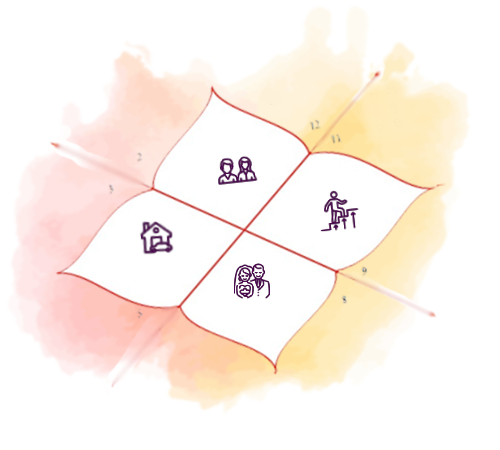
 12 Houses in Kundli at a Glance
How Do the 12 Houses Work in a Kundli?
Types of Houses in Vedic Astrology
1st House: House of Self
2nd House: House of Wealth and Family
3rd House: House of Courage and Communication
4th House: House of Home and Emotional Security
5th House: House of Children, Intelligence and Creativity
6th House: House of Health, Debts and Competition
7th House: House of Marriage and Partnerships
8th House: House of Transformation and Hidden Matters
9th House: House of Fortune and Dharma
10th House: House of Career and Profession
11th House: House of Income and Gains
12th House: House of Expenses and Liberation
Which House Represents What in Kundli?
Why Should You Read All 12 Houses Together?
Understand Your 12 Houses With Your Kundli
Frequently Asked Questions
12 Houses in Kundli at a Glance
How Do the 12 Houses Work in a Kundli?
Types of Houses in Vedic Astrology
1st House: House of Self
2nd House: House of Wealth and Family
3rd House: House of Courage and Communication
4th House: House of Home and Emotional Security
5th House: House of Children, Intelligence and Creativity
6th House: House of Health, Debts and Competition
7th House: House of Marriage and Partnerships
8th House: House of Transformation and Hidden Matters
9th House: House of Fortune and Dharma
10th House: House of Career and Profession
11th House: House of Income and Gains
12th House: House of Expenses and Liberation
Which House Represents What in Kundli?
Why Should You Read All 12 Houses Together?
Understand Your 12 Houses With Your Kundli
Frequently Asked Questions
| House | Sanskrit / Traditional Name | Main Areas of Life |
| 1st House | Tanu Bhava / Lagna | Self, personality, body, vitality, appearance |
| 2nd House | Dhana Bhava | Wealth, family, speech, savings, food |
| 3rd House | Sahaja Bhava | Courage, siblings, communication, skills, effort |
| 4th House | Sukha Bhava | Home, mother, property, education, comfort |
| 5th House | Putra Bhava | Children, intelligence, creativity, love, learning |
| 6th House | Ari or Ripu Bhava | Health, debts, competition, enemies, service |
| 7th House | Kalatra Bhava | Marriage, spouse, partnerships, business |
| 8th House | Randhra Bhava | Longevity, transformation, inheritance, hidden matters |
| 9th House | Dharma Bhava | Fortune, dharma, higher learning, father, long journeys |
| 10th House | Karma Bhava | Career, profession, authority, reputation, achievements |
| 11th House | Labha Bhava | Income, gains, networks, aspirations, fulfilment |
| 12th House | Vyaya Bhava | Expenses, foreign lands, isolation, spirituality, liberation |
The house shows where something happens in life, the sign shows how it is expressed, and the planet shows what kind of energy is influencing that area.
The house lord is also important. Every house contains a zodiac sign, and the planet ruling that sign becomes its house lord. The placement and condition of that planet can connect one area of life with another.
For example, the 10th house represents career, but an astrologer would also examine the 10th lord, planets in the 10th house, aspects on it and relevant Dashas before drawing conclusions.
This is why a Kundli should be read as a connected system rather than a collection of isolated placements.
The 12 houses are also grouped into important categories.
Kendra Houses: 1st, 4th, 7th and 10th
These are the four angular houses connected with major pillars of life.
Trikona Houses: 1st, 5th and 9th
These are associated with dharma, intelligence, fortune and personal direction.
Upachaya Houses: 3rd, 6th, 10th and 11th
These houses are traditionally linked with development through effort and experience.
Dusthana Houses: 6th, 8th and 12th
These relate to challenges, transformation, health struggles, expenditure and other areas requiring adjustment.
Maraka Houses: 2nd and 7th
These have a specific role in classical longevity analysis.
The 1st house, or Lagna, represents the self. It is associated with the body, personality, appearance, vitality, confidence, temperament and general approach to life.
It can help astrologers understand how a person presents themselves, responds to situations and moves through the world.
Classical meaning
Traditional interpretations of the 1st house cover the body, limbs, strength, appearance, fame, dignity, self-respect, longevity, livelihood, wisdom, sleep, peace, health and ability to work. The classical source also includes more specific references related to age, hair, skin, birthplace, dreams, honour and conduct.
The 2nd house, known as Dhana Bhava, represents accumulated wealth, savings, family, speech, food and personal values.
It can show how a person handles resources, communicates and relates to family and material security.
Classical meaning
The traditional significations include speech, wealth, family, food, learning, eloquence, precious stones, gold, silver, sale and purchase, generosity, financial effort, humility and steadiness of mind. Physical references such as the tongue, eyes, nose and nails also appear in the classical description.
The 3rd house, or Sahaja Bhava, is connected with courage, initiative, communication, younger siblings, practical skills and personal effort.
It is also associated with hobbies, writing, expression, short journeys and the willingness to take action.
Classical meaning
Traditional significations include courage, brothers, communication, strength, valour, friends, wandering, education, hobbies, physical development, profits, short journeys, pilgrimages, undertakings and personal duties. The classical text also includes references to roads, hands, ears, throat and various family and service relationships.
The 4th house, or Sukha Bhava, represents home, mother, property, education, comforts and inner security.
It is associated with the environment in which a person feels settled, along with matters related to land, vehicles and domestic life.
Classical meaning
Traditional descriptions include education, home, mother, relatives, property, land, vehicles, comforts, food, faith, good name, agriculture, gardens, wells, paternal property and entering a new home. The classical account also includes references to intellect, character, sacred installations and various traditional forms of wealth and property.
The 5th house, or Putra Bhava, represents children, intelligence, creativity, education, romance and self-expression.
It is also connected with wisdom, Mantra, discrimination and deeper learning.
Classical meaning
Traditional significations include children, education, pregnancy, intelligence, discretion, creativity, friendship, wisdom, Mantra, worship, deep thought, literature, good works and means of earning money. The source also mentions food distribution, music, spiritual practice and scholarship.
The 6th house, or Ari Bhava, is associated with health challenges, debts, competition, enemies, disputes and service.
It also relates to daily work and situations that require discipline, persistence and the ability to overcome obstacles.
Classical meaning
Its traditional significations include disease, obstacles, enemies, debts, wounds, disputes, slander, worry, competition, weariness and imprisonment. The classical description also contains references to several illnesses and bodily conditions that reflect the medical terminology of its historical period.
The 7th house, or Kalatra Bhava, is the principal house of marriage, spouse and long-term partnerships.
It also represents business partnerships, agreements, commerce and one-to-one interactions.
For marriage analysis, astrologers generally examine the 7th house along with its lord, relevant planets, Venus, Dashas and the Navamsa chart.
Classical meaning
Traditional significations include marriage, spouse, love, partnerships, commerce, trade, travel, foreign or distant places, arguments, sexual union, acquisition of money from distant places and other relationship-related matters.
The 8th house, or Randhra Bhava, deals with longevity, transformation, inheritance, joint resources, secrets and subjects that lie beneath the surface.
It can also become relevant in questions involving major changes, research and deeper forms of self-understanding.
Classical meaning
Traditional significations include longevity, inheritance, debts, loss of money, sudden difficulties, hidden matters, punishment, misery, long-awaited money, battle and severe mental anguish. The original source also includes references to death and physical harm that belong to its classical context.
The 9th house, or Dharma Bhava, represents fortune, dharma, higher learning, teachers, father, spirituality and long-distance journeys.
It reflects beliefs, principles, philosophy and the search for knowledge and meaning.
Classical meaning
Traditional significations include charity, virtuous actions, pilgrimage, teachers, learning, fortune, prosperity, travel, worship, nourishment, paternal property, temples, Vedic rituals and contact with virtuous people.
The 10th house, or Karma Bhava, is primarily associated with career, profession, authority, achievement, status and public reputation.
It represents visible action in the world and the responsibilities connected with professional life.
Classical meaning
Traditional descriptions include commerce, government work, service, agriculture, medicine, fame, prosperity, authority, lordship, honour, teaching ability and professional prominence. References to rulers, ministers and official authority can be understood today through wider themes such as leadership, responsibility and recognition.
The 11th house, or Labha Bhava, represents income, gains, profits, friendships, networks, aspirations and fulfilment of desires.
It can show the results gained through effort, connections and professional relationships.
Classical meaning
Traditional significations include gains, income, profits, elder siblings, wealth, ancestral property, special position, fulfilment of desires, rise of fortune, wisdom and artistic skill. The source also includes references to education, ornaments and other forms of prosperity.
The 12th house, or Vyaya Bhava, represents expenditure, foreign lands, isolation, sleep, detachment, spirituality and liberation.
Although it is traditionally associated with expenses and loss, its meaning is broader. It can also relate to retreat, charity, spiritual practice and releasing attachments.
Classical meaning
Traditional descriptions include sleep, expenditure, migration, isolation, freedom from suffering, foreign movement, loss of authority and various forms of physical and mental distress. The classical source also connects it with spiritual ascent, detachment and liberation-related themes.
Which house represents career?
The 10th house is the primary house for career and profession. The 6th and 11th houses may provide additional context.
Which house represents marriage?
The 7th house is the principal house for marriage, spouse and partnerships.
Which house represents wealth?
The 2nd house represents accumulated wealth and savings, while the 11th represents income and gains.
Which house represents children?
The 5th house is traditionally associated with children, intelligence and creativity.
Which house represents health?
The 1st house relates to the body and vitality, while the 6th is important for health challenges.
Which house represents property?
The 4th house represents home, property, land and domestic comforts.
Which house represents higher education?
The 5th and 9th houses are important for intelligence, higher learning and knowledge, while the 4th relates to foundational education.
Which house represents foreign travel?
The 9th and 12th houses are particularly relevant to long-distance and foreign connections.
What Does an Empty House Mean?
An empty house does not mean that its area of life is absent.
For example, an empty 10th house does not mean a person will have no career. Astrologers can still examine the sign occupying the house, its lord, aspects and planetary periods.
The same principle applies to every house in a Kundli.
The houses work as a connected system.
For career, the 10th house may be central, but the 6th can relate to service and employment and the 11th to income and gains.
For marriage, the 7th house is central, while its lord, Venus, the Navamsa chart and relevant Dashas can provide more detail.
For wealth, the 2nd and 11th houses can both matter, along with their lords and planetary influences.
This is why one house or one planet rarely tells the whole story.
Learning the meaning of the 12 houses gives you the foundation for understanding Vedic astrology. Your own Kundli takes that knowledge one step further by showing the signs, planets and house lords connected with each area of life.
Generate your free Kundli on Astropatri and explore your houses, planetary placements, Dashas and other important chart details.
From the 1st house of self to the 12th house of expenditure and liberation, the twelve Bhavas together create the framework through which a birth chart is interpreted.
The 12 houses in a Kundli, or Bhavas, represent different areas of life. The 1st house represents the self, the 2nd wealth and family, the 7th marriage and partnerships, the 10th career and profession, the 11th gains and income, and the 12th expenses, foreign connections and liberation. The remaining houses cover communication, home, children, health, transformation and fortune.
Each house represents a specific area of life. The 1st represents self and personality, 2nd wealth and family, 3rd courage and communication, 4th home and mother, 5th children and intelligence, 6th health and competition, 7th marriage, 8th transformation, 9th fortune, 10th career, 11th gains and 12th expenses and liberation.
The 7th house is the primary house of marriage, spouse and long-term partnerships in Vedic astrology. For a detailed marriage analysis, astrologers also consider the 7th lord, planets influencing the 7th house, Venus and the Navamsa chart rather than judging marriage from the 7th house alone.
The 10th house, also called Karma Bhava, is the primary house for career, profession, authority and public reputation. The 6th house can relate to employment and service, while the 2nd and 11th houses can add information about earnings and gains. A complete career reading considers these factors together.
The 2nd house represents accumulated wealth, savings, family resources and speech. The 11th house is associated with income, gains and fulfilment of financial goals. The 12th house can also be considered when studying expenditure. Wealth is therefore understood through the relationship between these houses and their lords.
Start with the Ascendant, which determines the 1st house. Then check the sign in each house, its house lord, planets placed there and planetary aspects. Dashas and transits help with timing. In Vedic astrology, a house is interpreted through these factors together rather than by its number alone.
An empty house does not mean that the related area of life is absent or inactive. Astrologers can still examine the sign occupying the house, its lord, planetary aspects and relevant Dashas. An empty 7th house, for example, does not mean a person will not marry.