-
 Translate
- Astropatri Values
- My Account
Translate

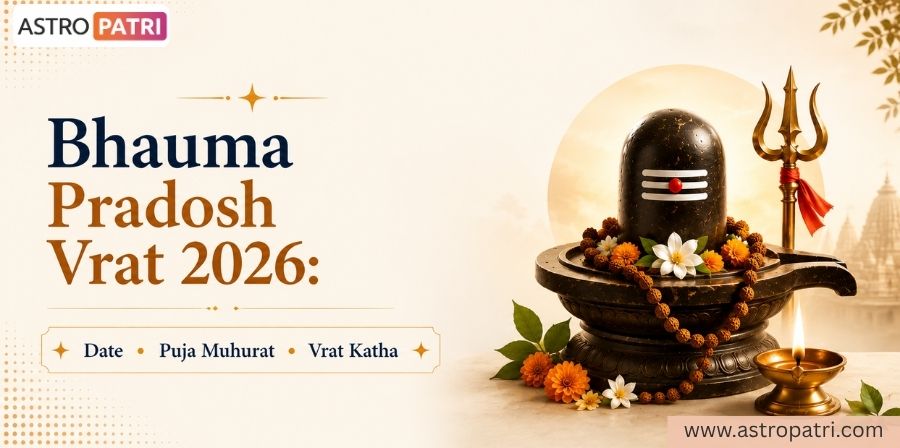
Bhauma Pradosha Vrat will be observed on Tuesday, August 25, 2026. The Pradosha Puja Muhurat is 6:51 PM to 9:04 PM, when Trayodashi Tithi overlaps with Pradosha Kaal. This Tuesday Pradosha is traditionally associated with Lord Shiva and Lord Mangala, and devotees observe it for courage, relief from debts, resolution of disputes and strength to deal with difficult situations.
What makes this Pradosha different from an ordinary Pradosha Vrat is the combination of Tuesday and Trayodashi. Tuesday is associated with Mangala, while Pradosha is dedicated to Lord Shiva. This gives Bhauma Pradosha a distinct place among Pradosha observances.
| Details | Information |
| Bhauma Pradosha Date | August 25, 2026 |
| Day | Tuesday |
| Trayodashi Tithi Begins | 6:20 AM, August 25 |
| Trayodashi Tithi Ends | 7:59 AM, August 26 |
| Pradosha Puja Muhurat | 6:51 PM to 9:04 PM |
| Pradosha Duration | 2 hours 13 minutes |
| Deities Worshipped | Lord Shiva and Lord Mangala |
| Main Purpose | Strength, courage, debt relief and overcoming obstacles |
These timings are based on the New Delhi Panchang.
Pradosha Vrat is observed on Trayodashi Tithi, both during Shukla Paksha and Krishna Paksha. The Pradosha observance is determined by the presence of Trayodashi during the evening Pradosha period after sunset.
When Pradosha falls on a Tuesday, it is known as Bhauma Pradosha or Mangala Pradosha.
The combination gives the vrat a strong focus on matters traditionally associated with Mars, such as courage, physical strength, disputes, property matters, debts and the ability to face difficult situations.
Devotees worship Lord Shiva and seek his blessings for strength and protection. The observance is also traditionally associated with reducing financial obstacles and dealing with disputes related to land and property.
There is a simple reason Tuesday Pradosha receives special attention.
Pradosha brings Lord Shiva into focus, while Tuesday is associated with Mangala.
So the vrat brings together Shiva’s worship with themes traditionally connected with Mars.
This is why Bhauma Pradosha is often observed by people who are dealing with:
The traditional belief is that sincere observance can strengthen courage and help a person face difficult circumstances with greater determination.
According to the traditional observance, Bhauma Pradosha is associated with several benefits.
Relief From Debts
The vrat is traditionally observed by devotees seeking relief from financial burdens and obstacles related to debt.
It is also a useful occasion to review one’s financial responsibilities and approach them with greater discipline.
Help With Property Disputes
Bhauma Pradosha is particularly associated with land and property-related disputes. Devotees pray for a peaceful resolution and the strength to deal with prolonged conflicts.
Greater Courage and Confidence
Mars represents courage, while Lord Shiva is worshipped for inner strength and stability. Bhauma Pradosha is therefore traditionally considered helpful for those who feel overwhelmed by difficult circumstances.
Protection From Obstacles
Devotees observe the vrat with the belief that Lord Shiva’s blessings help them overcome obstacles and move forward with greater determination.
Physical Strength
The traditional significance of Bhauma Pradosha also connects the vrat with physical strength and relief from certain ailments.
These are religious beliefs associated with the vrat. They should not replace medical or financial advice where such help is needed.
The story associated with Bhauma Pradosha is unusual because it brings Lord Hanuman into a vrat dedicated to Lord Shiva.
It begins with an elderly woman who was a devoted worshipper of Hanuman.
Every Tuesday, she observed her vrat with great faith. She followed her religious discipline carefully and avoided activities such as plastering the house with earth or digging soil on Tuesdays.
She lived with her son, Mangaliya. For a long time, her devotion remained unwavering. Then one day, Hanuman decided to test her faith. He appeared at her doorstep disguised as a holy man. The old woman respectfully asked him what she could do for him.
The disguised Hanuman told her that he was hungry and asked her to prepare the ground by plastering it with earth. The woman refused this particular request because it went against the Tuesday practice she had followed for years.
She told him she would fulfil another request instead. The holy man continued testing her. Eventually, he asked something far more difficult.
He told her to bring her son and said he would prepare food using fire placed on the boy’s back. The request was heartbreaking.
Yet the woman had already given her word. She brought Mangaliya to him. The disguised Hanuman then asked her to place her son in the position he instructed and lit the fire.
The old woman was devastated. She returned inside, believing she had lost her son. After preparing the food, the disguised Hanuman called her and asked her to bring Mangaliya so that he could also receive the food.
The woman could not bear to hear her son’s name. She believed he was dead. But the holy man insisted. Finally, she called out to Mangaliya.
To her complete surprise, her son came running towards her, safe and unharmed. The woman was overwhelmed with joy. At that moment, Hanuman revealed his true form.
She realised that the entire episode had been a test of her devotion and her commitment to her word.
The story ends with Hanuman blessing the devoted woman. The traditional account presents her faith as the reason for her eventual welfare and liberation.
The story is striking because the test is not about wealth or status.
It tests faith, discipline and the strength to keep one’s word during an extremely difficult situation.
For devotees, the message is closely connected with the spirit of the vrat.
When life becomes difficult, faith is often easier when everything is going well. The story asks a different question: what happens when devotion is tested?
That is why the old woman’s story remains an important part of the Bhauma Pradosha tradition.
The exact customs can differ between families and regions.
The traditional account associated with Bhauma Pradosha recommends observing the fast with discipline and worshipping Lord Shiva.
The supplied tradition mentions wheat and jaggery as the food for the day’s single meal, along with offering red flowers to Lord Shiva and wearing red clothes.
Devotees can follow the practices customary in their family.
A simple observance can include:
The most important part of the day is the Pradosha period, because Pradosha Puja is performed when Trayodashi overlaps with this evening period.
For Bhauma Pradosha on August 25, 2026, the Puja Muhurat is:
6:51 PM to 9:04 PM
The duration is 2 hours and 13 minutes.
The Trayodashi Tithi begins at 6:20 AM on August 25 and ends at 7:59 AM on August 26.
Devotees can also follow the Shiva worship practices followed in their family.
The focus should remain on sincere prayer and disciplined observance rather than expensive offerings.
Anyone who follows the tradition and wishes to observe the vrat can follow it according to their faith and family customs.
However, strict fasting is not suitable for everyone. Children, elderly people, pregnant women and people with medical conditions should follow appropriate dietary guidance rather than forcing a fast.
The spiritual purpose of a vrat does not require putting your health at risk.
The main difference is the day on which Pradosha occurs.
Pradosha Vrat is observed when Trayodashi falls during the Pradosha period. When this Pradosha occurs on Tuesday, it becomes Bhauma Pradosha.
Because Tuesday is associated with Mangala, Bhauma Pradosha has a stronger traditional connection with courage, strength, debt relief and property-related matters.
This is why people facing these concerns often pay special attention to Bhauma Pradosha.
Bhauma Pradosha on August 25, 2026, brings together the worship of Lord Shiva with the Tuesday energy traditionally associated with Mangala. This makes the vrat especially meaningful for devotees seeking strength, courage and relief from financial or property-related obstacles.
When is Bhauma Pradosha Vrat in August 2026?
Bhauma Pradosha Vrat will be observed on Tuesday, August 25, 2026.
What is the Bhauma Pradosha Puja Muhurat?
The Bhauma Pradosha Puja Muhurat is from 6:51 PM to 9:04 PM on August 25, 2026.
Why is Tuesday Pradosha called Bhauma Pradosha?
When Pradosha falls on Tuesday, it is called Bhauma Pradosha or Mangala Pradosha. Tuesday is traditionally associated with Mangala, or Mars.
What are the benefits of Bhauma Pradosha Vrat?
The vrat is traditionally associated with relief from debts, resolution of property disputes, courage, physical strength and the ability to overcome obstacles.
What should be offered on Bhauma Pradosha?
The traditional account mentions red flowers for Lord Shiva. It also associates the vrat with a single meal of wheat and jaggery and wearing red clothes.
What is the story of Bhauma Pradosha Vrat?
The traditional story tells of an elderly Hanuman devotee whose faith is tested when Hanuman appears disguised as a holy man. The story ultimately ends with her son being restored safely and Hanuman revealing his true form.
Can I observe Bhauma Pradosha without fasting?
Yes. If strict fasting is unsuitable because of age, pregnancy, health or other circumstances, you can follow the prayer and worship practices according to your family tradition without compromising your health.
Instant Report Based on Our Proprietary Framework, Developed by Experts