-
 Translate
- Astropatri Values
- My Account
Translate

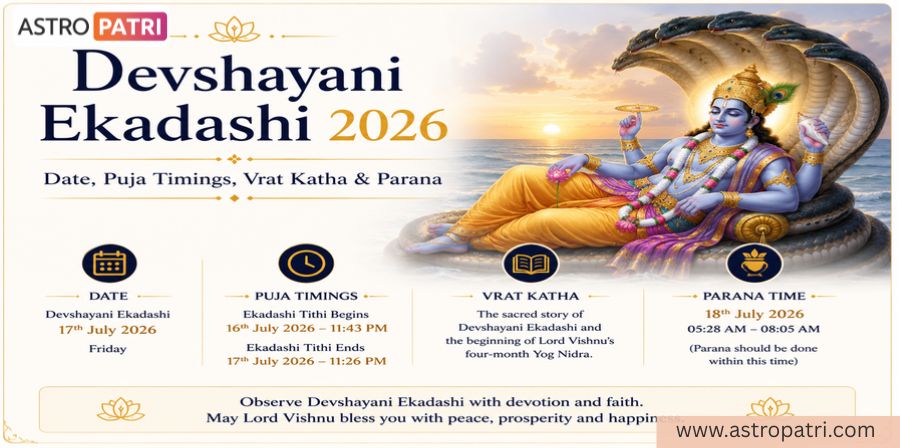
Devshayani Ekadashi will be observed on Saturday, 25 July 2026. It is one of the most significant Ekadashis dedicated to Lord Vishnu and marks the beginning of the sacred Chaturmas, a four-month period of spiritual discipline, devotion, and self-reflection. According to Hindu belief, this is the day when Lord Vishnu enters Yoga Nidra, or divine cosmic sleep, in Ksheer Sagar, and remains in this state until Devutthana (Prabodhini) Ekadashi.
This Ekadashi is celebrated with great devotion across India and is known by several names, including Hari Shayani Ekadashi, Ashadhi Ekadashi, Padma Ekadashi, and Maha Ekadashi in different regions. Devotees observe a day-long fast, worship Lord Vishnu, chant sacred mantras, and listen to the Devshayani Ekadashi Vrat Katha to seek prosperity, peace, and spiritual growth.
Beyond its religious importance, Devshayani Ekadashi reminds devotees to slow down, practise self-discipline, and strengthen their connection with the Divine. As Chaturmas begins, many people take spiritual vows, avoid tamasic food, increase charitable acts, and dedicate more time to prayer, meditation, and scriptural study.
In this guide, discover the Devshayani Ekadashi 2026 date, vrat timings, significance, fasting rules, puja vidhi, Vrat Katha, Parana time, spiritual benefits, and answers to the most frequently searched questions.
| Particulars | Details |
| Festival | Devshayani Ekadashi 2026 |
| Date | Saturday, 25 July 2026 |
| Ekadashi Tithi Begins | 24 July 2026 at 9:12 AM |
| Ekadashi Tithi Ends | 25 July 2026 at 11:34 AM |
| Parana Date | Sunday, 26 July 2026 |
| Parana Time | 5:39 AM to 8:22 AM |
| Dwadashi Ends | 1:57 PM on 26 July 2026 |
| Main Deity | Lord Vishnu |
| Significance | Beginning of Chaturmas and Lord Vishnu’s Yoga Nidra |
Devshayani Ekadashi is observed on the Ekadashi Tithi of Shukla Paksha in the month of Ashadha. It marks an important turning point in the Hindu calendar because it is believed that Lord Vishnu enters Yoga Nidra, or divine sleep, on this day. His symbolic rest continues for four months and ends on Devutthana Ekadashi, when He awakens and the Chaturmas period concludes.
During these four months, many auspicious ceremonies, including marriages and housewarming rituals, are traditionally avoided in several Hindu communities. Instead, the period is considered ideal for spiritual practices, fasting, charity, mantra chanting, and self-discipline.
For devotees of Lord Vishnu, Devshayani Ekadashi is more than a fasting day. It is an opportunity to pause from worldly distractions, reflect on one’s actions, and strengthen faith through sincere devotion.
One of the reasons this festival is widely known is because it has different names across India, each reflecting a unique aspect of its spiritual significance.
Although the names differ, they all refer to the same sacred Ekadashi dedicated to Lord Vishnu.
Devshayani Ekadashi carries deep spiritual meaning in Hindu tradition. While mythology describes Lord Vishnu entering Yoga Nidra, devotees understand this period as a reminder to turn inward and focus on spiritual growth.
Just as nature enters a calmer phase during the monsoon season, this Ekadashi encourages people to slow down, reduce unnecessary desires, and cultivate patience, gratitude, and devotion. Instead of seeking constant external achievements, Chaturmas inspires inner transformation through prayer, meditation, self-control, and acts of kindness.
According to Hindu scriptures, observing the Devshayani Ekadashi Vrat with sincerity is believed to remove negative karma, purify the mind, and attract Lord Vishnu’s blessings for peace, prosperity, and protection. Many devotees also begin new spiritual practices during this period, such as daily Vishnu Sahasranama recitation, Bhagavad Gita study, or regular charity.
The festival also teaches an important life lesson. Real prosperity is not measured only by wealth or success but also by inner peace, faith, compassion, and disciplined living.
One of the most important aspects of Devshayani Ekadashi is that it marks the beginning of Chaturmas, the sacred four-month period dedicated to spiritual discipline.
According to Hindu belief, Lord Vishnu enters Yoga Nidra on this day and awakens on Devutthana Ekadashi, four months later. During this period, devotees are encouraged to simplify their lifestyle, reduce worldly distractions, and increase religious activities.
Many people observe special vows during Chaturmas, including:
Spiritually, Chaturmas is considered one of the most auspicious times for self-improvement, devotion, and inner purification.
The fast observed on Devshayani Ekadashi is not only about avoiding food. It is a practice of discipline, gratitude, and devotion.
Devotees believe that fasting with sincere faith helps purify both the body and the mind. The day is spent worshipping Lord Vishnu, chanting His names, reading sacred scriptures, listening to the Devshayani Ekadashi Vrat Katha, and avoiding negative thoughts and actions.
Many devotees observe a complete fast, while others consume fruits, milk, and foods permitted during Ekadashi. The emphasis is on simplicity, self-control, and spending the day in spiritual reflection rather than material pursuits.
The fast concludes with Parana on the following day during the prescribed Dwadashi time after offering prayers to Lord Vishnu.
The Devshayani Ekadashi Vrat Katha, mentioned in the Bhavishyottara Purana, tells the story of the righteous King Mandhata. During his reign, the kingdom faced a severe drought that lasted for three years, causing famine and great suffering among the people.
Worried about his subjects, King Mandhata sought the guidance of Sage Angira. The sage advised him to observe the Devshayani Ekadashi Vrat with complete devotion and encourage his people to worship Lord Vishnu.
The king and his subjects observed the fast with sincere faith. Pleased by their devotion, Lord Vishnu blessed the kingdom with abundant rainfall. The famine ended, crops flourished once again, and peace and prosperity returned.
Moral of the Katha
The story teaches that faith, devotion, compassion, and righteous actions can help overcome even the most difficult challenges. It reminds us that sincere prayers, self-discipline, and trust in Lord Vishnu bring strength, peace, and divine blessings.
Observing the Devshayani Ekadashi Vrat with sincerity is considered more important than elaborate rituals. Devotees begin the day early and dedicate it to the worship of Lord Vishnu.
Although fasting traditions vary across families and regions, these guidelines are commonly followed:
The purpose of the fast is to purify the mind and strengthen devotion, not merely to abstain from food.
Food plays an important role during the Devshayani Ekadashi fast. The focus is on eating light, sattvic, and easily digestible meals while avoiding grains and processed foods. Many devotees observe a Nirjala Vrat (without food and water), while others choose a fruit-based fast or consume vrat-friendly foods according to their health and family traditions.
Always observe the fast according to your health and family traditions. Children, elderly people, pregnant women, and those with medical conditions should consult a healthcare professional before observing a strict fast.
For Devshayani Ekadashi 2026, the Parana should be performed on:
Before breaking the fast, devotees usually offer prayers to Lord Vishnu, perform a simple puja, and seek blessings for peace, good health, and prosperity. Many people begin the Parana with water, Tulsi leaves, fruits, or a light sattvic meal.
Devshayani Ekadashi 2026, observed on 25 July, is more than a sacred fasting day. It marks the beginning of Chaturmas, a spiritually significant period dedicated to devotion, discipline, and inner transformation. The festival reminds devotees that true progress comes not only from material success but also from faith, compassion, and righteous living.
Whether you observe the vrat for spiritual growth, family well-being, or inner peace, this Ekadashi offers an opportunity to pause, reflect, and reconnect with Lord Vishnu through sincere prayer and self-discipline. By following the vrat with devotion and breaking the fast during the proper Parana Muhurat, devotees seek divine blessings for happiness, prosperity, and protection throughout the year.
1. When is Devshayani Ekadashi in 2026?
Devshayani Ekadashi will be observed on Saturday, 25 July 2026. The Ekadashi Tithi begins on 24 July at 9:12 AM and ends on 25 July at 11:34 AM.
2. Why is Devshayani Ekadashi important?
Devshayani Ekadashi marks the beginning of Chaturmas and the day Lord Vishnu enters Yoga Nidra (divine sleep). It is considered one of the most sacred Ekadashis for worshipping Lord Vishnu and seeking spiritual growth, peace, and prosperity.
3. What is the significance of Chaturmas?
Chaturmas is a four-month sacred period dedicated to devotion, self-discipline, charity, and spiritual practices. It begins on Devshayani Ekadashi and concludes on Devutthana Ekadashi, when Lord Vishnu is believed to awaken from Yoga Nidra.
4. What foods are allowed during Devshayani Ekadashi fast?
Devotees can consume fruits, milk, dry fruits, sabudana, makhana, samak rice, kuttu flour, and singhara flour. Grains, rice, wheat, lentils, onion, garlic, and non-vegetarian food are traditionally avoided.
5. What is the Parana time for Devshayani Ekadashi 2026?
The Parana for Devshayani Ekadashi 2026 should be performed on Sunday, 26 July, between 5:39 AM and 8:22 AM. Devotees should break the fast during Dwadashi after offering prayers to Lord Vishnu.
6. What is the story behind Devshayani Ekadashi?
The Devshayani Ekadashi Vrat Katha tells the story of King Mandhata, whose kingdom suffered from a severe drought. On the advice of Sage Angira, he observed the Devshayani Ekadashi fast with devotion. Lord Vishnu’s blessings brought abundant rainfall, restored prosperity, and relieved the suffering of his people.
Instant Report Based on Our Proprietary Framework, Developed by Experts