-
 Translate
- Astropatri Values
- My Account
Translate

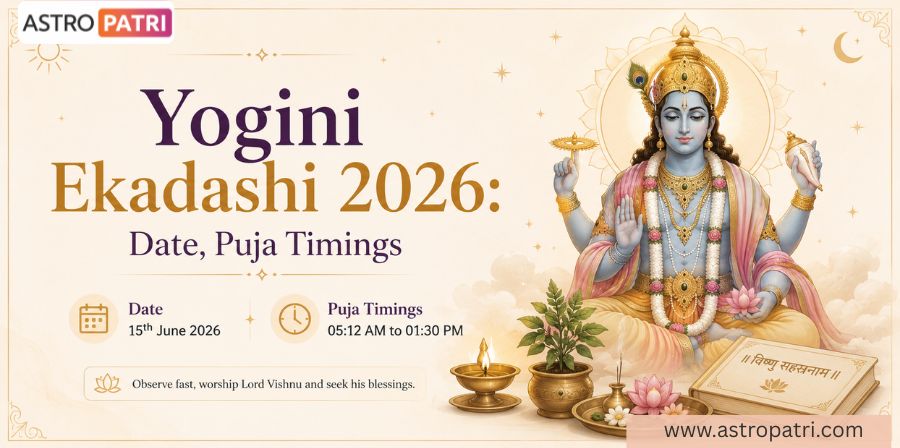
Yogini Ekadashi will be observed on Friday, 10 July 2026. Dedicated to Lord Vishnu and Goddess Lakshmi, this sacred Ekadashi is believed to free devotees from past sins, remove obstacles, and bless them with prosperity, good health, and spiritual progress.
According to the Padma Purana, observing Yogini Ekadashi with devotion is said to bring the spiritual merit of feeding 88,000 Brahmins.
Among the 24 Ekadashis observed each year, Yogini Ekadashi holds a special place because it reminds devotees that sincere repentance, disciplined living, and devotion can transform one’s life.
The famous story of King Kubera and his servant Hemamali teaches that no mistake is beyond redemption when one sincerely seeks Lord Vishnu’s grace.
Whether you observe this vrat every year or are planning to keep it for the first time, understanding its significance, rituals, and fasting rules can help you perform the vrat with greater devotion.
| Event | Date & Time |
| Yogini Ekadashi Date | Friday, 10 July 2026 |
| Ekadashi Tithi Begins | 10 July 2026, 8:16 AM |
| Ekadashi Tithi Ends | 11 July 2026, 5:22 AM |
| Parana Date | 11 July 2026 (Saturday) |
| Parana Time | 1:50 PM to 4:36 PM |
| Hari Vasara Ends | 10:32 AM on 11 July |
Note: Devotees should break the fast only after Hari Vasara ends and within the Dwadashi Parana period.
Yogini Ekadashi is the Krishna Paksha Ekadashi observed during the month of Ashadha according to the North Indian calendar. It falls after Nirjala Ekadashi and before Devshayani Ekadashi, making it an important observance in the annual Ekadashi cycle.
Dedicated to Lord Vishnu, this Ekadashi is believed to cleanse accumulated negative karma and encourage devotees to lead a life rooted in discipline, compassion, and devotion.
Ancient scriptures describe Yogini Ekadashi as one of the most powerful fasting days because it combines physical discipline with spiritual reflection. Rather than focusing only on giving up food, the vrat encourages devotees to control anger, greed, attachment, and harmful actions while strengthening their connection with the Divine.
Yogini Ekadashi is not simply about abstaining from food. Its deeper message is about correcting one’s mistakes and returning to the path of righteousness.
The famous legend associated with this Ekadashi shows that even a devoted servant can lose divine blessings through carelessness. At the same time, it teaches that sincere repentance, guidance from a wise teacher, and unwavering faith in Lord Vishnu can completely transform a person’s destiny.
The vrat encourages devotees to cultivate qualities such as:
These values remain just as relevant today as they were in ancient times, making Yogini Ekadashi more than a religious observance. It becomes an opportunity for personal reflection and spiritual renewal.
Many devotees keep this fast with the belief that it helps purify both the mind and actions.
The vrat is observed not only for material well-being but also to seek Lord Vishnu’s blessings for inner peace and spiritual growth. Devotees spend the day chanting Vishnu mantras, reading sacred texts, performing charity, and avoiding negative thoughts and actions.
For many families, Yogini Ekadashi also becomes a day to pause from daily routines, reflect on one’s responsibilities, and strengthen faith through prayer and self-discipline.
The story of Yogini Ekadashi is narrated in the Padma Purana through a conversation between Lord Krishna and Arjuna. Lord Krishna explains that observing this Ekadashi with devotion destroys sins, removes obstacles, and leads a devotee towards spiritual progress.
According to the legend, King Kubera, the ruler of Alakapuri and a devoted worshipper of Lord Shiva, had a Yaksha servant named Hemamali. Every day, Hemamali brought fresh flowers from Lake Manasarovar for Shiva’s worship.
One day, after collecting the flowers, Hemamali became engrossed in spending time with his wife, Vishalakshi. In doing so, he forgot to deliver the flowers for the king’s daily worship. When King Kubera learned about his negligence, he became deeply disappointed and cursed Hemamali to suffer from leprosy and live on Earth separated from his wife.
After enduring great hardship, Hemamali reached the ashram of Sage Markandeya in the Himalayas. Seeing his sincere repentance, the sage advised him to observe Yogini Ekadashi Vrat with complete faith and devotion.
Hemamali followed the sage’s guidance wholeheartedly. By the grace of Lord Vishnu and the spiritual merit of the fast, he was freed from the curse, regained his original celestial form, and reunited with his wife.
Yogini Ekadashi teaches that neglecting one’s duties can lead to difficulties, but sincere repentance, discipline, and devotion can transform even the hardest circumstances. The vrat reminds devotees to perform their responsibilities with honesty while seeking Lord Vishnu’s blessings for spiritual growth and inner peace.
Observing Yogini Ekadashi is not only about fasting. The vrat is an opportunity to purify the mind, strengthen faith, and dedicate the day to Lord Vishnu through prayer, discipline, and self-reflection.
You can follow these simple steps to observe the vrat according to tradition.
1. Begin the Day Early
Wake up during Brahma Muhurta, take a bath, and wear clean clothes. Clean your home temple and prepare it for worship.
2. Take a Sankalp (Vow)
Before beginning the fast, offer water to Lord Vishnu and take a sincere vow to observe Yogini Ekadashi with devotion. Pray for wisdom, good health, peace, and spiritual progress.
3. Worship Lord Vishnu and Goddess Lakshmi
Offer:
Chant “Om Namo Bhagavate Vasudevaya” or recite the Vishnu Sahasranama if possible.
4. Observe the Fast
Many devotees observe a Nirjala fast without food or water, while others follow a Phalahar vrat, consuming fruits, milk, and vrat-approved foods according to their health and capacity.
The spirit of the fast is more important than its difficulty. It should be observed with sincerity and self-control.
5. Spend Time in Devotion
Read the Bhagavad Gita, Vishnu Sahasranama, or the Yogini Ekadashi Vrat Katha. Chant Lord Vishnu’s name, meditate, and avoid unnecessary arguments or negative thoughts.
6. Break the Fast Correctly
The fast should be broken on Dwadashi during the prescribed Parana Muhurat, only after Hari Vasara has ended.
For devotees observing the fast on Friday, 10 July 2026, the fast should be broken on:
Breaking the fast within the prescribed Dwadashi period is considered an important part of the Ekadashi observance.
People often ask whether fruits or milk can be consumed during Ekadashi. The answer depends on the type of fast you choose.
Most devotees consume:
Drink enough water if you are not observing a Nirjala fast.
Traditional scriptures advise avoiding:
Many devotees also avoid excessive sleeping, gossip, and unnecessary entertainment on this day.
According to the Padma Purana, observing Yogini Ekadashi with faith is believed to bring both spiritual and worldly blessings.
Devotees observe this vrat to seek:
The scriptures also state that the spiritual merit of observing this Ekadashi is comparable to feeding 88,000 Brahmins, highlighting its importance in the Ekadashi tradition.
Apart from dietary restrictions, devotees are encouraged to avoid actions that disturb the mind or weaken the spirit of the vrat.
Try to avoid:
The purpose of Yogini Ekadashi is not only to purify the body but also to cultivate kindness, patience, humility, and devotion.
Yogini Ekadashi is much more than a traditional fast. It is a reminder that sincere devotion, discipline, and righteous actions can bring positive change in life. The story of Hemamali teaches that even after making mistakes, a person can find redemption through repentance, faith, and the blessings of Lord Vishnu.
Whether you observe the vrat for spiritual growth, family well-being, good health, or inner peace, the true purpose of Yogini Ekadashi lies in purifying both the mind and actions. Along with fasting, practising kindness, humility, charity, and gratitude helps devotees experience the deeper meaning of this sacred day.
May Lord Vishnu and Goddess Lakshmi bless you with peace, prosperity, wisdom, and happiness on Yogini Ekadashi 2026.
1. When is Yogini Ekadashi in 2026?
Yogini Ekadashi will be observed on Friday, 10 July 2026. The Ekadashi Tithi begins at 8:16 AM on 10 July and ends at 5:22 AM on 11 July 2026. Devotees observe a fast and worship Lord Vishnu on this auspicious day.
2. What is the Parana time for Yogini Ekadashi 2026?
The Parana, or breaking of the fast, should be performed on Saturday, 11 July 2026, after the end of Hari Vasara.
Breaking the fast during the prescribed Dwadashi period is considered an important part of the Ekadashi observance.
3. What is the significance of Yogini Ekadashi?
Yogini Ekadashi is dedicated to Lord Vishnu and is regarded as one of the most powerful Ekadashis for spiritual purification. According to the Padma Purana, observing this vrat with devotion is believed to remove past sins, promote inner peace, attract prosperity, and guide devotees towards spiritual growth. It also inspires discipline, self-control, and sincere devotion.
4. Can we eat fruits and drink milk during Yogini Ekadashi fast?
Yes. Many devotees observe a Phalahar Vrat, which allows fruits, milk, curd, dry fruits, makhana, coconut water, and vrat-approved foods such as sabudana, kuttu flour, and singhara flour. Those observing a Nirjala fast refrain from both food and water, depending on their health and tradition.
5. What should be avoided on Yogini Ekadashi?
Apart from avoiding grains, rice, onion, garlic, meat, and alcohol, devotees are encouraged to avoid anger, harsh speech, dishonesty, unnecessary arguments, and negative thoughts. The vrat is considered most effective when observed with a calm mind, compassion, and sincere devotion to Lord Vishnu.
Instant Report Based on Our Proprietary Framework, Developed by Experts