-
 Translate
- Astropatri Values
- My Account
Translate

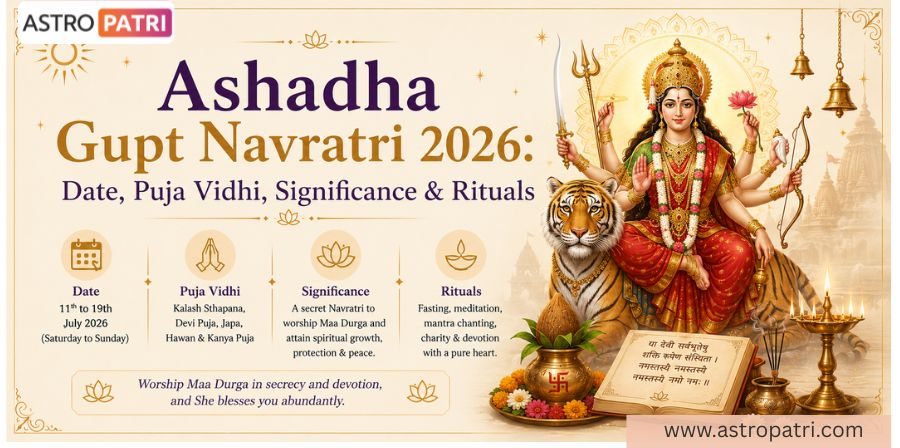
Ashadha Gupt Navratri 2026 will be observed from 15 July to 23 July 2026. This sacred nine-day festival is dedicated to Goddess Durga and the Dasa Mahavidyas. Unlike Sharad and Chaitra Navratri, Gupt Navratri is observed more privately and is especially known for spiritual practices, mantra chanting, meditation, and the worship of the Divine Mother in her powerful forms. It is believed that sincere devotion during these nine days helps devotees seek protection, wisdom, prosperity, inner strength, and spiritual growth.
Although Gupt Navratri is often associated with Tantra Sadhana, it is not limited to spiritual practitioners or saints. Household devotees also observe this Navratri to pray for good health, career growth, family happiness, financial stability, and freedom from obstacles. The festival reminds us that true devotion does not always need grand celebrations. Sometimes, the deepest spiritual transformation begins in silence, faith, and sincere prayer.
| Event | Date |
| Ashadha Gupt Navratri Begins | 15 July 2026 |
| Ghatasthapana | 15 July 2026 |
| Durga Ashtami | 21 July 2026 |
| Maha Navami | 22 July 2026 |
| Gupt Navratri Ends | 23 July 2026 |
Ashadha Gupt Navratri is one of the two Gupt Navratris observed every year in the Hindu calendar. Celebrated during the Shukla Paksha of the Ashadha month, it is dedicated to the worship of Maa Durga, the Dasa Mahavidyas, and the divine feminine energy known as Adi Shakti.
Unlike Sharad Navratri, which is celebrated with public festivities, Gupt Navratri is traditionally observed through personal worship, meditation, mantra chanting, and spiritual discipline. According to the Shakta tradition, these nine days are especially auspicious for strengthening one’s spiritual practice, seeking divine protection, and receiving the blessings of the Goddess.
Ashadha Gupt Navratri is celebrated to honour Maa Durga in her hidden and powerful forms, especially the Dasa Mahavidyas, the ten embodiments of Divine Wisdom. In the Shakta tradition, these nine days are considered highly auspicious for deep spiritual practices, mantra chanting, meditation, and self-discipline. It is believed that sincere worship during this period helps devotees overcome obstacles, gain inner strength, and move closer to spiritual awakening.
Unlike Sharad Navratri, which is marked by public celebrations and cultural festivities, Gupt Navratri focuses on personal devotion and inner transformation. The emphasis is on quiet prayer rather than grand rituals, making it a time for self-reflection, faith, and spiritual growth.
Many devotees observe this Navratri to seek:
For spiritual seekers, this period is also regarded as one of the best times to begin a new mantra, deepen meditation, or strengthen daily sadhana under proper guidance.
The word “Gupt” means hidden, secret, or private.
This Navratri is known as Gupt Navratri because many of the spiritual practices performed during these nine days were traditionally kept private. Ancient sages believed that worship offered with humility and without the desire for recognition carries greater spiritual power.
Rather than celebrating with large public gatherings, devotees often choose simple home worship, mantra japa, meditation, and scriptural reading. This quiet approach reflects the deeper purpose of the festival, which is to transform oneself from within rather than seek external recognition.
Ashadha Gupt Navratri is primarily dedicated to Maa Durga, but it holds special significance for the worship of the Dasa Mahavidyas, the ten divine forms of Adi Shakti. Each Mahavidya represents a unique aspect of cosmic energy and offers different spiritual blessings.
| Mahavidya | Represents |
| Maa Kali | Transformation and protection |
| Maa Tara | Wisdom and guidance |
| Tripura Sundari (Shodashi) | Beauty, harmony, and fulfilment |
| Maa Bhuvaneshwari | Creation and abundance |
| Maa Bhairavi | Courage and determination |
| Maa Chhinnamasta | Self-control and inner awakening |
| Maa Dhumavati | Detachment and spiritual wisdom |
| Maa Baglamukhi | Victory over enemies and obstacles |
| Maa Matangi | Knowledge, speech, and creativity |
| Maa Kamala | Prosperity and divine grace |
Many devotees also worship Goddess Varahi during this Navratri, which is why Ashadha Gupt Navratri is often referred to as Varahi Navratri in several traditions. Her worship is believed to bring protection, courage, success, and the strength to overcome life’s challenges.
Each day of Gupt Navratri is dedicated to a different form of Goddess Durga. Worshipping these forms with devotion is believed to help devotees progress spiritually while receiving blessings for health, prosperity, courage, and inner strength.
| Day | Date | Goddess Worshipped | Represents |
| Day 1 | 15 July | Maa Shailputri | Strength and new beginnings |
| Day 2 | 16 July | Maa Brahmacharini | Knowledge, devotion, and patience |
| Day 3 | 17 July | Maa Chandraghanta | Courage and protection |
| Day 4 | 18 July | Maa Kushmanda | Prosperity and positive energy |
| Day 5 | 19 July | Maa Skandamata | Family happiness and wisdom |
| Day 6 | 20 July | Maa Katyayani | Confidence and victory over difficulties |
| Day 7 | 21 July | Maa Kalaratri | Protection from negativity and fear |
| Day 8 | 22 July | Maa Mahagauri | Purity, peace, and prosperity |
| Day 9 | 23 July | Maa Siddhidatri | Success, spiritual fulfilment, and divine blessings |
Many devotees also perform special prayers to Goddess Varahi and the Dasa Mahavidyas throughout these nine days, according to their family traditions and spiritual practices.
You do not need elaborate arrangements to worship during Gupt Navratri. What matters most is a pure heart, discipline, and sincere devotion.
A simple puja can be performed by following these steps:
Those following advanced spiritual practices should perform mantra sadhana only under the guidance of a qualified Guru.
Observing discipline is considered as important as performing the rituals.
Gupt Navratri is not only about observing dietary restrictions. It is also an opportunity to cultivate patience, humility, gratitude, and self-control, allowing the worship of the Divine Mother to become a journey of inner transformation.
The food eaten during Gupt Navratri should be simple, fresh, and sattvic. The purpose of the vrat is not just to avoid certain foods but to maintain purity in both body and mind.
Drink plenty of water and eat according to your health and family traditions.
Fasting is most meaningful when accompanied by positive thoughts, self-discipline, and devotion.
The scriptures describe Gupt Navratri as a sacred period when the Divine Mother blesses devotees who worship Her with unwavering faith and sincerity. While Sharad Navratri is celebrated with public festivities, Gupt Navratri has traditionally been observed through quiet devotion, meditation, and spiritual discipline.
According to the Shakta tradition, many sages and seekers performed intense penance during these nine days to receive the blessings of the Dasa Mahavidyas. Pleased by their dedication, the Divine Mother blessed them with wisdom, courage, protection, and spiritual knowledge. Over time, this sacred observance became known as Gupt Navratri because these practices were performed privately rather than publicly.
The story reminds devotees that true devotion does not depend on elaborate rituals or grand celebrations. A sincere heart, disciplined mind, and unwavering faith are considered the greatest offerings to the Goddess.
| Ashadha Gupt Navratri | Sharad Navratri |
| Observed during the Ashadha month | Observed during the Ashwin month |
| Celebrated quietly through personal worship | Celebrated publicly across India |
| Greater emphasis on meditation and spiritual practices | Greater emphasis on cultural celebrations and community worship |
| Associated with Dasa Mahavidya worship | Primarily dedicated to Navadurga |
| Popular among spiritual seekers | Celebrated by devotees of all ages on a large scale |
Both festivals honour the Divine Mother. The difference lies in their style of worship rather than their spiritual importance.
Devotees often focus only on fasting, but Gupt Navratri is equally about cultivating discipline and devotion.
Try to avoid:
The Divine Mother values sincerity more than perfection. Even simple worship performed with faith is considered meaningful.
1. Why is Ashadha Gupt Navratri different from Sharad Navratri?
Ashadha Gupt Navratri is observed with private worship, meditation, and mantra chanting, while Sharad Navratri is celebrated publicly with Garba, Durga Puja, and community festivities. Gupt Navratri is also closely associated with the worship of the Dasa Mahavidyas.
2. Can beginners observe Ashadha Gupt Navratri?
Yes. Anyone can observe Ashadha Gupt Navratri with sincere devotion. Beginners can perform simple Durga Puja, chant “Om Dum Durgayei Namah,” read the Durga Chalisa, and follow a sattvic lifestyle during the nine days.
3. Which Goddess is worshipped during Ashadha Gupt Navratri?
Maa Durga is the principal deity worshipped during Ashadha Gupt Navratri. Many devotees also offer prayers to the Dasa Mahavidyas, especially Goddess Varahi, according to their family traditions and spiritual practices.
4. What are the main benefits of observing Ashadha Gupt Navratri?
According to Hindu beliefs, observing Ashadha Gupt Navratri may bring spiritual growth, mental peace, courage, prosperity, protection from negative influences, stronger focus, family harmony, and the blessings of Maa Durga.
5. What should be avoided during Ashadha Gupt Navratri?
Devotees generally avoid tamasic food, alcohol, anger, harsh speech, dishonesty, and negative thoughts. Maintaining purity in thoughts, words, and actions is considered just as important as observing the fast itself.





Instant Report Based on Our Proprietary Framework, Developed by Experts