-
 Translate
- Astropatri Values
- My Account
Translate

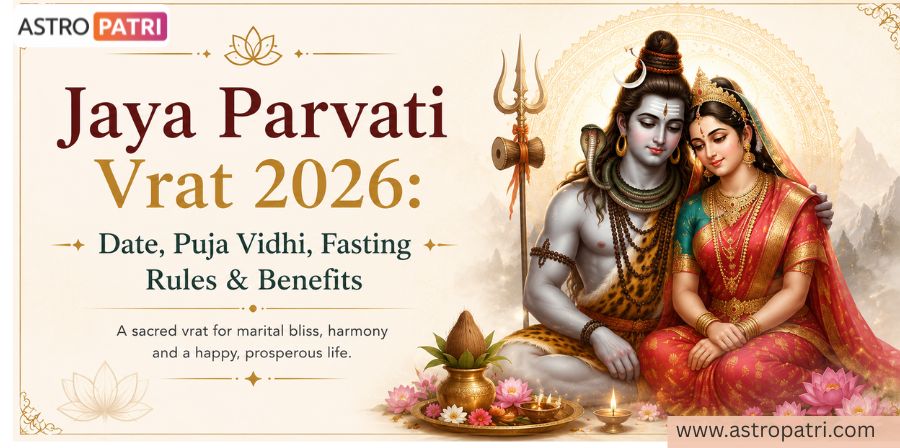
Jaya Parvati Vrat 2026 is a five-day Hindu fasting festival dedicated to Goddess Parvati, observed mainly by unmarried girls seeking an ideal life partner and married women praying for a happy and long-lasting married life. In 2026, this vrat will be observed on 27th July and will be concluded on 1th August 2026. Celebrated with great devotion in Gujarat, this vrat symbolises patience, commitment, and unwavering faith. Throughout the five days, devotees worship Goddess Parvati, observe strict fasting, sow sacred wheat seeds known as Javara, and conclude the festival with the traditional Jaya Parvati Jagran.
Unlike many one-day fasts, Jaya Parvati Vrat is a spiritual journey that encourages self-discipline, gratitude, and family harmony. The rituals are simple, but each one carries a deeper meaning rooted in Hindu tradition. Whether you are observing the vrat for the first time or continuing a family custom, understanding its significance can make your worship more meaningful.
| Particular | Details |
| Festival | Jaya Parvati Vrat |
| Dedicated to | Goddess Jaya (Goddess Parvati) |
| Duration | Five days |
| Hindu Month | Ashadha |
| Starts | Shukla Paksha Trayodashi |
| Ends | Krishna Paksha Tritiya |
| Popular In | Gujarat |
| Observed By | Unmarried girls and married women |
| Main Purpose | Marriage blessings, marital happiness and family prosperity |
Jaya Parvati Vrat honours the unwavering devotion of Goddess Parvati, who performed intense penance to marry Lord Shiva. Her determination and patience have made her a symbol of love, strength, and commitment in Hindu tradition.
Inspired by this story, unmarried girls observe the vrat to seek a caring and compatible life partner, while married women pray for the health, happiness, and long life of their husbands. Beyond these beliefs, the vrat also reminds devotees that strong relationships are built through trust, patience, sacrifice, and mutual respect.
For many families in Gujarat, Jaya Parvati Vrat is not simply a religious ritual. It is a tradition passed down through generations that brings families together in prayer and devotion.
Unlike many Hindu fasts that last a single day, Jaya Parvati Vrat is observed continuously for five days. Every ritual performed during this period reflects growth, discipline, and devotion.
The vrat is unique because it combines fasting with symbolic rituals such as sowing wheat seeds, daily worship, and an overnight Jagran. These traditions remind devotees that blessings often come through patience and consistent effort rather than immediate results.
Many women also take a vow to observe this vrat for five, seven, nine, eleven, or even twenty consecutive years, making it one of the most deeply followed family traditions in Gujarat.
The rituals of Jaya Parvati Vrat are simple, but each one carries a deep spiritual meaning. Every offering and tradition symbolises faith, patience, prosperity, and the hope for a happy family life.
Here’s how devotees traditionally observe the vrat:
On the first day, wake up early, take a bath, wear clean clothes, and take a Sankalp (vow) to observe the five-day fast with devotion. Offer prayers to Lord Ganesha before beginning the worship of Goddess Parvati.
One of the most important rituals is sowing Javara (wheat seeds) in a small earthen or metal pot. The pot is placed in the puja area and worshipped every day.
As the seeds begin to grow, they symbolise prosperity, new beginnings, and the blessings of Goddess Parvati. Many devotees believe the growing wheat also represents the gradual growth of happiness, stability, and abundance within the family.
Every morning, devotees offer fresh flowers, kumkum, incense, fruits, and a lit diya to Goddess Parvati. The Nagla, a sacred cotton thread decorated with vermilion, is also offered during the puja as a symbol of devotion and marital harmony.
Many families recite Parvati Stotra, Durga Chalisa, Shiva-Parvati prayers, or simply chant the Goddess’s name with faith.
The Javara is watered every morning throughout the five-day vrat. This daily ritual represents nurturing relationships with patience and care. Just as the seeds grow steadily, devotees pray for lasting happiness, prosperity, and peace in their lives.
During the five days, devotees follow strict fasting rules according to family tradition. The emphasis is not only on food restrictions but also on practising self-control, kindness, and positive thoughts.
On the final night of the vrat, devotees remain awake in Jaya Parvati Jagran, singing bhajans, devotional songs, and aartis dedicated to Goddess Parvati. The night-long vigil is considered an expression of complete devotion and gratitude.
The next morning, after offering the final prayers, the grown wheat grass is respectfully immersed in a river, pond, or another clean water body. The fast is then concluded with a traditional meal, marking the successful completion of the vrat.
One of the defining features of Jaya Parvati Vrat is its disciplined fasting tradition. While customs may vary slightly from one family to another, most devotees observe the following rules throughout the five days.
The purpose of these rules is not merely dietary restriction. They encourage self-discipline, gratitude, and spiritual focus throughout the observance.
Sowing Javara (wheat seeds) is one of the most meaningful rituals of Jaya Parvati Vrat.
As the seeds sprout over five days, they represent growth, prosperity, hope, and new beginnings. The ritual reminds devotees that meaningful relationships and lasting success develop gradually through patience, care, and consistent effort.
The healthy growth of the wheat is traditionally regarded as an auspicious symbol of the Goddess’s blessings on the family.
The final night of the vrat is marked by Jaya Parvati Jagran, when devotees stay awake singing bhajans, chanting prayers, and remembering Goddess Parvati.
In Hindu tradition, remaining awake in devotion symbolises alertness, faith, and complete surrender to the Divine. It is believed to strengthen one’s spiritual connection while expressing gratitude for the blessings received during the five-day observance.
For many families, the Jagran is also a time when relatives and neighbours gather to sing devotional songs together, making it one of the most cherished parts of the festival.
Jaya Parvati Vrat is observed with the belief that sincere devotion to Goddess Parvati brings blessings for love, family life, and overall well-being. While the benefits are rooted in Hindu tradition and personal faith, the vrat also encourages qualities such as patience, gratitude, and self-discipline.
According to traditional beliefs, observing this vrat may help devotees:
Beyond religious significance, the five-day observance also offers an opportunity to slow down, spend time in prayer, and reconnect with values that strengthen family relationships.
Although Jaya Parvati Vrat is most commonly observed by women, anyone with faith in Goddess Parvati may participate according to family traditions.
The vrat is generally observed by:
Many devotees continue the vrat for five, seven, nine, eleven, or twenty consecutive years, depending on the vow they have taken and their family customs.
Jaya Parvati Vrat holds a special place in Gujarat’s religious and cultural traditions. Across the state, homes and temples celebrate the festival with devotion, community prayers, bhajans, and Jagran.
Young girls often observe the vrat together with family members, while married women perform the rituals with the hope of protecting the happiness and well-being of their families. The festival is also seen as an occasion to pass traditions from one generation to the next, helping preserve cultural values alongside religious practices.
This deep community participation has made Jaya Parvati Vrat one of Gujarat’s most cherished observances dedicated to Goddess Parvati.
Jaya Parvati Vrat is more than a traditional five-day fast. It is a celebration of faith, commitment, and the enduring values represented by Goddess Parvati. From sowing Javara to observing the night-long Jagran, every ritual carries a message of patience, gratitude, and lasting devotion.
Whether you observe the vrat to seek an ideal life partner, pray for marital happiness, or deepen your spiritual practice, Jaya Parvati Vrat serves as a reminder that meaningful blessings are often nurtured through sincerity, discipline, and unwavering faith. This is why the festival continues to hold a special place in the hearts of devotees, especially across Gujarat, where it remains one of the most cherished traditions dedicated to Goddess Parvati.
When is Jaya Parvati Vrat in 2026?
Jaya Parvati Vrat is observed during the Hindu month of Ashadha, beginning on Shukla Paksha Trayodashi and concluding five days later on Krishna Paksha Tritiya. The exact Gregorian dates may vary depending on your local Panchang.
Why is Jaya Parvati Vrat observed for five days?
The five-day observance symbolises devotion, patience, and spiritual discipline. Each day’s rituals, from sowing Javara to the final Jagran, represent gradual growth, commitment, and the blessings of Goddess Parvati.
Why is salt avoided during Jaya Parvati Vrat?
Avoiding salt is a long-standing tradition associated with self-control, simplicity, and devotion. Many devotees also follow additional dietary restrictions according to their family customs.
What is the significance of Javara in Jaya Parvati Vrat?
The wheat seeds, known as Javara, symbolise prosperity, growth, fertility, and new beginnings. Their steady growth over five days reflects the belief that happiness and success are built with patience and care.
Can unmarried girls observe Jaya Parvati Vrat?
Yes. Unmarried girls traditionally observe the vrat to seek the blessings of Goddess Parvati for a suitable and virtuous life partner.
For how many years is Jaya Parvati Vrat observed?
Depending on family tradition or personal vows, devotees may observe the vrat continuously for five, seven, nine, eleven, or even twenty years.