-
 Translate
- Astropatri Values
- My Account
Translate

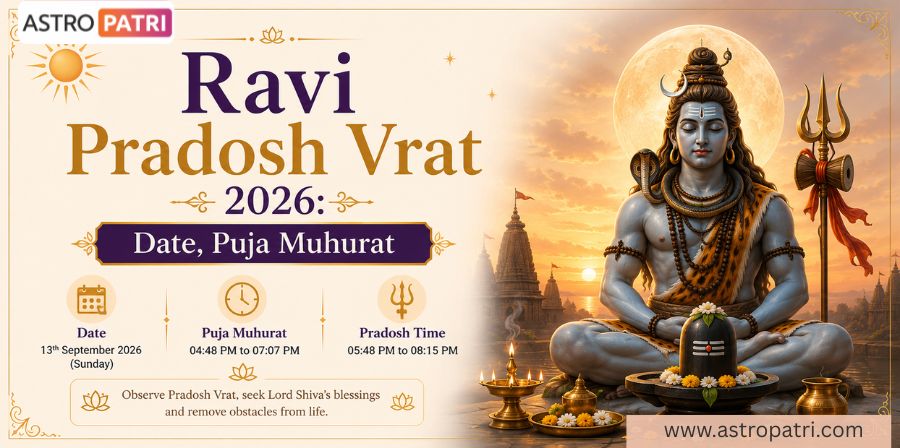
Ravi Pradosh Vrat will be observed on Sunday, 12 July 2026. Dedicated to Lord Shiva, this sacred fast is observed during Pradosh Kaal on Trayodashi Tithi. It is believed to remove obstacles, reduce the effects of Pitru Dosha and weak Sun-related afflictions, while bringing good health, confidence, family happiness, and spiritual progress.
Pradosh Vrat is among the most revered fasts dedicated to Lord Shiva. When it falls on a Sunday, it is known as Ravi Pradosh Vrat. Since Sunday is ruled by Surya (the Sun), this combination is considered especially auspicious for those seeking relief from challenges related to confidence, reputation, health, ancestral karma, and career.
Devotees observe this vrat with fasting, Shiva Puja during Pradosh Kaal, Rudrabhishek, mantra chanting, and prayers to seek Lord Shiva’s blessings for a peaceful and successful life.
| Event | Date & Time |
| Ravi Pradosh Vrat | Sunday, 12 July 2026 |
| Trayodashi Tithi Begins | 12 July 2026, 2:04 AM |
| Trayodashi Tithi Ends | 12 July 2026, 10:29 PM |
| Pradosh Puja Muhurat | 7:22 PM to 9:24 PM |
| Puja Duration | 2 Hours 2 Minutes |
Note: Pradosh Vrat is observed when Trayodashi Tithi prevails during Pradosh Kaal, the sacred period just after sunset dedicated to Lord Shiva.
Ravi Pradosh Vrat is a special form of the Pradosh Vrat observed when Trayodashi Tithi coincides with Sunday. Since Sunday is governed by the Sun, this vrat combines the divine energies of Lord Shiva and Surya Dev.
According to Hindu scriptures, the period immediately after sunset on Trayodashi is known as Pradosh Kaal, when Lord Shiva is believed to perform his divine cosmic dance. Worshipping Lord Shiva during this sacred time is said to remove negativity, grant inner strength, and bless devotees with peace, prosperity, and spiritual upliftment.
Unlike many fasts that focus only on material wishes, Ravi Pradosh Vrat encourages self-discipline, devotion, forgiveness, and inner transformation.
Ravi Pradosh Vrat is considered highly auspicious because it combines the blessings of Lord Shiva, the destroyer of negativity, with the life-giving energy of Surya Dev, the symbol of vitality, confidence, and authority.
According to traditional beliefs, observing this vrat with sincerity may help devotees:
Many devotees also perform this vrat while praying for success in career, harmony in relationships, and protection from obstacles.
From a Vedic astrology perspective, Sunday represents Surya, the planet associated with self-confidence, vitality, authority, leadership, and reputation.
When Pradosh falls on Sunday, the spiritual energy of Lord Shiva is believed to support and balance these qualities. Devotees with a weak Sun in their birth chart or those experiencing challenges related to confidence, career, father, government matters, or public image often observe this vrat with special devotion.
It is also regarded as a favourable day for seeking relief from ancestral karmic influences (Pitru Dosha) and praying for overall well-being.
Beyond rituals and fasting, Ravi Pradosh carries a deeper message.
Lord Shiva teaches detachment, compassion, and inner peace, while the Sun represents truth, purpose, and self-confidence. Together, they remind us that real strength comes from balancing humility with responsibility.
The vrat encourages devotees to let go of ego, forgive past mistakes, fulfil their duties with sincerity, and move forward with faith and gratitude.
Every Pradosh Vrat is associated with a sacred story that highlights the power of devotion and the blessings of Lord Shiva. The Ravi Pradosh Vrat Katha tells how sincere faith, charity, and unwavering devotion can transform even the most difficult circumstances.
According to ancient scriptures, there once lived a poor Brahmin who struggled to provide for his family. Despite his hardships, he never lost faith in Lord Shiva. One day, a wise sage advised him to observe Ravi Pradosh Vrat with complete devotion and perform Shiva Puja during Pradosh Kaal.
The Brahmin followed the instructions sincerely. He observed the fast, worshipped the Shivling with sacred offerings, chanted “Om Namah Shivaya,” and spent the evening remembering Lord Shiva. Pleased with his devotion, Lord Shiva gradually removed his difficulties. The Brahmin’s financial condition improved, his family found happiness, and he earned respect in society.
The story teaches that true devotion, honesty, patience, and righteous actions never go unnoticed. Ravi Pradosh Vrat is not simply about fasting but about strengthening one’s faith while performing every duty with sincerity.
Observing Ravi Pradosh Vrat is a beautiful way to seek Lord Shiva’s blessings for health, prosperity, and inner peace.
Wake Up Early
Begin the day during Brahma Muhurta, take a bath, wear clean clothes, and resolve to observe the fast with a pure mind.
Take a Sankalp
Offer water before Lord Shiva and take a sincere vow to observe the vrat for spiritual growth and the well-being of your family.
Perform Shiva Puja During Pradosh Kaal
The most auspicious time for worship is during Pradosh Kaal, shortly after sunset.
Offer:
Recite Om Namah Shivaya, Shiva Chalisa, Rudrashtakam, or Mahamrityunjaya Mantra according to your tradition.
Spend Time in Prayer
Avoid unnecessary distractions. Reading Shiva Purana, listening to devotional hymns, or meditating on Lord Shiva enhances the spiritual value of the vrat.
Many devotees observe a fruit-based fast throughout the day.
Common fasting foods include:
Those observing a Nirjala fast should do so only if their health permits.
During Ravi Pradosh Vrat, devotees traditionally avoid:
The purpose of the vrat is to purify both the body and the mind.
According to Hindu tradition, observing Ravi Pradosh Vrat with devotion is believed to bring several spiritual and worldly benefits.
Some of the commonly believed benefits include:
Many devotees also observe this vrat while praying for freedom from obstacles, mental stress, and negative influences.
Ravi Pradosh Vrat is one of the most sacred occasions dedicated to Lord Shiva. Observed during the auspicious Pradosh Kaal on Trayodashi, it encourages devotees to combine fasting with prayer, self-discipline, and compassion. Whether you seek better health, stronger confidence, harmony in your family, or spiritual growth, this vrat serves as a reminder that sincere devotion and righteous actions always lead to positive transformation. May Lord Shiva shower you with peace, prosperity, strength, and divine blessings on Ravi Pradosh Vrat 2026.
1. What is the best time to perform Shiva Puja on Ravi Pradosh Vrat 2026?
The most auspicious time to worship Lord Shiva is during Pradosh Kaal, which falls shortly after sunset. In 2026, the Ravi Pradosh Puja Muhurat is from 7:22 PM to 9:24 PM on 12 July. Performing Abhishek, offering Bel Patra, and chanting “Om Namah Shivaya” during this period is considered highly beneficial.
2. What are the benefits of observing Ravi Pradosh Vrat on Sunday?
Ravi Pradosh Vrat is believed to bring Lord Shiva’s blessings for good health, confidence, family happiness, career growth, and social respect. According to traditional beliefs, it may also help reduce the effects of Pitru Dosha and strengthen the positive influence of the Sun in one’s horoscope.
3. Can anyone observe Ravi Pradosh Vrat, or is it meant only for Shiva devotees?
Anyone can observe Ravi Pradosh Vrat regardless of age or gender. Devotees keep this fast to seek Lord Shiva’s blessings for peace, prosperity, success, protection from obstacles, and spiritual growth. The vrat can be observed with a full fast or a fruit-based fast according to one’s health and family tradition.
4. Which offerings are considered most important during Ravi Pradosh Puja?
The most common offerings include Bel Patra, water, Gangajal, milk, curd, honey, sandalwood paste, white flowers, incense, and a ghee lamp. Chanting Om Namah Shivaya or the Mahamrityunjaya Mantra during Pradosh Kaal is also considered highly auspicious.
5. Why is Ravi Pradosh Vrat considered effective for Pitru Dosha and Sun-related problems?
Since Ravi Pradosh falls on Sunday, the day ruled by the Sun, it combines the divine blessings of Lord Shiva and Surya Dev. According to Vedic beliefs, worshipping Lord Shiva on this day may help reduce the effects of Pitru Dosha, improve self-confidence, strengthen leadership qualities, and bring greater stability in personal and professional life.
Instant Report Based on Our Proprietary Framework, Developed by Experts