-
 Translate
- Astropatri Values
- My Account
Translate

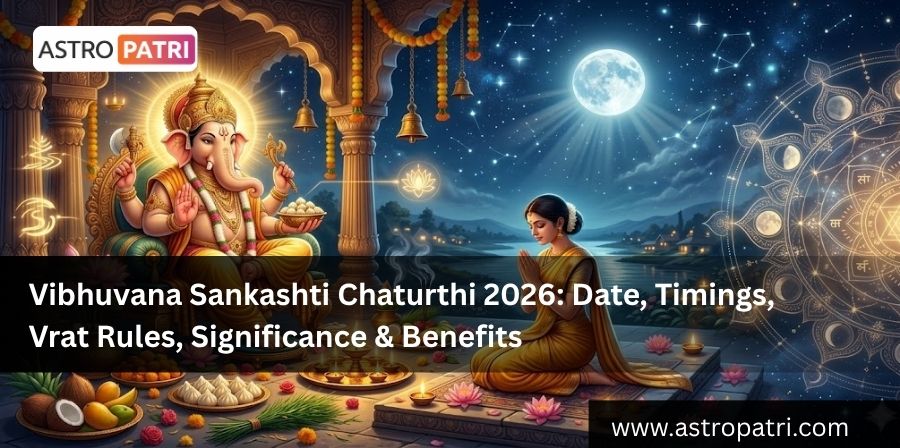
Vibhuvana Sankashti Chaturthi 2026 will be observed on June 3 and is regarded as one of the rarest Sankashti Chaturthi fasts in the Hindu calendar.
Unlike regular monthly Sankashti observances, this sacred vrat occurs during Adhik Maas, an additional lunar month that appears approximately once every two and a half years.
Because of its rare occurrence, Vibhuvana Sankashti is considered highly auspicious by devotees of Lord Ganesha. Many believe that prayers, fasting, charity, and mantra chanting performed on this day yield greater spiritual rewards than on ordinary days.
The vrat is observed to remove obstacles, seek divine blessings, fulfill important wishes, and strengthen one’s spiritual path.
For those looking for relief from long-standing challenges or seeking a fresh start, Vibhuvana Sankashti is considered a powerful day to reconnect with faith, discipline, and devotion.
Vibhuvana Sankashti Chaturthi will be observed on Wednesday, June 3, 2026. Since this rare Sankashti falls during Adhik Maas, devotees across India will observe a fast and worship Lord Ganesha to seek blessings, remove obstacles, and invite positivity into their lives.
| Event | Date & Time |
| Vibhuvana Sankashti Chaturthi | June 3, 2026 |
| Chaturthi Tithi Begins | 09:21 PM on June 3, 2026 |
| Chaturthi Tithi Ends | 11:30 PM on June 4, 2026 |
| Moonrise Time | 10:04 PM to 10:43 PM on June 4, 2026 |
| Vrat Duration | 24 Hours 39 Minutes |
Moonrise holds special significance during Sankashti Chaturthi. Devotees traditionally conclude their fast only after offering Arghya to the Moon and performing prayers to Lord Ganesha.
Among all Sankashti Chaturthi observances, Vibhuvana Sankashti occupies a unique place because it occurs only during Adhik Maas. While Sankashti Chaturthi is observed every month during Krishna Paksha, the one that falls in Adhik Maas is known as Vibhuvana Sankashti.
Unlike other Sankashti vrats that are associated with specific lunar months, Vibhuvana Sankashti has no fixed month. Its occurrence depends entirely on the appearance of Adhik Maas in the Hindu calendar.
This unique timing makes the vrat one of the least-observed Sankashti fasts, thereby increasing its spiritual importance among devotees.
The rarity of Vibhuvana Sankashti comes from its connection with Adhik Maas, often referred to as the “extra month” in the Hindu calendar.
Adhik Maas is added approximately every 32 to 33 months to maintain balance between the lunar and solar calendars. Because Vibhuvana Sankashti can occur only during this special month, devotees get the opportunity to observe it only once every few years.
For this reason, many spiritual practitioners consider it a rare window for prayers, fasting, charity, and remedies aimed at overcoming persistent challenges.
Every Sankashti Chaturthi is associated with a particular form of Lord Ganesha. On this day, devotees worship Vibhuvana Ganesha.
The word “Vibhuvana” means “present in all three worlds” or “illuminating all realms of existence.”
According to Hindu philosophy, these three worlds are:
Vibhuvana Ganesha symbolizes a divine presence that transcends all boundaries and protects devotees across every aspect of life. Worshipping this form of Ganesha is believed to bring guidance, wisdom, protection, and freedom from obstacles.
Adhik Maas is often described as a month dedicated to spiritual growth and self-reflection.
According to Hindu traditions, spiritual activities performed during this period are believed to generate greater merit. These activities include:
When Sankashti Chaturthi falls during this sacred month, its importance increases further. Many devotees believe that sincere efforts made on Vibhuvana Sankashti bring multiplied blessings and deeper spiritual benefits.
The vrat can be observed with simplicity and devotion. What matters most is sincerity rather than elaborate rituals.
Start the day with a bath and take a vow to observe the fast. Many devotees wear clean clothes and create a peaceful space for worship.
Different devotees observe the vrat in different ways:
Grains and tamasic foods are generally avoided throughout the day.
During the evening puja, devotees offer:
Reciting Ganesh mantras and listening to or reading the Sankashti Vrat Katha is also considered auspicious.
After moonrise, devotees offer water to the Moon and pray for blessings. Only after this ritual is the fast traditionally broken.
One unique tradition associated with Vibhuvana Sankashti is the offering of coconut laddus to Lord Ganesha.
Coconut has long been regarded as a symbol of purity, humility, devotion, and surrender of ego. Offering coconut-based sweets is believed to please Lord Ganesha and invite his blessings.
Many devotees believe this offering helps in:
Because of this belief, coconut laddus are considered one of the most important bhog items for this vrat.
People observe Vibhuvana Sankashti for both spiritual and personal reasons.
According to traditional beliefs, the vrat may help devotees:
Lord Ganesha is worshipped as Vighnaharta, the remover of obstacles. Devotees seek his blessings for smoother progress in important life matters.
Many people perform this vrat while praying for success in career, education, finances, marriage, or family matters.
The combination of fasting, prayer, and self-discipline helps reduce distractions and brings greater calmness to the mind.
The vrat encourages introspection, devotion, patience, and self-control.
Many devotees believe that worshipping Lord Ganesha on this rare occasion creates a positive atmosphere both within the home and within oneself.
To preserve the sanctity of the vrat, devotees generally avoid:
The emphasis is not only on dietary discipline but also on maintaining purity in thoughts, words, and actions.
According to traditional beliefs, sincere devotion on Vibhuvana Sankashti helps remove obstacles standing between a person and their goals.
Many devotees pray for:
The vrat is not viewed as a shortcut to success. Instead, it is seen as a way of aligning faith, effort, and discipline while seeking divine guidance.
Vibhuvana Sankashti Chaturthi 2026 is much more than a monthly Ganesh fast. Its occurrence during Adhik Maas makes it one of the rarest and most spiritually significant Sankashti observances in the Hindu calendar.
For devotees seeking blessings, prosperity, protection, wish fulfillment, and spiritual growth, this sacred day offers a meaningful opportunity to deepen their connection with Lord Ganesha. Through fasting, prayer, charity, and devotion, devotees believe they can remove obstacles, strengthen their faith, and invite greater positivity into their lives.
Why is Vibhuvana Sankashti Chaturthi considered rare?
It occurs only during Adhik Maas, which appears approximately once every 32 to 33 months, making it much less frequent than regular Sankashti Chaturthi.
Which form of Lord Ganesha is worshipped on Vibhuvana Sankashti?
Devotees worship Vibhuvana Ganesha, a form believed to be present across all three worlds and capable of removing obstacles from every aspect of life.
What special bhog is offered on Vibhuvana Sankashti?
Coconut laddus are traditionally offered to Lord Ganesha and are considered especially auspicious on this day.
What is the main benefit of observing Vibhuvana Sankashti Vrat?
The vrat is believed to help remove obstacles, support wish fulfillment, bring spiritual growth, and generate enhanced merit because it occurs during Adhik Maas.
When is the moonrise for Vibhuvana Sankashti 2026?
The moonrise is expected between 10:04 PM and 10:43 PM on June 4, 2026.
Instant Report Based on Our Proprietary Framework, Developed by Experts